

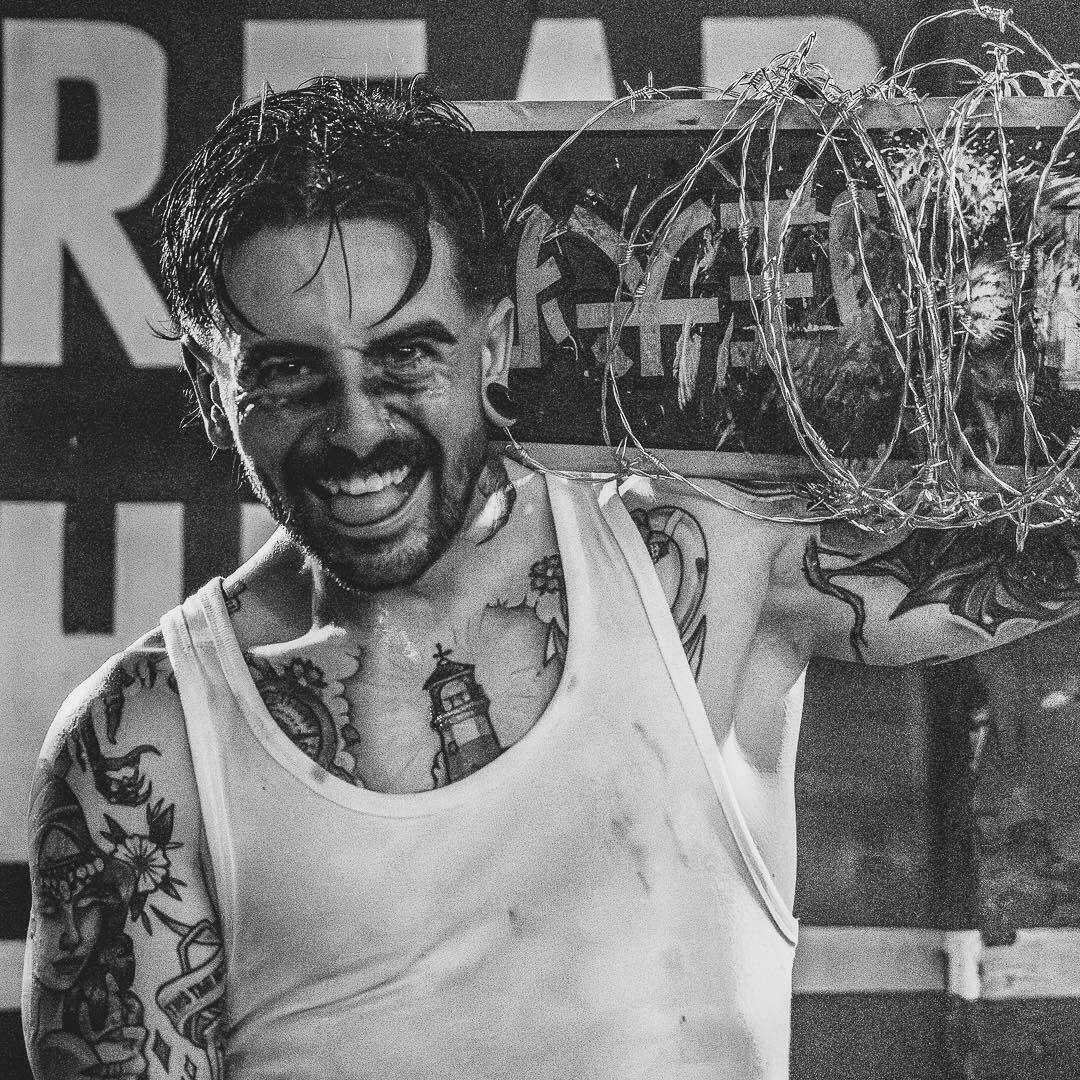
Sitting in London’s Finsbury Park on a warm Wednesday afternoon, there’s a calm intensity about Scotty Rawk. He’s compact, quietly animated, and every sentence seems to carry two things: gratitude and grit. It’s an unlikely setting, perhaps, for a conversation that spans Grimsby, the grassroots wrestling schools of the North, the chaos of a TNA tryout in New York, and a life lived at the intersection of punk rock, neurodivergence, and LGBTQ+ identity.
But then, nothing about Scotty’s journey has followed the neat, polished route. It’s been DIY from day one, and that’s exactly how he likes it.
Growing Up in Grimsby: Skate Parks, PS2s and VHS Tapes
Before the tryouts and transatlantic flights, there was Grimsby, a town (before now) not exactly renowned as a breeding ground for future wrestling stars. “I grew up like a lot of working-class kids up there,” Scotty says. “Not much money, not many obvious opportunities, but a lot of time and a lot of imagination.”
His childhood was split between three obsessions: playing “SmackDown vs. Raw” on the PlayStation 2, wearing out battered VHS tapes of shows likeSummerSlam ’91, and spending endless hours at the skate park or in band practice.
“I’ve always been creative,” he explains. “Playing guitar, being in bands, skating, I was always throwing myself into something. Wrestling was there in the background the whole time, but it felt like a thing on TV, not something a kid from Grimsby could actually do.”
What changed was his understanding of what wrestling actually is. “Wrestling isn’t just big lads in trunks,” he says. “It’s performance, storytelling, theatre – all with this raw, chaotic energy. Once I saw it like that, it gripped me in a way nothing else did. And it never let go.”
“I Just Stopped Pretending”: Finding Authenticity in the Ring
Early on, Scotty went through the same identity crisis most young wrestlers experience.
“When people think of wrestling, they think of gimmicks,” he says. “You see it straight away in training schools. People walk in already fantasy-booking themselves. They want to be the monster, the comedy guy, the edgy character. I did the same.”
As a 17-year-old, he debuted as “The RAWKSTAR”, all cut-off plaid shorts and DIY sleeveless Metallica shirts, more WCW Flock than polished sports entertainer. “I looked like I’d been dropped out of a 90s stable like Raven’s Flock,” he laughs. “But that was me trying to work out, ‘What’s the most on-the-nose version of who I am?’”
The real turning point came later. “If I could sum it up, I’d say: I stopped pretending,” he explains. “I spent years thinking, ‘I’m a pro wrestler, so I have to move like this, talk like this, be this type of person.’ But I’m five foot six. I was never going to be Dave Bautista. I was never going to be this six-foot-two powerhouse ducking under door frames.”
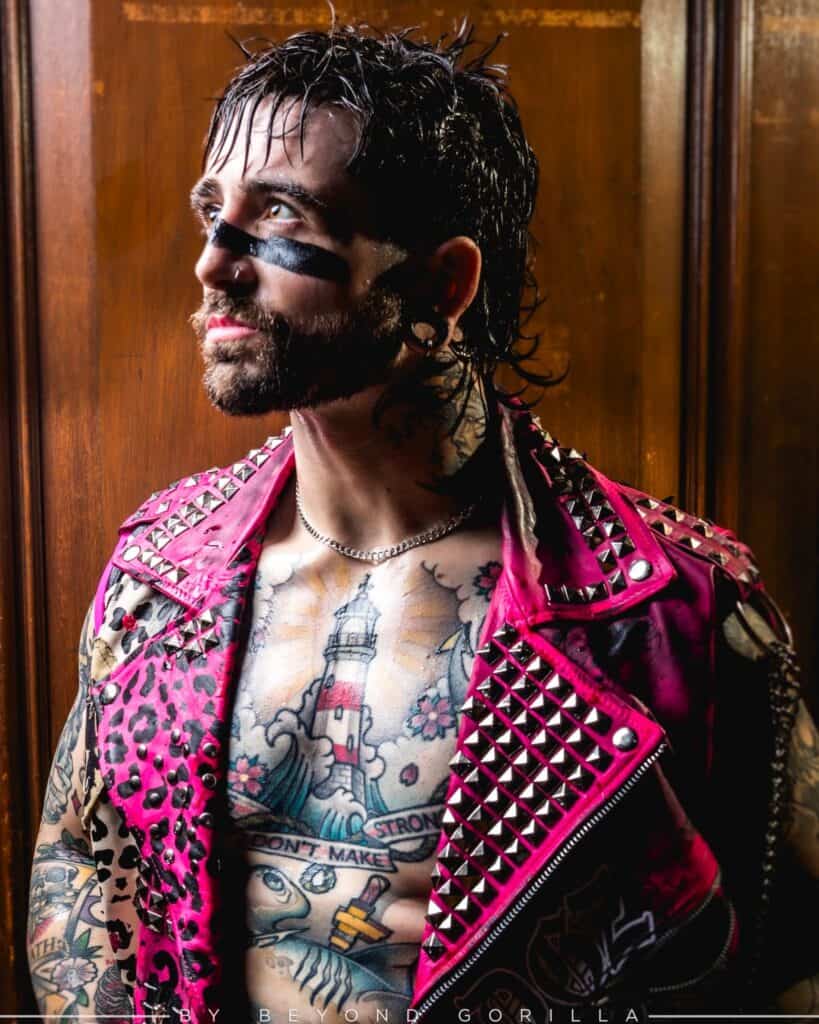
Instead of chasing an impossible archetype, he started asking a different question: what can I bring that nobody else can? “Scotty Rawk has always been DIY, always been punk rock, always been from the gutters of Grimsby, always biting off more than he can chew,” he says. “The character didn’t appear overnight, it evolved as I figured out who I actually was. It’s been a journey of self-discovery as much as wrestling.”
That authenticity isn’t just aesthetic. It’s his entire philosophy. “If you resonate with someone on a real level, you form a real connection,” he says. “You don’t have to meet them. It can be through your story, through the truth you put out. Authenticity shines brighter than any gimmick.”
Building a Northern Stronghold
Long before the flights to the States, before his name was popping up in headlines around diversity and inclusion, Scotty was part of building something much closer to home: a genuine wrestling scene in Grimsby.
It began with the Grimsby Wrestling Alliance (GWA), a scrappy training school that appeared in the days when wrestling was far from fashionable. “Picture what a wrestling school in Grimsby looked like 12 years ago,” Scotty says. “This was before NXT UK, before WWE was on Netflix, before wrestling clawed its way back into the mainstream. Back then, if you liked wrestling, you were a geek. GWA wasn’t glamorous, but it was somewhere to learn, to dream.”
Eventually, GWA fell apart. Life, politics, and circumstance took their toll. But a handful of core people – Scotty among them – saw something still worth fighting for. “We realised there was a base in Grimsby,” he says. “There was a hungry live audience, or at least people who wanted a night of entertainment. So we decided to build something new.”
That “something” became BWR – British Wrestling Revolution. “We started at a rugby club with about 80 people in attendance,” he recalls. “Then we just grafted. Promoted, postered, hustled, improved. Kept going.”
The growth has been remarkable. BWR have now run shows at the Grimsby Auditorium, selling over 1,000 tickets. Recently, they marked their nine-year anniversary at the Memorial Hall. For a town often overlooked, it’s a powerful statement: you don’t have to be in London, or Manchester, or Glasgow to create something special.
The Grind
For all the big nights and packed halls, Scotty is quick to stress the unseen cost of building a career in wrestling. “I was in one of those schools where you kind of needed the coach’s approval to go anywhere else,” he says. “So for a while I was stuck. When that folded and we were in limbo, I just travelled wherever I could to keep learning.”
That meant regular trips to NGW in Hull – without a car. “I’d lose entire afternoons and evenings,” he says. “Bus or lift to a meeting point. Cram into a car between two of the burliest lads you’ve ever seen. Drive to some rec centre in Hull. Then you set the ring up for an hour, train as long as you can, then break the ring down. That was my week, every week I was home.”
At the same time, he was at university in Liverpool, drifting through a course he’d applied to late, chased by tutors for missing deadlines, and wrestling with an unsettling realisation. “I found myself asking, ‘Why am I only happy when I’m at home?’” he says. “And the answer was wrestling. That’s where I was building BWR, where I was growing at NGW.”
In Liverpool, he found a new home at Fighting Spirit School, run by Zack Gibson and James Drake – The Grizzled Young Veterans. “That was another level,” Scotty recalls. “Not just moves, but how to think about matches, how to carry yourself. Proper, serious education.”
When university ended and he returned to Grimsby, the grind intensified. “I was working a part-time job, every hour going, just to afford wrestling gear, petrol to get to training, a gym membership,” he says. “My feet were coming through my training boots. I couldn’t afford separate pairs for training and shows. Everything was patched up.”
Rawk likens it to other art forms. “If you’re a guitarist, you dump money into guitars and amps. If you’re into music tech, you’re buying home studio gear. Wrestling’s the same – it’s an expensive love. I’ve been lucky enough to turn it into a career, but wrestling doesn’t owe anyone anything. It was here before I started, and it’ll be here long after I retire.”
Mentors, Manners, and the Armpit of the UK
Scotty is quick to credit the Northern scene for shaping not just his in-ring style, but his professional backbone. He rattles off names likeNathan Cruz, Robbie X, Matt MyersandRampage Brown, and a raft of Hull and North-East veterans.
“I call that area the armpit of the UK,” he grins, “but honestly some of the most professional, level-headed people I’ve met come from there.”
The key lessons weren’t flashy. “Anyone can be taught how to take a bump,” he says. “What’s harder to learn is manners, etiquette, politeness, professionalism. Turning up on time. Shaking hands. Knowing how to behave in a locker room.”
The feedback he hears about those mentors is always the same. “People say, ‘Whatever you think of them, what a professional.’ And that matters. People forget the first word in ‘professional wrestling’ is professional.”
A TNA Tryout
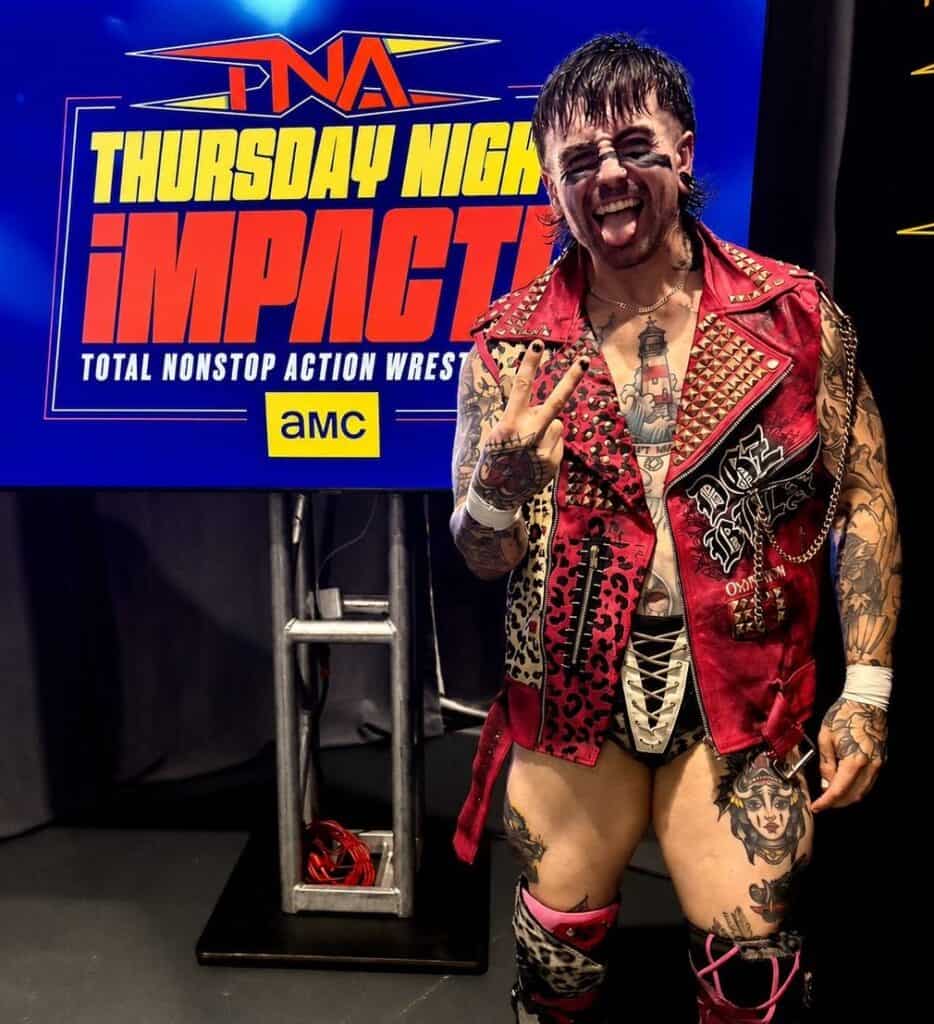
Recently, Scotty received the kind of email most independent wrestlers dream about: an invitation to work as crew and extra for TNA on their US tapings.
“It was a whirlwind,” he admits. “I got the email on the Wednesday, booked my flights on the Thursday, flew out on the Monday to Albany for the Tuesday setup and the Wednesday-Thursday tapings.”
Crucially, there were no promises. “There was no, ‘If you do this, you’ll get that,’” he says. “No dangling carrot. It was: ‘This is your opportunity. Come work with us, for us. Show us who you are. See how you fit.’”
That kind of ambiguity crushes some people. For Scotty, a kid who’s been grafting since day one, it felt familiar. “I’ve had to scratch and claw my whole life,” he says. “Shout my own name the loudest. So turning up and saying, ‘I’ll do whatever needs doing’ – that wasn’t new to me. That’s just Tuesday.”
He did what the Northern schools had drilled into him from day one. “You turn up, you shake every hand,” he says. “Wrestlers, staff, bar crew – everyone. Then you work. You run for agents, for management, for whoever needs anything. You make yourself useful. For three days straight, I was that guy.”
Beyond the immediate pressure, there was a deeper emotional pull.
Growing up, Scotty’s Saturdays at his nana’s house followed a strict ritual: episodes ofDog the Bounty Hunter,Pimp My Ride, and, sandwiched between them,TNA Wrestling on Bravo.
“That was my upbringing,” he says. “Watching AJ Styles, Christopher Daniels, Samoa Joe on a Saturday afternoon, while my mum – a single parent – was out working a part-time job to put food on the table. TNA was my escape.”
Standing in a TNA ring, even as crew and extra, meant more than just “career progress”. “My goal for the year was simple,” he says. “I wanted to be ready if a tryout came. And walking away from that, I don’t think I’ve ever felt more ready. For whatever comes next.”
Punk Rock Ethos and Favourite Bands: Beyond the Playlist
Scotty calls himself the “punk rock pro wrestler”, but he’s wary of reducing that to a costume or a Spotify genre.
“When I was younger, yeah, it was aesthetic – plaid shorts, band shirts, the whole lot,” he says. “But punk for me now is deeper than what’s in your playlist.”
Part of that is down to his own brain chemistry. “I’ve got ADHD, so my Spotify Wrapped is unhinged,” he laughs. “No algorithm can pin me down. I’m all over the place.”
Right now, that chaos has a particular flavour. He’s just watched Jackass 5, which has thrown CKY back into heavy rotation. He talks about blasting those riffs on the way to training, how they drag him right back to that early-2000s era of skate videos, dumb stunts and teenage invincibility.
He’s also deep into the new record from Liverpool’s Loathe. “They’ve just dropped a new album and it’s made me go back through all their older stuff as well,” he says. “It’s heavy and inventive, but there’s this atmosphere to it that I really connect with. It’s the kind of thing that makes you want to put your headphones on and walk a bit slower, just so you can stay in that world a little longer.”
Then there’s the long-time staple: Limp Bizkit. “Limp Bizkit are always on rotation,” he admits with a grin. “They’re never leaving. I don’t care what anyone says, that nu-metal era raised me.” Outside of guitars and breakdowns, there’s a softer spot for 90s and 2000s rap and hip hop – everything from Dr. Dre and Snoop Dogg to more modern crossovers.
“I’ll stick on some old Dre or Snoop as easily as I’ll put on metal or hardcore,” he says. “There’s just something about that era of production and groove that hits me right.”
And then, in the most endearingly random twist, he mentions an earworm that refuses to let go: “Chase the Sun”, the trance anthem synonymous with darts and terrace chants, which has lodged itself in his head during the recent football.
“It’s been living rent-free in my brain for weeks,” he laughs. “You hear it once and that’s you done for the day.”
For Scotty, though, the point is less about genre and more about spirit. “Punk rock, to me, is DIY. It’s supporting local. It’s sharing your friends’ bands, your friends’ businesses, your friends’ shows. Promoting the posters for events you’re on. That’s punk. Loving yourself in a world that wants you to be a cog in a machine, that’s punk too.”
He sees punk less as rebellion-for-rebellion’s-sake and more as a commitment to alternative paths. “Anything you invest yourself in that isn’t the grey nine-to-five corporate grind – that’s punk rock,” he says. “Every time you choose passion over conformity, you’re doing something radical.”
In wrestling terms, that’s why he’s drawn to names like Brodie King, Malakai Black, and CM Punk. “When CM Punk debuted on ECW, I’d already been a fan for about ten years,” Scotty recalls. “There’s that promo with Shannon Moore where Punk slaps him, looks him up and down, and goes, ‘You’re a poser.’ That stuck with me as a kid. I thought, ‘I don’t care if this guy’s terrible in the ring, I’m a CM Punk fan for life.’”
Mental Health, Neurodivergence and the LGBTQ+ Community: “Your People Are Out There”
In recent months, Scotty’s profile has risen not just because of his in-ring work, but through a deeply personal story that’s resonated far beyond the wrestling bubble, his journey as a neurodivergent, LGBTQ+ person navigating identity, relationships, and self-acceptance.
What message does he have for the kids watching from places like Grimsby or Hull, who feel like there’s no place for them in wrestling – or in the world?
He pauses. “I think the scariest and bravest thing anyone can do is be vulnerable,” he says. “Especially if you’re LGBTQ+, especially if you’re neurodivergent, especially if you’re working-class and feel like the world wasn’t built for you.”
Vulnerability, he admits, is terrifying. “You’re basically holding your heart out and hoping people don’t stomp on it,” he says. “But through that, you find deep connections. The ones you hold onto. The ones that save you.”
Back home, he’s channelled that philosophy into spaces like Evo Wrestling Academy in Grimsby – an offshoot formed by core members of BWR, later enriched when former NGW coaches began training there. “We’ve worked really hard to build a safe space,” he explains. “A real sense of community. All walks of life, welcomed with open arms. You’re encouraged to share but never pressured or poked at. It’s warm. It’s loving.”
His core message is simple, but he repeats it with conviction: “Your people are out there.”
“To anyone sat there thinking, ‘Why is my brain like this? I wish I was normal. I wish I didn’t think like this’ – I’ve been there,” he says. “A lot of us have.”
Away from the ring, Scotty is also a mental health first aid instructor. “I train workplaces to spot the signs of poor mental health, to recognise people in crisis,” he says. “And over and over, I see the same thing: communication is key. A conversation can save a life. It has saved many.”
In a world he feels is increasingly hostile and disconnected, especially for LGBTQ+ people, those conversations matter more than ever.
“People are scared of connection now,” he says. “If you stop someone in public just to talk, they panic. But the internet – when you cut through the AI slop, the hate, the politics – puts you in touch with people who look like you, think like you, feel like you. Same hair, same tattoos, same scars, same stories. That can be life-changing.”
From the Gutters to the Globe
From skate parks in Grimsby to TNA tapings in New York, from DIY band kid to mental health instructor and LGBTQ+ role model, Scotty’s path isn’t neat. It isn’t easy. It isn’t linear.
But it is unmistakably his.
“You can be from the gutters of a forgotten town,” he says. “You can be queer, neurodivergent, working-class. You can feel like you’ve been dealt the worst hand going – and still build something that matters.”
He smiles, looking out across Finsbury Park, London traffic humming in the background.
“You don’t have to become someone else to fit the mould,” he says. “You just have to be the truest version of yourself, over and over again, even when it’s scary. Because at the end of the day, nobody does you better than you.”