

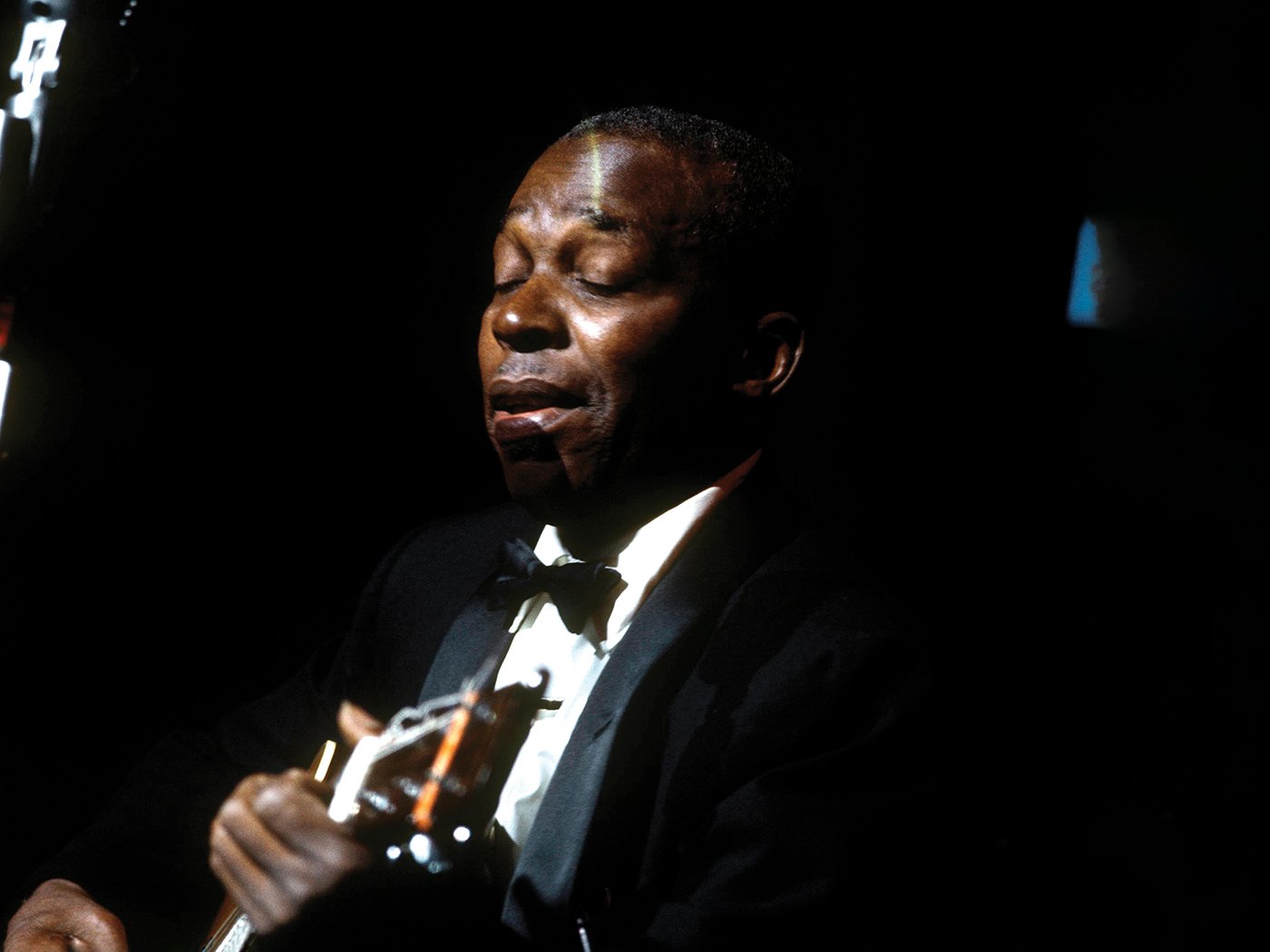
In the 2001 movie Ghost World, a teenage girl played by Thora Birch buys a vinyl compilation of old blues sides from an oddball, played by Steve Buscemi, at a garage sale.
“The whole record was good,” she tells him when she returns in search of more. “But that one song, ‘Devil Got My Woman’… I just keep playing that over and over. Do you have any other records like that?”
“There are no others like that,” comes the reply.
The recording which obsessed the girl was recorded by Skip James for Paramount in 1931. It was James’ first session and it would be another 33 years before he entered the studio again, following his rediscovery and lionisation during the 1960s folk-blues revival.
“I made 26 songs, eight on guitar and the rest on piano and I didn’t get paid but 40 dollars for all of those records,” James recalled of that landmark session. “Well, that discouraged me. I just give up music for a long time. I got so care-hardened and disappointed I quit playin’ altogether”.
Had James followed Robert Johnson by dying in mysterious circumstances while still in his prime, he would surely have attained the same mythical aura. Instead, while his rediscovery appeared miraculous, a living, flesh-and-blood artist is never quite as legendary as a sepia-tinted wraith, so Johnson became the King Of The Delta Blues and James merely a princeling.
Of the 1931 recordings, 18 tracks were released at the time and the other eight lost, the metal masters sold for scrap when Paramount went bust in 1935. In the midst of the Great Depression, James’s biggest selling 78 – “Cherry Ball Blues” b/w “Hard Time Killing Floor Blues” – sold fewer than 650 copies.
Yet James’s recordings certainly reached the ears of Johnson, who adopted him as something of a role model, using the same open D-minor tuning and singing in a similarly eerie voice, covering his “22-20 Blues” and incorporating elements of other songs into compositions such as “Hellhound on My Trail”.
However, while Johnson died in 1938, James lived on in obscurity until John Fahey found him in a hospital in Tunica, Mississippi in 1964. Fahey put him onstage at the Newport Folk Festival and helped him resume his recording career, concluding with this 1968 album – now remastered and reissued – a year before his death from cancer.
Born Nehemiah Curtis James in Mississippi in 1902, Skip received a two-dollar guitar from his mother when he was 10, and he also learned to play piano and organ in the church where his father preached. By the early 1920s he was an itinerant labourer hoboing around the Delta, an experience he chronicled in “Illinois Blues”, which he re-recorded on this final album. Later he found a side hustle distilling moonshine whiskey. Singing the blues was often merely a way of seducing women.
Recommended to Paramount by the Mississippi talent scout HC Spier, who also discovered Charlie Patton, Son House and Johnson, he travelled north to Paramount’s studios in Grafton, Wisconsin to record a set of remarkable songs that included not only “Devil Got My Woman”, “Illinois Blues” and “22-20 Blues” but also “I’m So Glad”, later covered by Cream. Another of the sides was titled “Jesus Is A Mighty Good Leader”, and after concluding that there was no money in making records, he became a church minister.
Fast forward a third of a century and when Fahey arrived at his sickbed, James told him, “You must be pretty stupid. Took you a long time to get here.” After being discharged from hospital he recorded a Fahey-produced LP titled Greatest of the Delta Blues Singers, a direct riposte to Johnson’s King Of The Delta Blues Singers released three years earlier by Columbia.
Three further LPs for Vanguard followed with Devil Got My Woman, recorded solo and unaccompanied, as his swansong. In an inversion of the ratio of his pre-war recordings and a reflection of 1960s proclivities, eight of the dozen tracks feature his intricate guitar picking and only four his sonorous, rolling piano playing.
Three songs are reprised from the 1931 session and the comparison between the two versions of “Devil Got My Woman” is particularly fascinating. It’s immediately evident that his finger-picking technique has lost little of its dexterity and indeed on several other tracks, such as “Good Road Camp Blues”, “Catfish Blues” and “Sick Bed Blues”, there’s more delicacy and nuance to his string bending, although some of that may be down to the superior fidelity of the recording. His voice has changed, however, his falsetto higher and more haunting than ever.
He was not the only pre-war bluesman to be rediscovered in the 1960s: Son House, Mississippi John Hurt, Rev Gary Davis and others also resumed interrupted recording careers. Yet James’s story was in many ways the most remarkable of all. Robert Johnson aside, there was simply nobody else like him.