

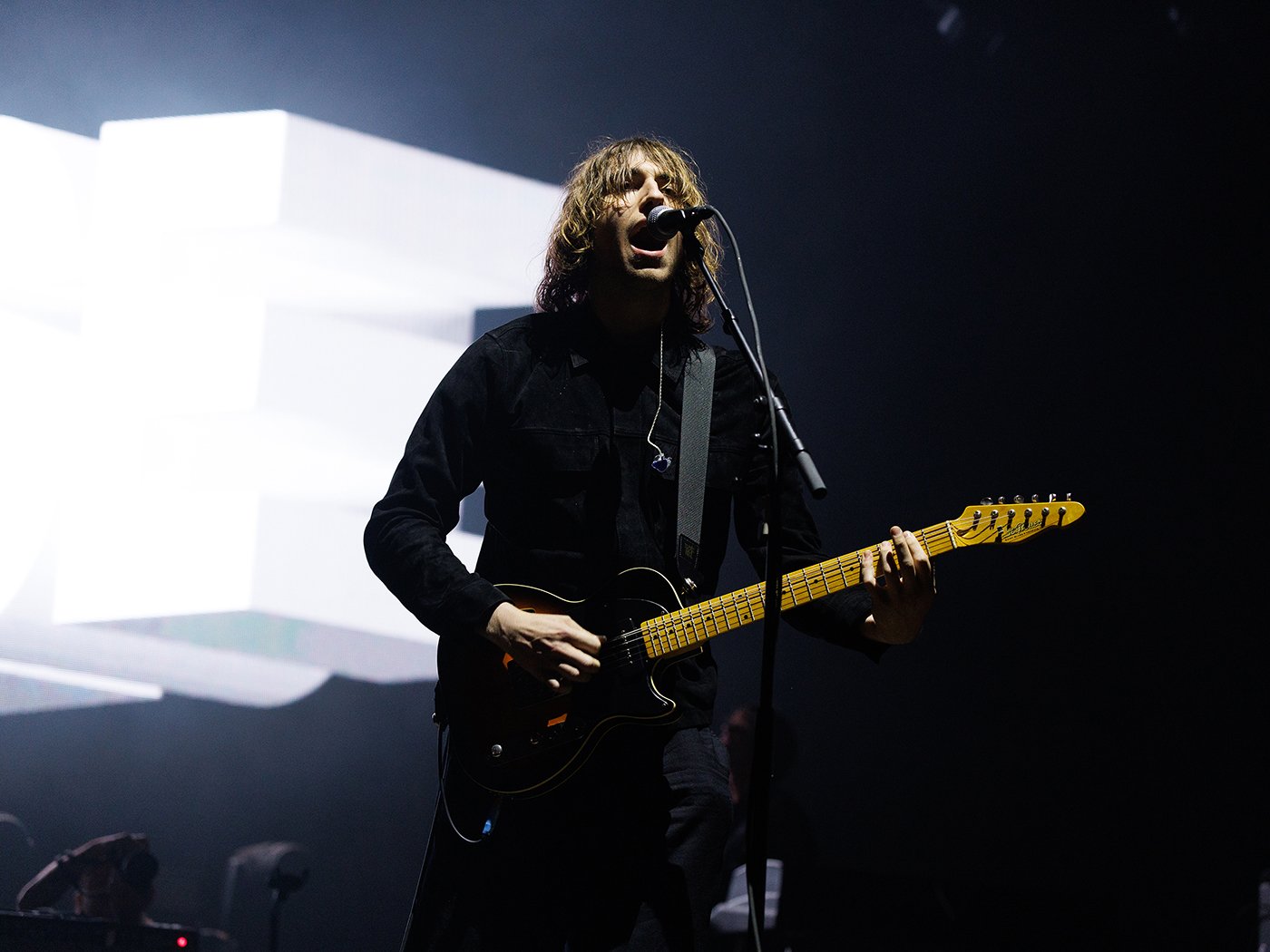
“There’s a bomb in my car!” yell 15,000 people in unison, along with Cameron Winter of Geese. Luckily everyone is safely parked up by this point, otherwise it might have caused even more of a delay at the gates. It’s a suitably exhilarating climax to a noisy first day at End Of The Road 2026.
Over the course of its 20-year existence, the festival has brought us countless memorable performances by some of the biggest and most influential names in indie, folk, punk, Americana and beyond. But ask anyone who regularly ringfences the first weekend in September to attend, and it’s not just about the headliners – it’s the thrill of discovering a slew of great bands you’ve never heard of before.
Witness Yalla Miku, kicking off festivities on the main (Woods) stage. Based in Geneva, but with roots in Eritrea, Morocco, Algeria and Lebanon, the proudly genre-fluid five-piece are an early reminder of End Of The Road’s unifying qualities. Cheerfully fusing microtonal chants with kraut-punk rhythms, banjo riffs, synth splurts and deadpan French raps, they soon have a group of people in homemade gnome hats bobbing along. And we’re away!
An unfortunate vocal mic malfunction forces Modern Woman to improvise, but the pleasantly drifting chamber folk they conjure up on the fly serves as the perfect sunset prelude to their tempestuous art-rock. Over in the Folly, Nina Winder-Lind is moonlighting from her day job in Brighton’s ritualistic rockers The New Eves. In leather trousers, fronting a five-piece band, her solo songs tilt a little more Patti Smith – though often with a strange, disconcerting twist. When she sits down at the piano to bash out a curdled cabaret waltz, it sounds like something from John Cale’s Paris 1919, played underwater.
Back on the Woods Stage, YHWH Nailgun tap into a strong tradition of haywire New York punk-funk stretching back through Liars and The Rapture to DNA and The Contortions. Admittedly they sometimes sound like a spool of tape being yanked from the machine, while Zack Borzone’s vocal convulsions are an acquired taste. But equally you can’t take your eyes off him.
They leave the crowd simmering nicely for the arrival of Geese, not that anyone here really needs warming up. With record numbers of people onsite for a Thursday night, anticipation is off the scale for the band’s first ever European headline show.
Preceded by their already infamous walk-on VT of overhead kicks, basketball tip-ins and a bloke called Big John saying “bosh”, Geese immediately prove themselves to be a band in total control of their moment, teasing the crowd with the surreal slow-burn of “Husbands” and the casually devastating “Half Real”. It’s almost half an hour before Cameron Winter relinquishes his grip on the opening long note of “2122” and finally gives the moshpit what they want.
It’s abundantly clear why Geese have been widely hailed as saviours of rock’n’roll or whatever you want to call it – unlike most acts headlining festivals in 2026, they don’t puff up their sound with digital padding or sync their performance to the firework display. If anything, they are almost defiantly ragged, guitarist Emily Green – looking typically unbothered in a chic black-and-white striped dress – lazily toying with a riff before Max Bassin’s powerhouse drums take over. It’s the sheer quality of their songs, and the strength of their conviction in this supposedly outmoded artform, that makes Geese such a powerful live act.
At various points, they remind you of most of the best bands of the last 40 years – Nick Cave meets the Pixies, Jack White duelling with Pavement, Julian Casablancas fronting Radiohead, take your pick – but crucially in Cameron Winter, they have a frontman who’s found compelling new ways to tell us his heart is broken and the world is on fire.
Despite his diffident demeanour – dazed stare, shaggy bed hair – his howls of unrequited love on “Cobra” and the ridiculously anthemic “Au Pays Du Cocaine” are highly relatable. Everyone who was recently slamming into each other with abandon, many frantically waving toy geese, suddenly clambers onto each others’ shoulders to bawl along.
After a thrilling “Taxes”, complete with hardcore punk coda, Geese return for an extended, cathartic surge through the apocalyptic wastes of “Trinidad”, which Winter drolly augments with what sound like extracts from Couples Therapy. Even when he’s just goofing around it seems somehow poignant or important. It’s a rare gift – and provides the first major highlight of End Of The Road’s next 20 years.