

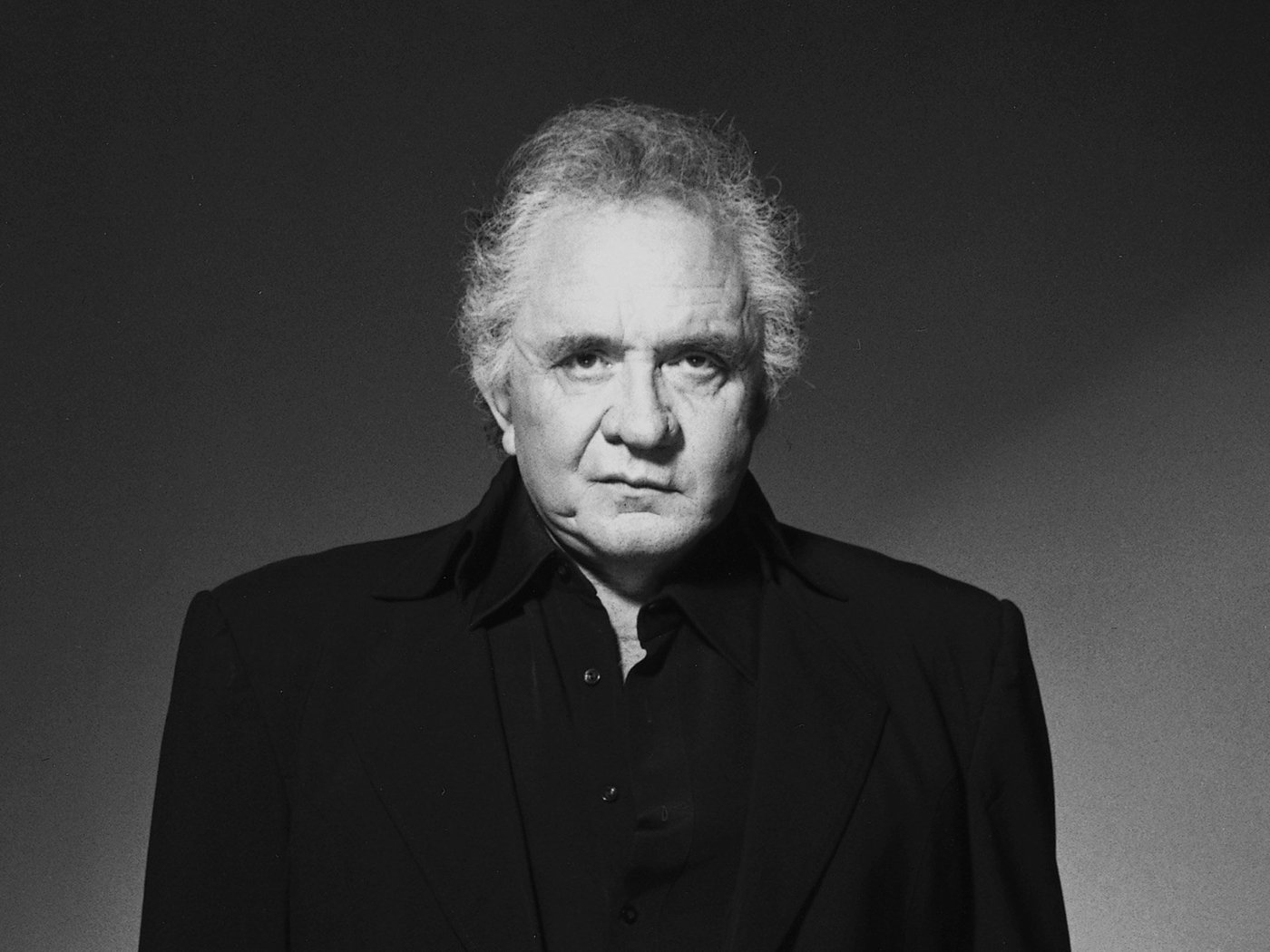
Between 1986 and ’91, the unthinkable happened to country music legend Johnny Cash, twice. The artist who did more than any other to open the genre up to a wider, more mainstream audience found himself out in the cold on two occasions, sending shock waves through the industry.
Having made his recording debut for the small but respected Memphis-based independent Sun Records in 1955, the self-styled “Man In Black” was wooed by major label Columbia. There he became a bona fide star via hit singles, a brace of groundbreaking live albums recorded in prisons and a nationally syndicated TV show.
But when new brooms swept through Columbia as the complexion and commercial priorities of country music changed in the mid-’80s, he was unceremoniously dropped, bringing to an end close to three decades of loyal service. There was outcry among his fellow musicians, with then up-and-comers Dwight Yoakam and Steve Earle, specifically, enraged by the ruthless treatment of an inspirational figure whose work had laid the foundations for their own careers and those of hundreds of others.
“They should be ashamed of themselves for letting Johnny Cash go,” Yoakam told NME. “He’d been there 30 fuckin’ years makin’ them money. He built the building, man!”
The smart money was on him being welcomed into the fold of another, less mercenary, label, and Cash duly signed to Mercury Records. But after four albums registering only modest sales, his contract was not renewed. A third opportunity to remain a relevant creative force seemed unlikely, until a saviour emerged from an equally unexpected source.
Rick Rubin had made his name as co-founder and in-house producer of the hip hop powerhouse Def Jam Recordings, guiding both Beastie Boys and Run-DMC to international stardom. After leaving Def Jam he set up American Recordings, scoring almost immediate success with fledgling rock acts The Black Crowes and The Jayhawks. But there was one already familiar artist he was keen to add to his stable.
Rubin had seen Cash perform at Bob Dylan’s 30th anniversary concert at Madison Square Garden in 1992 and felt he was still a vital artist who had been unfairly written off by the music industry.
“There was a lot of apathy, record companies didn’t want people my age,” Cash told Details magazine. “I didn’t even talk to anybody [at Mercury] for the last two years I was there, and when Rick came along I was still wary. I said, ‘What would you do if you had me?’ And he said, ‘I’d just sit you down with your guitar and a list of songs and listen to what you’ve got burning inside to sing.’”
Recordings took place either in Cash’s barn on his sprawling estate in Hendersonville, Tennessee, 20 miles from Nashville, the hub of the industry that had turned its back on him, or at Rubin’s home studio in Los Angeles. The intimacy of the settings helped create the confessional mood that became central to Rubin’s masterplan.
“Sitting and talking and playing music, that was when we got to build up a friendship,” the producer said in 2009 of the early days of the partnership. “My fondest memories are just of hanging out and hearing his stories. He didn’t speak much but, if you drew him out, he seemed to know everything. He was shy and quiet but a wise, wise man.”
Elegant in its simplicity, the plan was to rehabilitate The Man In Black by taking him back to his roots. The recordings were lean, stripped-down affairs, often comprised of just the singer’s oaky baritone and a lone acoustic guitar. Rubin was instrumental in the choice of material, a mix of traditional folk and country songs alongside modern compositions that chimed with the myth of Johnny Cash.
The first fruits of the collaboration, 1994’s American Recordings, featured songs written and previously recorded by Tom Waits, Leonard Cohen and Loudon Wainwright, their lyrics reflecting Cash’s own outlaw persona. The centrepiece was “The Beast In Me”, written specifically for Cash by his former son-in-law Nick Lowe, an atmospheric portrait of a troubled man “caged by frail and fragile bars”.
Key to the rehabilitation of a legend was how it would be presented to the world. Immediately prior to teaming up with Rubin, many of Cash’s live bookings had been at run-of-the-mill country fairs in the US or relatively anonymous holiday camps in Britain. Now it was time to place him before audiences at venues with considerably more cachet.
Part of the initial push behind the makeover involved appearances at fashionable clubs in major American cities, including a show at actor Johnny Depp’s famed Viper Room in Los Angeles. In Britain, Cash captivated a crowd of almost 100,000 at Glastonbury, his mid-afternoon Sunday slot often cited as the origin of the festival’s now traditional “legend” slot.
Speaking to NME in 2013, festival organiser Michael Eavis said: “Some of the youngsters thought I’d gone crazy, as they believed I should be booking new stuff all the time. They thought he was just a daft old country singer. But he was spellbinding, bloody brilliant.”
American Recordings was both a commercial and critical success, and four further albums cut from the same cloth followed before Cash’s death in 2003 at the age of 71. Their contents included a succession of powerful performances that effortlessly became part of the Cash canon.
Among the highlights were the death-row defiance of Nick Cave’s “The Mercy Seat”, Tom Petty’s contemplative “Southern Accents”, Neil Diamond’s loner anthem “Solitary Man” and Trent Reznor’s emotionally naked ode to self-destruction, “Hurt”.
The sheer volume of material recorded by Cash and Rubin became apparent after the singer’s death when a box set revealed more than 60 previously unheard recordings that had not made it onto the albums released during his lifetime.
Taken together, they represent one of the most remarkable late-career runs in popular music: a final act that transformed Johnny Cash from a country legend into a timeless American voice.