


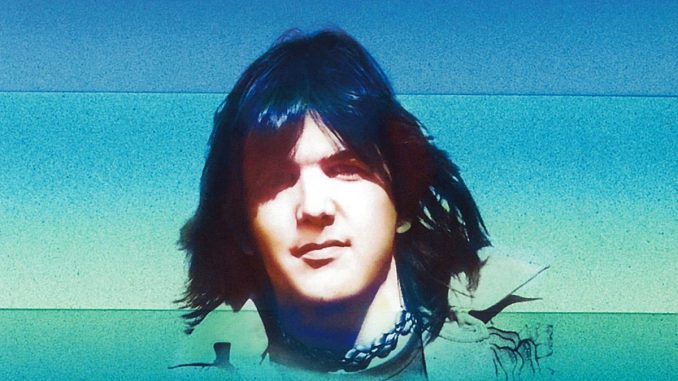
As a serious Byrds fan more or less since their inception (on my travels in Paris in the mid-60s, I met a guy who used to sit in with them at Ciro’s on Sunset Boulevard), I loved their sound (leads and harmonies), the songs (or song selection), McGuinn’s 12-string Rickenbacker, Hillman and Crosby’s harmonies and the evolution via changes in the group’s makeup to a much more country rock sound, then into pure country and what was the precursor to Americana. They had some standout songs, even some classics, but the song that stood out for me above all others was Hickory Wind, the masterpiece written by Gram Parsons and Bob Buchanan, a fellow member of the International Submarine Band.
Stories about Parsons are legendary, but they form part of a different story. Here, we are looking at the origins of Hickory Wind and its extraordinary impact on country and Americana artists ever since it was written in 1968 (though there was a young female folk singer, Sylvia Sammons, who claimed to have written it in 1963). Like so many events and myths surrounding Parsons, this was another mystery, but his story is one that sticks. It was apparently written on a train ride from Florida to LA in early 1968, and being a song with no chorus was, at the time, an unusual construct, with just three verses. It seems to reflect on a life that Parsons never lived (it was allegedly written for his grandmother). – “Istarted out younger at most everything/All the riches and pleasures, what else could life bring?” He indeed came from a wealthy family, but he seems unsatisfied with his lot: “And now when I’m lonesome / I always pretend / That I’m getting a feel / Of hickory wind”.
Then later he considers what his touring and fame may have done to his life: “It’s a hard way to find out that trouble is real / In a far away city, with a far away feel”, though the trouble is never explained.
The first recording of the song was on the Byrds’ Sweetheart of the Rodeo in 1968, with Al Perkins on steel and John Hartford on fiddle. It may well be the best version, but the song struck a chord with so many artists that you have a multitude of versions to pick from (and remastered versions of the originals). Parsons himself recorded it on Grievous Angel, on the Cash on the Barrelhead medley in 1974, with Emmylou Harris with a faux live audience. Parsons heard Harris’s high note on the song’s last line, and told her: “That note right there, it’s gonna make you famous.” He was not wrong; Byrds bandmate Chris Hillman recorded it on Morning Sky in 1982: “If Gram had never written another song, ‘Hickory Wind’ would have put him on the map“, he said. In the meantime, Emmylou Harris did a version on her 1979 album Blue Kentucky Girl.
The first person to cash in on the song was Joan Baez with her folky interpretation in 1969, but the list of artists who tried their hand is lengthy (65 at the latest count) and includes JD Crowe and New South, Richard Thompson (with Gregson and Collier), The Seldom Scene, Gillian Welch and Rachel Harrington. Molly Tuttle and her family band, The Tuttles, played the song (on YouTube below), with 15-year-old cousin AJ Lee singing lead on a quite marvellous interpretation. Then later there have been versions by Lucinda Williams, Israel Nash (on his 2026 reimagined version of Sweethearts of the Rodeo), and so on, and these are just the ‘americana’ versions. Take a listen to Son Volt’s Jay Farrar’s mournful live version.
It remains a firm favourite with artists and critics alike and often appears in polls of favourite songs. So here are some versions of an exquisite song; though as it is a song that I think would be hard to ruin, it is worth exploring many more of them.
Related