

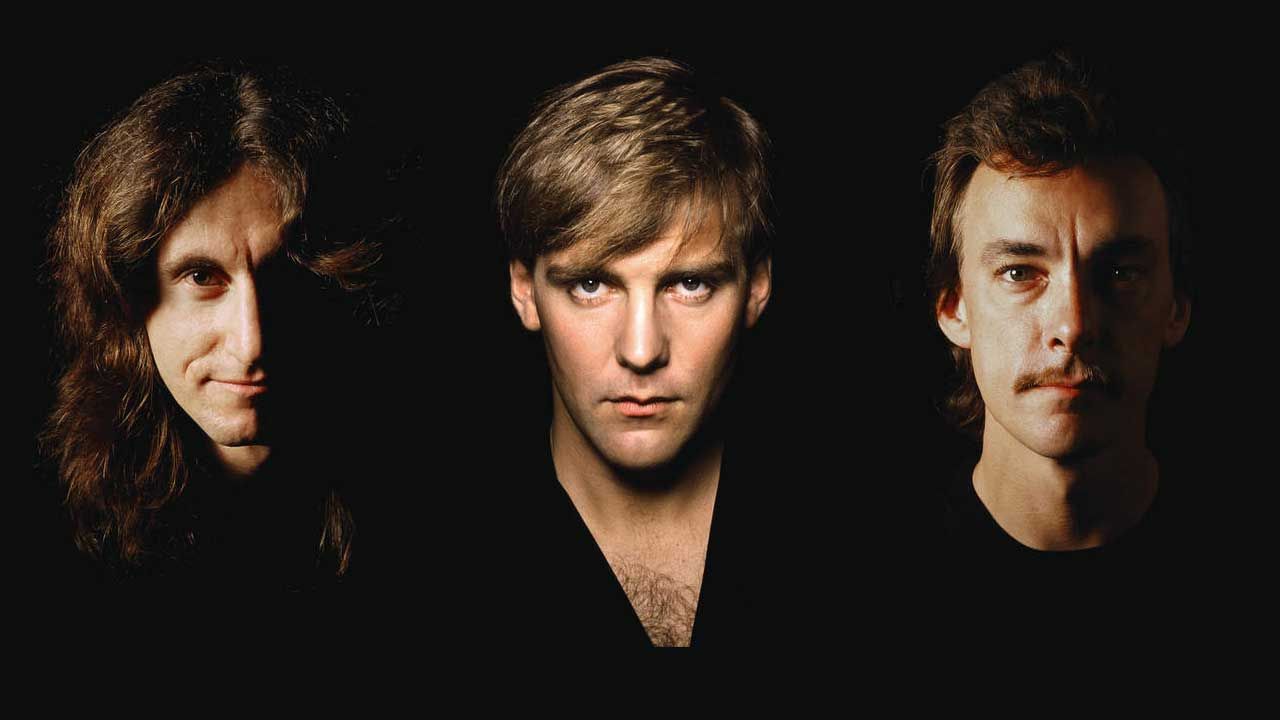
Rush were holed up in Le Studio, a residential recording facility tucked away in the mountains of Quebec, when it all got too much for guitarist Alex Lifeson. It was the summer of 1982, and the band were mixing Subdivisions, the track that would open their ninth studio album, Signals.
Change was in the air in the wider music world. The hegemony of the guitar – for so long the weapon of choice for rock bands – was under threat from the technological advances made in the realm of electronic music. Synthesisers were moving in from the sidelines to become the pre-eminent instrument of the era.
Rush themselves weren’t immune to this new trend – certainly not singer/ bassist Geddy Lee, a self-professed “synth geek” who had been incorporating synthesisers into the band’s music since 1977’s A Farewell To Kings. But for Alex Lifeson, Subdivisions marked the point where the balance between guitars and synths tipped in the wrong direction.
Latest Videos From Louder
“I was sitting there thinking: ‘I can’t hear guitar,’” says Lifeson, recalling the mixing process. “I’m a very easy-going guy, but I thought: ‘This is not right.’ So I pushed that fader up. I do remember Terry [Brown, producer] turning to me and smiling, and reaching over and pulling it back down. I could barely hear my guitar on that mix, and that just screams ‘wrong’ to me.”
By Rush’s normally equable standards, this kind of passive-aggressive tussle was a blow-out of the highest magnitude. But Subdivisions certainly did feel like a departure. As the compact, synth-heavy opening track on Signals, it ushered in a new era for these former progressive rock heavyweights, one that would bring them more in line with contemporary bands such as The Police or Ultravox than with their 70s prog peers.
The signs had been there on Rush’s previous album, 1981’s Moving Pictures, which expertly blended Lifeson’s guitar with Lee’s increasingly prominent keyboards. The two musicians had the wind in their sails from the success of that record when they began writing songs for the follow-up between legs of the Moving Pictures tour.
“Sound-check was the best opportunity for us to throw some ideas around,” says Lifeson. “We would play a couple of songs in full, but we would also do a little bit of writing. I’m sure there are ancient cassettes somewhere with snippets of ideas that ended up on all our records.”
Subdivisions emerged from the trio’s jam sessions, driven by Lee’s throbbing synth pulse. The band reconvened with Terry Brown in Le Studio in late 1981 to work on the live album Exit… Stage Left, and it was there that Peart began working the song’s lyrics, which revolved around suburban alienation and the nature of being an outsider – a subject that was close to home for three men who had grown up in the suburbs of Toronto. ‘In the high school halls, in the shopping malls, conform or be cast out,’ ran Peart’s lyrics, his critique of the push for uniformity amplified
“[It was] an exploration of the background from which all of us (and probably most of our audience) had sprung,” the drummer later wrote in his diary. “One afternoon as I was idly polishing my car, Alex and Ged returned from working at the little studio, set up a portable cassette player right there in the driveway, and played me the musical ideas they had come up with for it.”
Subdivisions would be given an early airing on the final leg of the Moving Pictures tour in the UK and America in late 1981. Bootleg recordings show that it was pretty much fully formed even then, albeit with Lifeson’s guitar much more prominent than it is on the finished studio recording. Rush returned to Le Studio in the early summer of 1981 to work on Signals. It was there that a shift in the track’s sound occurred, with Lee’s synths pushed to the forefront at the expense of Lifeson’s guitar
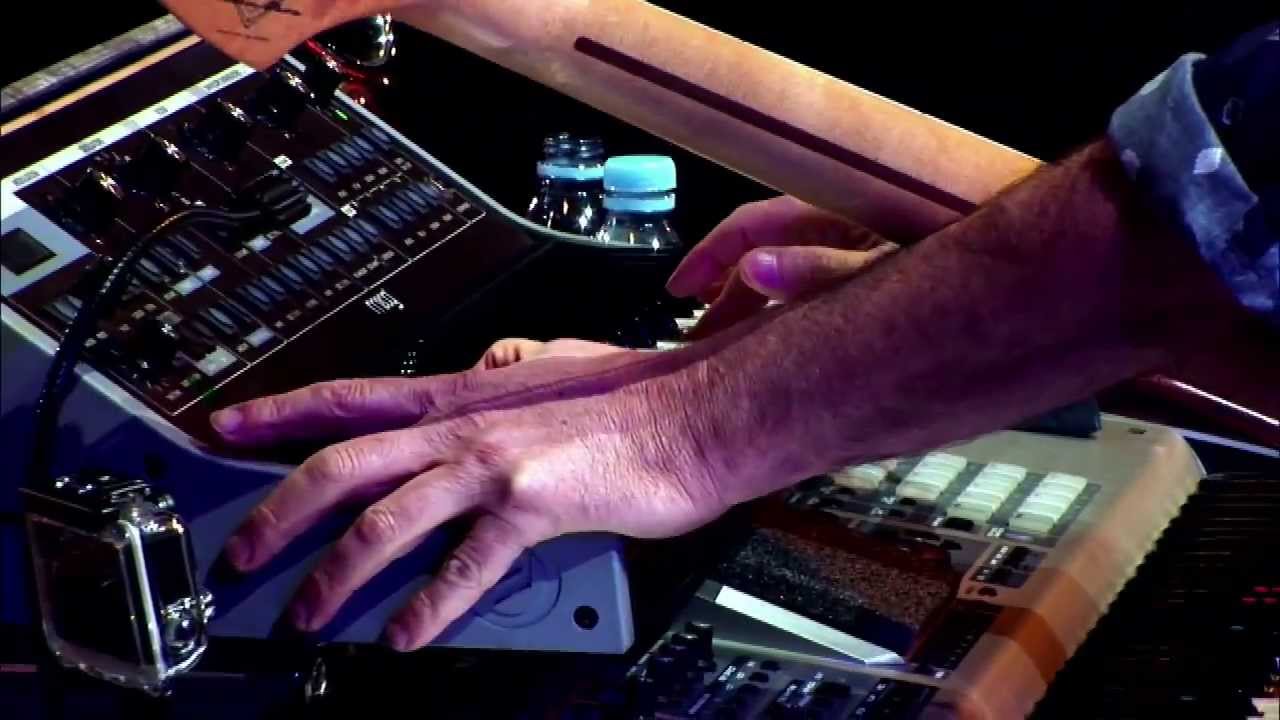
“Ged’s obsession with synthesisers had a lot to do with this change in direction, plus the desire to go with a stripped down guitar component,” Terry Brown says now. “The band were also listening to The Police and Ultravox, to name just two of their influences at the time.”
Lifeson’s annoyance over the vanishing levels of guitar on Subdivisions subsided, although it never completely dissipated. “It’s a strong song, it’s just the mix that I didn’t like,” he says. “I guess I just fought for my guitar rights for years after that.”
Despite his reservations, Subdivisions was released in October 1982 as the second single from Signals. It was accompanied by a striking video shot in and around the suburbs of Toronto that captured the dislocation and ennui of suburban teenage life (the kid who appears in the video was first-time actor Dave Glover, a student at L’Amoreaux Collegiate Institute, which was used as a location in the video).
“The video was really memorable,” says Lifeson. “And Neil’s lyrics really struck a chord with people, especially people who grew up in the suburbs like we did.”
But Subdivisions and Signals marked a shift in Rush’s career – and not necessarily a good one, in the eyes of their fans. Their subsequent 80s albums followed the same, keyboards-forward path, although they hit a more even balance between guitars and synths. Still, Signals remains the most divisive album in Rush’s back catalogue, even if attitudes towards it have mellowed in the years since it was released. But ultimately, both the record and Subdivisions itself embody progressive rock’s boundary-pushing spirit just as much as earlier Rush albums 2112 or Moving Pictures had.
“I guess you could stay where you are and do the same thing over and over and over again, but that’s not the kind of band we are,” says Lifeson. “Progress is important to us. We always need to go somewhere else. We always wanted to evolve.”