

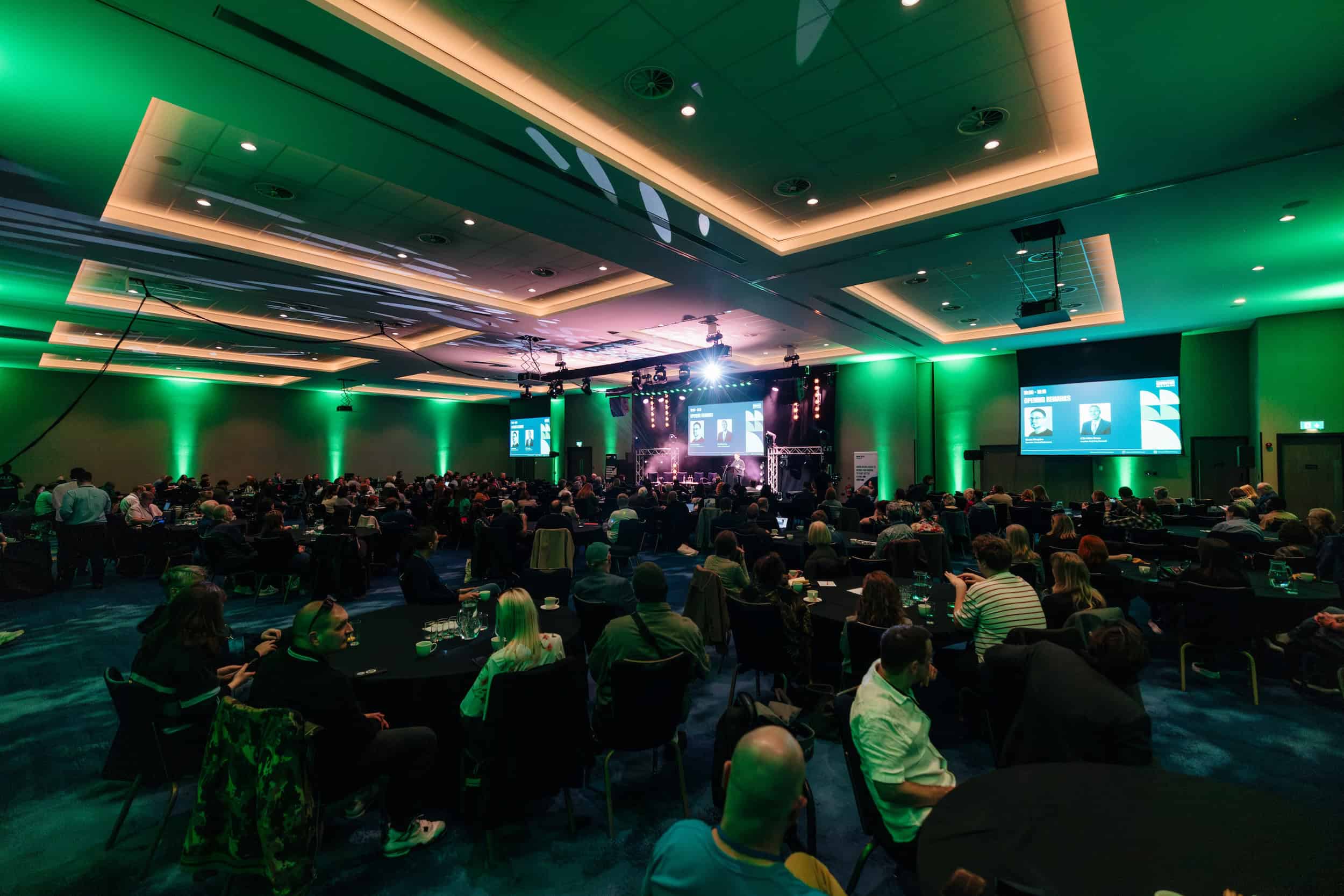
When Sound Diplomacy announced that its flagshipMusic Cities Conventionwas coming to Hull, more than a few eyebrows were raised. In the hierarchy of “obvious” global music destinations, Hull isn’t typically uttered in the same breath as London, Manchester, Liverpool or Barcelona. To some, it’s still a “hidden gem” at best, a punchline at worst.
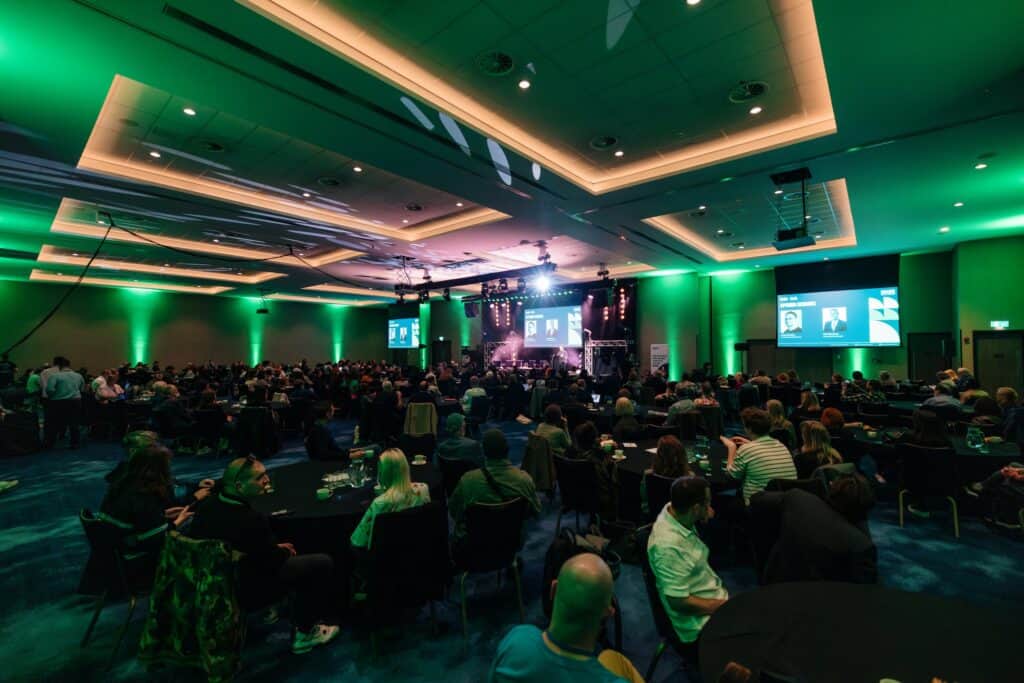
The Music Cities Convention in Hull, organised by Sound Diplomacy
Yet for Azucena Micó, Chief Strategy Officer at Sound Diplomacy, Hull didn’t just host a conference, it quietly made the case for why cities like it are the future of music-led urban development.
“I’m from Barcelona,” she says, “so I don’t have the bias that some people in the UK might have. We got a lot of, ‘Why Hull?’ And my answer was always, ‘Why not?’”
What unfolded over those days in East Yorkshire was more than a well-run industry gathering. It was a live demonstration of how a city that many still underestimate can reshape how it’s seen, by policymakers, by international visitors, and crucially, by its own people.
Why Hull? The Strategy Behind the Selection
For years, cities have bid to host Sound Diplomacy’s conventions – this isn’t a random dart thrown at a map. Hull’s pitch, backed by the council and rooted in a long-term cultural vision, stood out from the start. Initially, even Sound Diplomacy’s UK-based team weren’t entirely convinced. “The initial thought was like, maybe it’s not the right place,” Azucena recalls. “Maybe it doesn’t have all the culture, or it doesn’t have…” She trails off, then laughs. “We know about the heritage. But then when we started actually talking to them and understanding where they were at, what they had done…” – the picture changed quickly.
Hull’s tenure asUK City of Culture in 2017clearly left more than just a logo and a few banners. The city now has a seriousinvestment pool for the artscompared to many other regions, and itscultural and heritage strategydoesn’t just namecheck music – it weaves it deeply into the wider policy framework, tying it to sustainable development and the city’s long-term priorities.
“They have a cultural and heritage strategy that includes music very thoroughly and also includes sustainable development,” Azucena explains. “When we read it, I really thought that it was very good.”
What really impressed the team was how culture wasn’t treated as a side project or a vanity stunt. “The overall cultural strategy is very embedded with the priorities and the strategy of the city,” she says. “That was also quite interesting for us to learn.”
Then came the data. Sound Diplomacy dug into Hull’screative economyand the economic impact of its cultural drive and were surprised by the scale of it for a city of Hull’s size. “We didn’t realise that the creative economy was actually big enough for the city that it was,” she admits.
At the same time, Hull was starting to appear in lifestyle rankings, even being picked up as one of those “cool places to move to” in the UK. “I think it was National Geographic that listed it as one of the places to live,” she says. “So in the end, it had all the ingredients that we look for in a city, for us to engage with them.”
Normally, Sound Diplomacy will work with a city on a full-blown music or cultural strategy. In Hull’s case, they felt that groundwork had already been laid. “A strategy didn’t make sense because they had one,” Azucena says. “So a convention felt like a very good option.”
This wasn’t just about parachuting into a “cool” city for a few days. It was about backing a place that understands howculture, policy and community can move in step, and giving that work an international stage.
Breakouts, Policy, and Real Connection
Hull didn’t just shape where the convention landed,it helped shape what the conventionis. Sound Diplomacy used this edition as a test bed to evolve the format itself.
“We changed some things as well from previous conferences,” Azucena explains. “Things that we had received feedback on, that we had been wanting to change for a while. Hull had a lot of the conditions that we needed to make that change.”
The most visible shift was in the structure: more breakout sessions, more room for actual conversation, less of the traditional “sage on the stage” dynamic. “We wanted places where everyone could express themselves more than just having someone on stage and the rest listening,” she says, “but having those spaces that were a bit smaller and where everyone could say their thing if they wanted or not, and activate more networking opportunities.”
Those rooms became fertile ground for unexpected connections. In big plenaries, titles can blur into background noise. In a smaller space, someone raising their hand and saying, “I am the night mayor of Philadelphia,” suddenly becomes a catalyst. “You think, okay, I need to go talk to him,” Azucena laughs. “I know who he is now. I wouldn’t have known otherwise.”
They also built in a policy-focused first day: an invite-only gathering for UK music cities and local stakeholders. It wasn’t just about showing off Hull to a room of outsiders; it was about listening to the people who are already there doing the work. “That first day was more of a UK policy-specific discussion with locals,” she says. “With the people that are actually living and breathing what’s going on and how policies are designed and implemented in the UK, and what the needs and challenges are. That was also, I think, very good for us to learn.”
For Sound Diplomacy, these conventions are never just industry mixers. They’re research environments – live laboratories that feed directly into the strategies they build for cities across the globe. “One of the reasons why we do this is to learn,” Azucena says. “We learn a lot as a company for our strategies from these conferences. Many of the outcomes of the recommendations that we propose come from things that we have learned in our own conferences.”
Or, as she puts it with a smile: “We are a conference about what we are interested in – which happens to be interesting to other people, which is always nice, I guess.”
Did It Work?
It’s one thing for organisers and locals to walk away saying, “That felt good.” It’s another to back that feeling up with evidence. Sound Diplomacy, being obsessed with data, have the stats to prove that Hull didn’t just feel successful – it was.
“We will release the report very soon,” she says, before reading out some of the early figures. “Seventy-six percent attended from out of town. Eighty-two percent – the perception of Hull changed positively. Sixty-one percent made connections with Hull organisations or professionals to follow up with. Eighty-five percent anticipate new projects or new conversations or new things coming out of the event.”
In the moment, I tell her, “That’s really amazing,” and it is – especially that last number. “That 85 percent was very surprising as well, for us,” she admits. “In a good way.”
For a city that still battles old stereotypes and even a bit of internal cynicism, those numbers matter. They showperception shifting in real time: people who may previously have dismissed Hull as grey, peripheral, or hard to reach now leaving with a sense that it’s vibrant, connected, and full of possibility.
That shift wasn’t just external. Throughout our chat, we talk about how events like this can refract a city back at itself. Long-time residents and local creatives start seeing their own streets and venues differently once they watch international delegates get excited about them.
“Events like this can really help change the perception of Hull, even for people within Hull as well,” I say to her during the interview, and she nods to that dual impact. “I think it also helped the city, to be honest,” she says. “I think it brought a lot of eyes to Hull.”
Those eyes matter because they don’t just look once and move on. Sixty-one percent of attendees made connections with Hull organisations or professionals to follow up with. Eighty-five percent anticipate new projects, conversations or collaborations. That’s the long tail: tours, exchanges, policy experiments, new partnerships for festivals, labels, venues and educators in the city. The full impact will play out over months and years, not just in the glow of a single weekend.
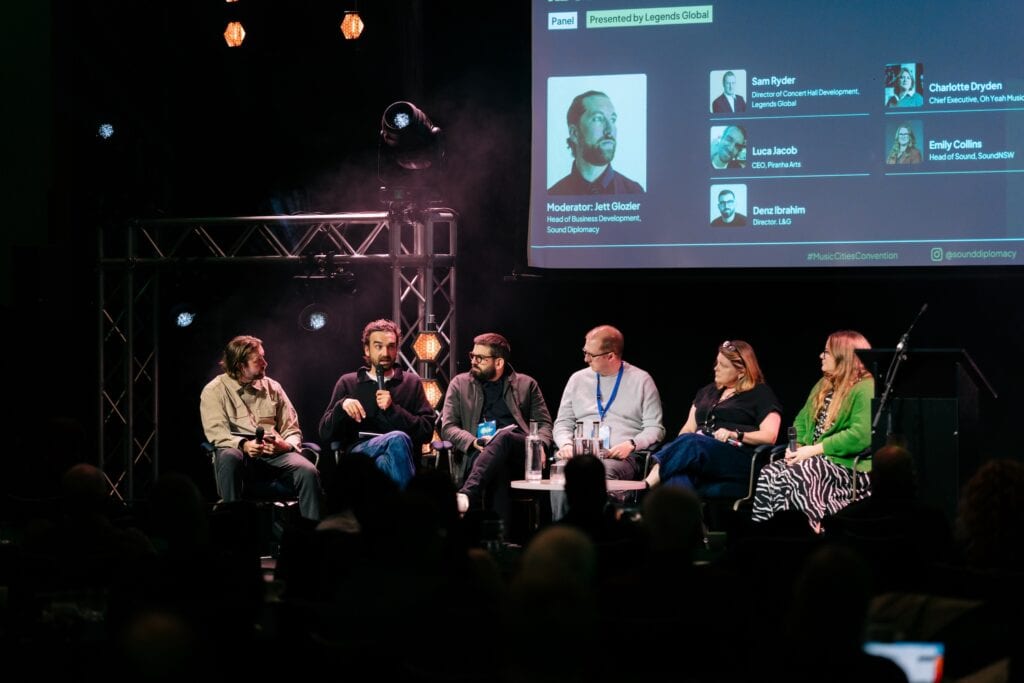
Panel ‘Measuring Impact: Big, Small – Everything Is About Community’ at the Music Cities Convention in Hull
Heritage, Venues, and Heart
When Azucena talks about Hull, it’s not in generic PR soundbites. Her enthusiasm is rooted in specific experiences and small, human moments that you only get by actually walking the streets and cramming into its venues.
Her biggest highlight? No surprise to anyone who knows the city’s grassroots scene:The Adelphi Club.
“The Adelphi Club was probably my biggest highlight,” she smiles. “We also got a very full tour around and we got to go backstage into the green rooms, and that was a personal highlight, to be honest. That feeling of, ‘Wow, I’m here where all these bands have played. This is this tiny place where all these bands have played.’”
Outside of the conference itself, she lights up talking about Hull of a Night, the multi-venue programme that stitched together the city’s live music infrastructure into one sprawling, immersive evening. “I enjoyed all the gigs, to be honest,” she says. “I think outside from the conference itself, what I liked the most was Hull of a Night.”
From my side, it was “great to see all the venues come together,” a night where the city’s ecosystem – promoters, artists, bar staff, techs, venue managers, punters – was visible and alive. For Azucena, it was proof of what Hull can do when everything’s pulling in the same direction.
“It showed us the amazing music activity that can happen in the city,” she says. “Some of the professionals that came from the city or the region were doing amazing things, and the heritage – we were so impressed by the heritage of it as well.”
The awards atHull Minsterleft a very different but equally powerful impression. “The Minster is amazing,” she says simply. “It’s an amazing building.” The sight of a global music policy conference celebrating its own community in a centuries-old place of worship is the kind of visual that stays with people.
But beyond the big rooms and big moments, what really captured her was thecharacter of smaller cities like Hull– and the people who keep their cultural life beating against the odds.
“I think that there is this, with the smaller cities, there is this proximity to culture,” she reflects. “Even if you are a tourist, you feel like you are in a more… I don’t want to say intimate, that’s not necessarily the word, but you are closer to the things that are happening.”
She doesn’t sugarcoat the challenges. “It’s probably harder to run a venue in Hull than it is to run it in London,” she says. “It is probably harder to draw people to Hull than it is to draw people to London or to Barcelona, and this makes the venue operators and the cultural managers in general in these cities take a lot of care and really, really want to do it.”
She’s careful not to throw shade at bigger cities. “I don’t want to say venue operators in London don’t care – that is totally not what I mean to say,” she adds. Instead, she’s pointing to the extra weight that smaller-city operators carry. “Handling the situation of managing a venue in a city that is not a central city requires big will and a lot of care,” she says. “And I think you can feel this care. You can feel this desire to keep going forward, to keep pushing, to have a city, to live in a city where things happen – and they understand that they are the ones that need to make these things happen.”
That’s where the impact on Hull goes beyond numbers. When people like Azucena go home and tell that story – that Hull isn’t just surviving, it’schoosingto build something special – it feeds back into how artists and promoters here feel about what they’re doing. It validates the grind. It says: this matters.
Why Music Matters
Hull might have been the latest stop, but it’s part of a much bigger journey for Sound Diplomacy. FromHuntsville, Alabama– once mainly known for NASA, now a flagship case study in how music strategy can reshape a city – to urban centres across Europe and North America, the company’s mission is consistent: help cities grow through music and culture.
“We’ve been rethinking what we do and how we do it and why we do it a lot recently,” Azucena explains. “At the end, we want to keep helping cities. I think that is what drives most of the team – or not most of the team, I would say all of the team – and we want to do it through music and culture.”
The future, she says, is increasingly aboutimpact analysis– proving with hard data what many of us feel instinctively when we walk into a great gig or see a festival transform a neighbourhood for a weekend.
“We believe that one of the things that at Sound Diplomacy for us is super important is data, to make smart and focused decisions based on evidence,” she says. “We want to make sure that it’s rigorous. It’s super important to understand what’s the actual impact that music, or an event, or a festival, or a venue is having in the city.”
That means digging into both economic and social impact: jobs created, local spending, community cohesion, diversity, wellbeing, and how all of that lines up with public policy. “For a long time it’s been, ‘Yeah, music is great, it has a lot of cognitive benefits, it supports jobs,’” she says. “But now we can say other things. We can say that it’s supporting diverse communities across cities because we have data that shows that. Or we can say that it is, in a way, co-creating public policy together with cities because we’ve seen that done with festivals.”
Ultimately, Sound Diplomacy wants every city manager in the world to understand that music isn’t a garnish – it’s infrastructure. “We want every city manager in the world to understand that,” she says, “and to feel that they can come to us or to any such consultancy,” she laughs, “but I don’t care if it’s someone else, as long as music is understood as a very necessary sector for cities to grow, to improve, to make their people feel happier, to want to continue living where they are living.”
Sound Diplomacy will soon be announcing its next Music Cities Convention inCalgary, alongside other major events like theMusic Tourism ConventionandSound Development, the latter focused on creative infrastructure and set forLos Angeles. Behind the scenes, there’s even talk of one day anchoring the convention in a single, recurring host city to ease the heavy logistical lift of starting from scratch each time.
But whether they keep moving or eventually settle, the Hull experience will remain a landmark chapter, as proof that a so-called “under-the-radar” city can not only keep pace with global players, but set the tone for the conversation.
For Azucena, that’s what keeps her hooked after more than a decade with Sound Diplomacy. “I’ve been with Sound Diplomacy since we started,” she says. “It’s my 14th year, I think, or 13th, I don’t even know. And I always say that it’s never been the same job two years in a row.”
What’s been constant is that sense of purpose. “What’s been a constant is this feeling that what we do matters,” she says. “When we speak to people and people are like, ‘Wow, this is amazing, I had never thought of music from this perspective,’ or, ‘Wow, I didn’t realise that I could do so much for my city through my festival or my venue’… to me, it means the world.”
In Hull, she saw that possibility up close – in venues like the Adelphi, in policymakers willing to listen, in international visitors going home with changed minds, and in a local scene that, for a few days, got to see itself reflected back on a global stage.
Images: Tom Arran
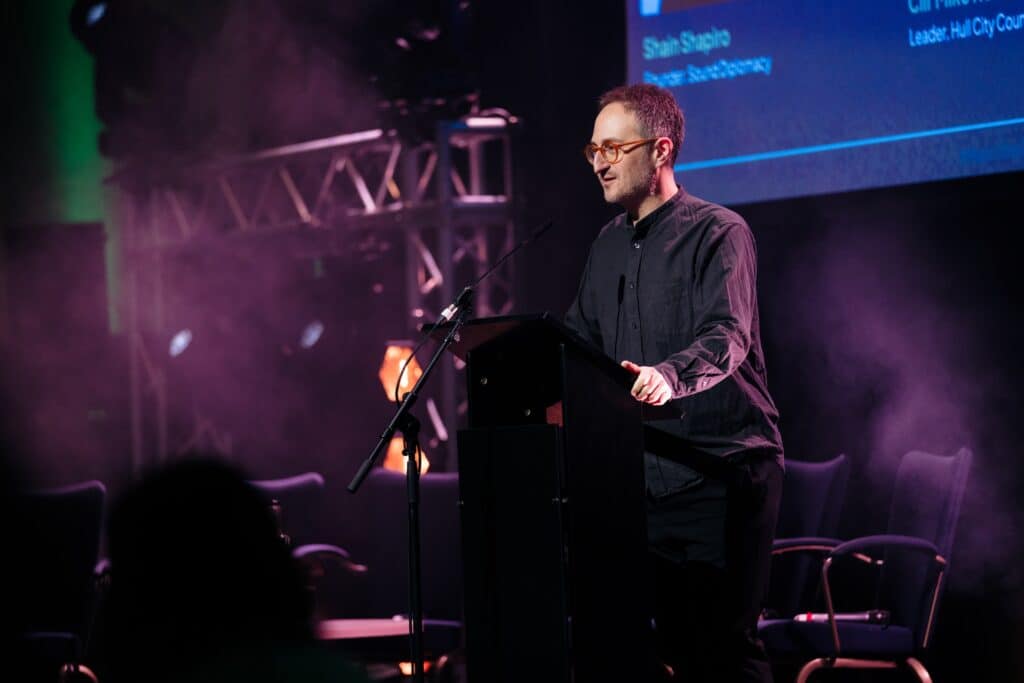
Shain Shapiro, Founder & Executive Chairman of Sound Diplomacy, at the Music Cities Convention in Hull