

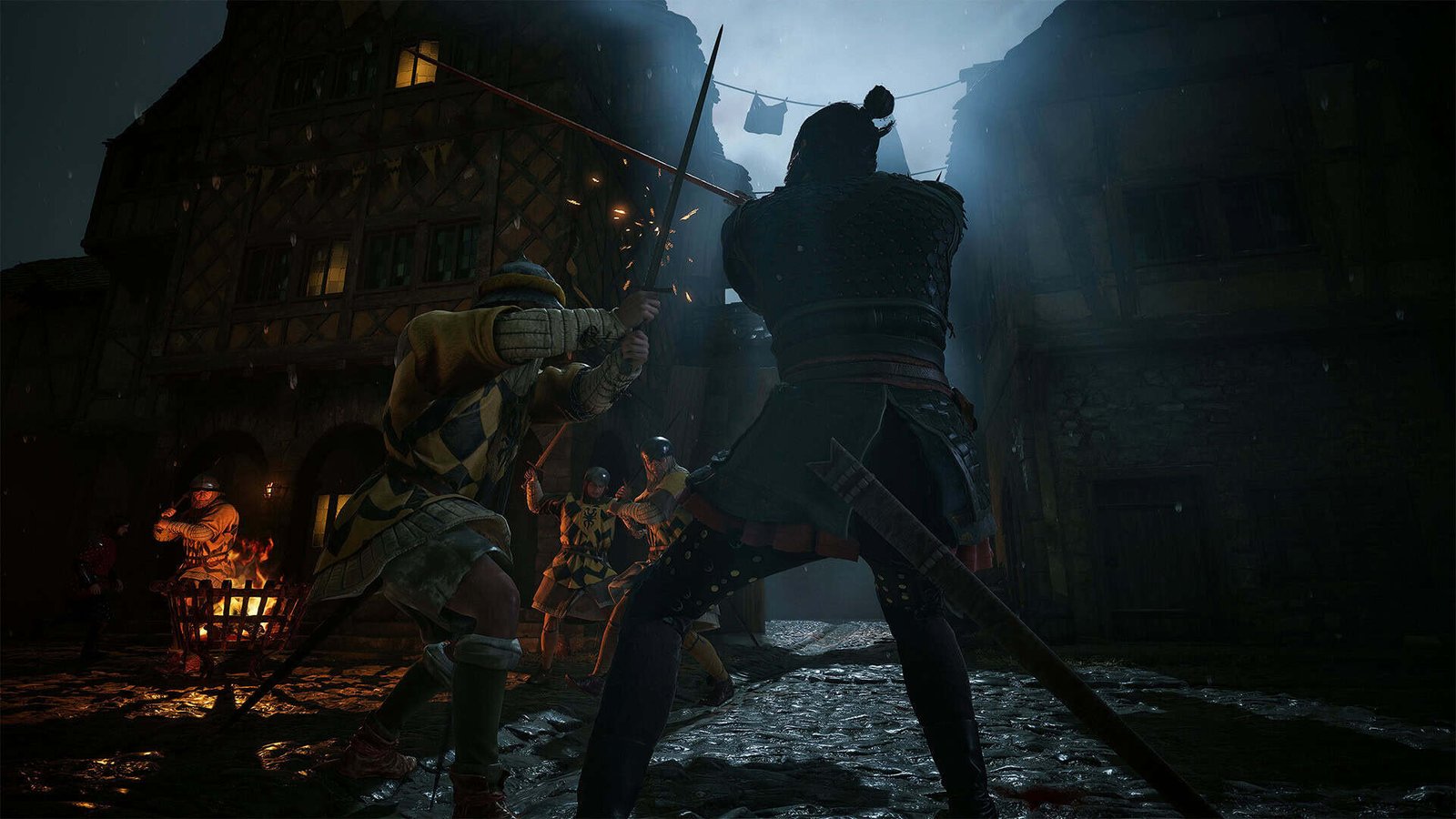
The Blood of Dawnwalker is a new supernatural open-world RPG that lets players control a vampire by night and a sword-wielding hero by day, but is it worth 30 days and 30 nights of your time?
Picture this: you’re out for coffee or dinner with a friend, and they ask you to sum up Rebel Wolve’s new RPG, Blood of Dawn Walker. You tell them to imagine a game that feels a lot like The Witcher 3: Wild Hunt, where you’re a noble hero on a quest to right the injustices of the world – but at night you trade your swordsmanship for supernatural powers and stalk your victims as a vampire.
Now, roleplaying a vampire isn’t new to RPGs; games like Oblivion and Skyrim let you play as a creature of the night if you wanted to, and sure, it added gameplay quirks like new vampiric skills and strength. But it also limited you to avoiding sunlight and meant you needed to suck the blood of Tamriel’s denizens, and all this could often be a hassle.
While there have been other vampire RPGs in recent years, none have quite offered players the have-your-cake-and-eat-it power fantasy that Blood of Dawn Walker does, which is why the “it’s the Witcher 3, but you’re also a vampire” promise is so enticing. However, it’s also rather reductive.
There’s so much more to Blood of Dawn Walker than just being the Witcher 3 with vampire powers.
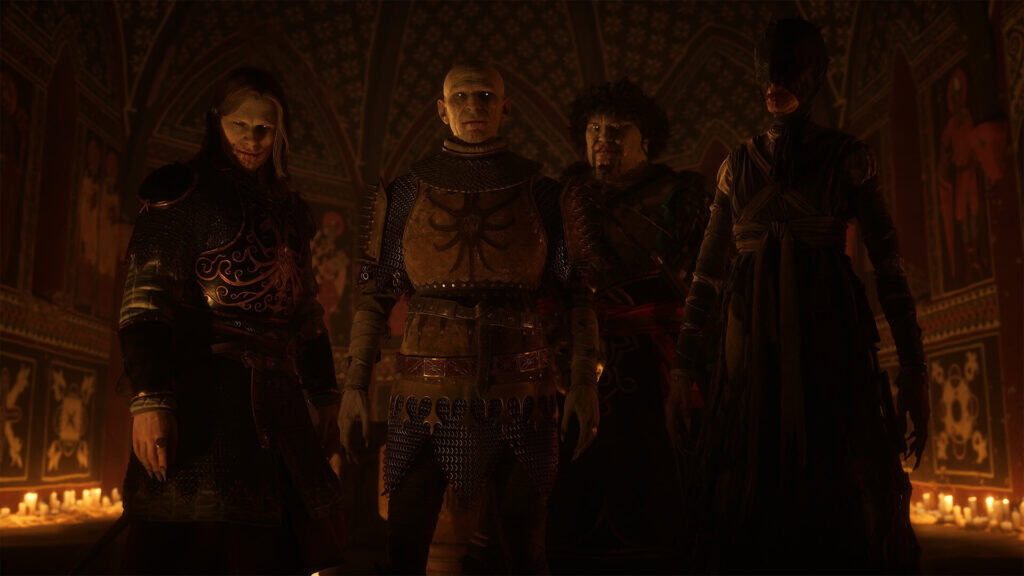
Image credit: Rebel Wolves
The story starts as pretty basic, but we were pleasantly surprised by its twists and turns as the adventure got going. Players control Coen a man who, while trying to save a family member from the last brutal regime that ruled his homeland, witnesses a bloody coup where these villains are slaughtered and replaced by a group of ancient vampires who naturally end up being even more ruthless.
While Coen is initially saved by the vampires and turned into one of them, something goes awry with his transformation and he becomes a Dawnwalker. And if you’re asking, “Is that like being a Daywalker from Blade, all of their powers with none of their weaknesses?” then yes, it’s exactly like that, and just as it is in Blade, it’s badass.
It means that by day, Coen needs to try and live his normal human life while working to overthrow the oppressive undead regime that now occupies his lands, but by night, he owns the darkness and fully embraces his new vampiric powers. From a gameplay point of view, this often offers two main ways to complete objectives; Coen can approach quests from a human perspective, or he can wait until nightfall and let the blood flow.
Players can also decide if they want to walk a dark path as Coen, giving in to the beast within, or if they try to retain their humanity and use his powers only when he needs to become a dark avenger. This system works remarkably well and feels similar to The Witcher 3’s sometimes agonizing morality system. Remember the quest with the witches and the kids? Yeah.
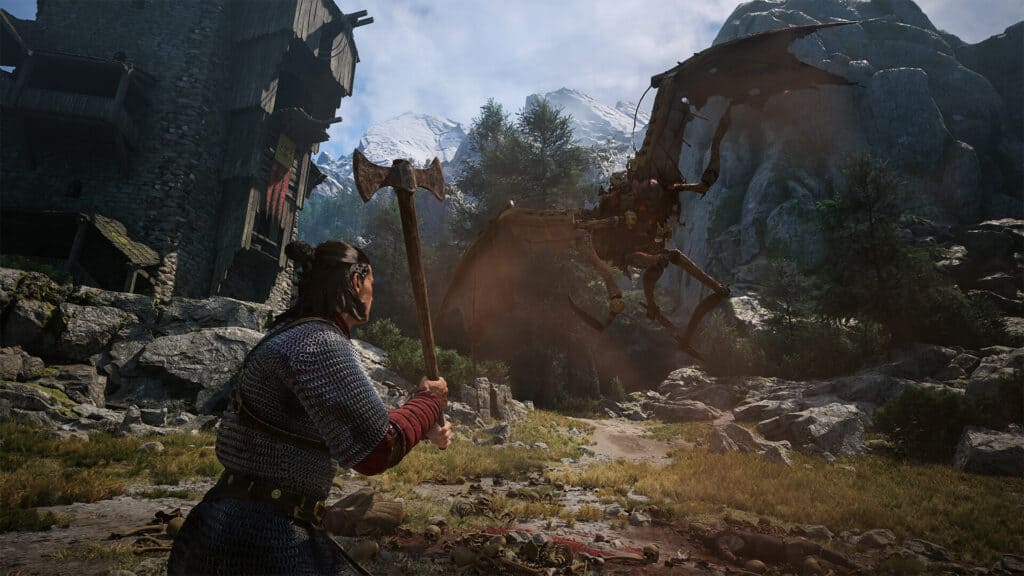
Image credit: Rebel Wolves
It also makes the game highly replayable, and we’re already interested to see what would have happened if we had embraced our dark side and slaughtered a group of characters that really had it coming, rather than resolving things diplomatically when the sun was shining. Similarly, there were times when we chose to tackle some objectives as a vampire, when more peaceful and less direct solutions were available.
However, most of your choices, and the day/night cycle the game employs, are subject to a ticking clock that only lasts 30 days and 30 in-game nights until you’re forced into the endgame. So the choices you make during these finite day and night segments matter and not only impact the world, characters, and ending, but Coen himself.
Like Coen’s vampirism, we found this to be both a blessing and a curse. The time limit raises the stakes (this is the only vampire pun we’re making) and means you only get one shot at certain events, while needing to prioritise what you do and for whom, increasing the replayability even more. But for those who like to take their time in an RPG, see and do everything without the pressure of a time limit, this mechanic can be frustrating.
Let’s not forget, Blood of Dawnwalker isn’t some ten-hour narrative adventure you can replay multiple times in a week. It’s a 40+ hour RPG and a real time sink, so while players will be motivated to replay it and do things differently, doing so is quite the commitment in a year when so many other exciting games are on the horizon.
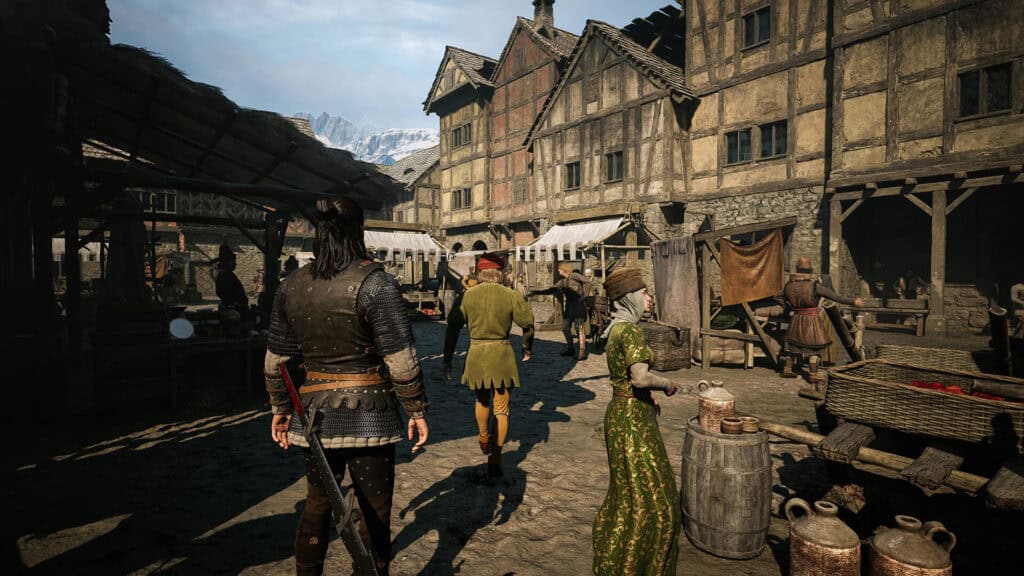
Image credit: Rebel Wolves
Finally, we need to talk about the game’s combat, where, if we’re being honest, playing as a vampire was always more appealing to us, regardless of the impact it had on the world. When playing as standard human Coen, the game employs a complicated and intricate sword-fighting system with parries and carefully placed strikes that match the direction your opponent is attacking from.
For those who really take the time to get to grips with it, it’s rewarding and deep, not unlike For Honor and Kingdom Come: Deliverance’s combat. But for those who prefer a more hack-and-slash approach, it’s far easier to just handle things as a vampire. The game provides two different combat styles and essentially asks players to choose between being a disciplined swordsman or a superpowered undead Blade figure. So it feels like the swordplay is fighting a losing battle here.
Ultimately though, Blood of Dawnwalker is still a triumph, and perhaps its choice and consequence system, matched with its two distinct playstyles, will be enough to tempt players to play through its lengthy campaign more than once. We know that we’re certainly going to.