


Walking to the Tube station to get to the multimedia screening of Digger, dated two days till October rolls in, yet the temperature matched that of a spring/summer’s day, I couldn’t help but mentally ask the endless sea of people who immersed themselves in AI from 2022 to this year: was it really worth it? Was generating countless images of celebrities doing bizarre things or going to random places far associated with them really worth wasting all the water and hazarding unthinkable amounts of electricity, worth the scorching heat when we should be wrapped up in the refreshing cold?
Not even mentioning the doomed fate it will bring to our doorsteps
Sitting for Digger, which I went into mostly blind, then came to round these harrowing thoughts off quite nicely for the day. This is Mexican filmmaker Alejandro G. Iñárritu‘s eighth feature following 2022’s Bardo, which charted an existential crisis. A Satirical black comedy narrating another major cause of the climate issues previously addressed, Digger stars renowned sci-fi action star Tom Cruise in the titular role of Digger Rockwell, characterised as the most powerful man in the world thanks to his status as a wealthy business magnate in the oil industry, such as a rig in Greenland, alongside Riz Ahmed, John Goodman, Sandra Hüller, Michael Stuhlbarg, and Jesse Plemons.
In a deeply ambitious script co-written by the director and Sabina Berman, Alexander Dinelaris Jr., and Nicolás Giacobone, the film depicts Digger’s major shortcomings in refusing to take appropriate, drastic measures to resolve an issue at his Greenland rig, combining with his ruthless drilling to cause an ice floe to make its way toward a destructive collision with several European countries, offering major carnage and environmental damage with it.
Leading off this logline and without giving too much away, Iñárritu’s latest film reads as a hybrid between Kubrick’s Dr Strangelove and Buñuel’s The Discreet Charm of the Bourgeoisie, to name a few.
Digger may not have arrived in cinemas in the socially reflective time it assumed and with the landing it was expecting for itself, and it is now resonating among critics and audiences as a deeply divisive work, with its visuals and performances clashing with the plot’s progression and its thematic expression.

Tom Cruise is oil tycoon Digger Rockwell
To get to the first point, Digger is a film which, visually and technically speaking, oozes with rhythm, whether it be the camera making the most of all onscreen, the score aligning with emotion or action, the speech accelerating in tension or the performances expanding to occupy the entire screen.
Cruise completely sells it as the delusional and avaricious tycoon, spouting out a performance that you may initially want to argue is a grossly exaggerated lampoon, and it probably was supposed to be, but when you look to the undignified absurdity moulded as contemporary Western politics in major global locations, you’d find Cruise’s work rather docks as a restrained meiosis. Other cast members are successful in mirroring or counteracting Digger Rockwell’s brutish ignorance, with the former being handled by Goodman in a stellar performance as the blindly led President of the United States and the latter secured by the underrated Ahmed as a frustrated, environmentally aware scientist who resonates as an underpaid teacher forced to handle a class of immature students who were poorly raised.
However, a talented yet underused Hüller is randomly tossed in (after a fairly great, humorous character introduction) as Digger’s half-sister, so he has someone on his side to argue with to make the system a little more murky, yet so much more could have been done here.
Combined with some images of angry protests and meetings where figures prioritise profit over saving people, all corners needed by the narrative seem to be covered.
Additionally, no one can deny that the combined efforts of cinematographer Emmanuel Lubezki, production designers Dennis Gassner and Richard Johnson, and set designer Anna Pinnock make Digger one of the year’s most fulfilling visual treats. Its settings are bordering on delicious in how extravagant and refined everything looks, with both camera framing and camera movement squeezing every detail to the maximum for our eyes to feast on. There is the drawback of a muted composition of colour, though, with colourist team Peter Doyle, Brian Woos, Élodie Ichter, Luis Reggiardo and Alan Louis Gordan omitting bold and thunderous colours, and we are instead left to grab at what is left of these tones as they flicker along the screen as phantoms.
Dialogue is also a component demanding the most attention here. In some sequences, it’s a tennis match between the figures demanding the screen’s space, some advocating for environmental and humanitarian justice while others, like Digger, campaign mercilessly for profit and a cover-up via booming voices, jeers and curses. Other times, it’s a carousel of dark humour with intent to spotlight outrageous ignorance and bigotry exemplified by the politically corrupt figures, snatching the power of mockery away from them as they’ve abused it and instead handing it over to the audiences as a vessel for their anger towards real-life political tyrants destroying our planet.
Coming towards Digger’s messaging around capitalist exploitation and environmental justice, as conveyed through many a grand speech, the dialogue is placed under pressure to not only get the right information but also the correct tone that will land well and for the most part, Digger’s writing doesn’t speak down to the film’s audience. There’s an insightful, recognised verbal motif about “controlling the narrative”, which many audience members will find suitable for the character’s flawed and limited mindset, as representative of political and media-based propaganda to omit climate issues and gaslight public opinion to paint green activists as delusional. (Think right-wing news outlets scornfully labelling Just Stop Oil as privileged wokies, a sentiment not heard much anymore now that it is still 25 degrees in mid-September.)
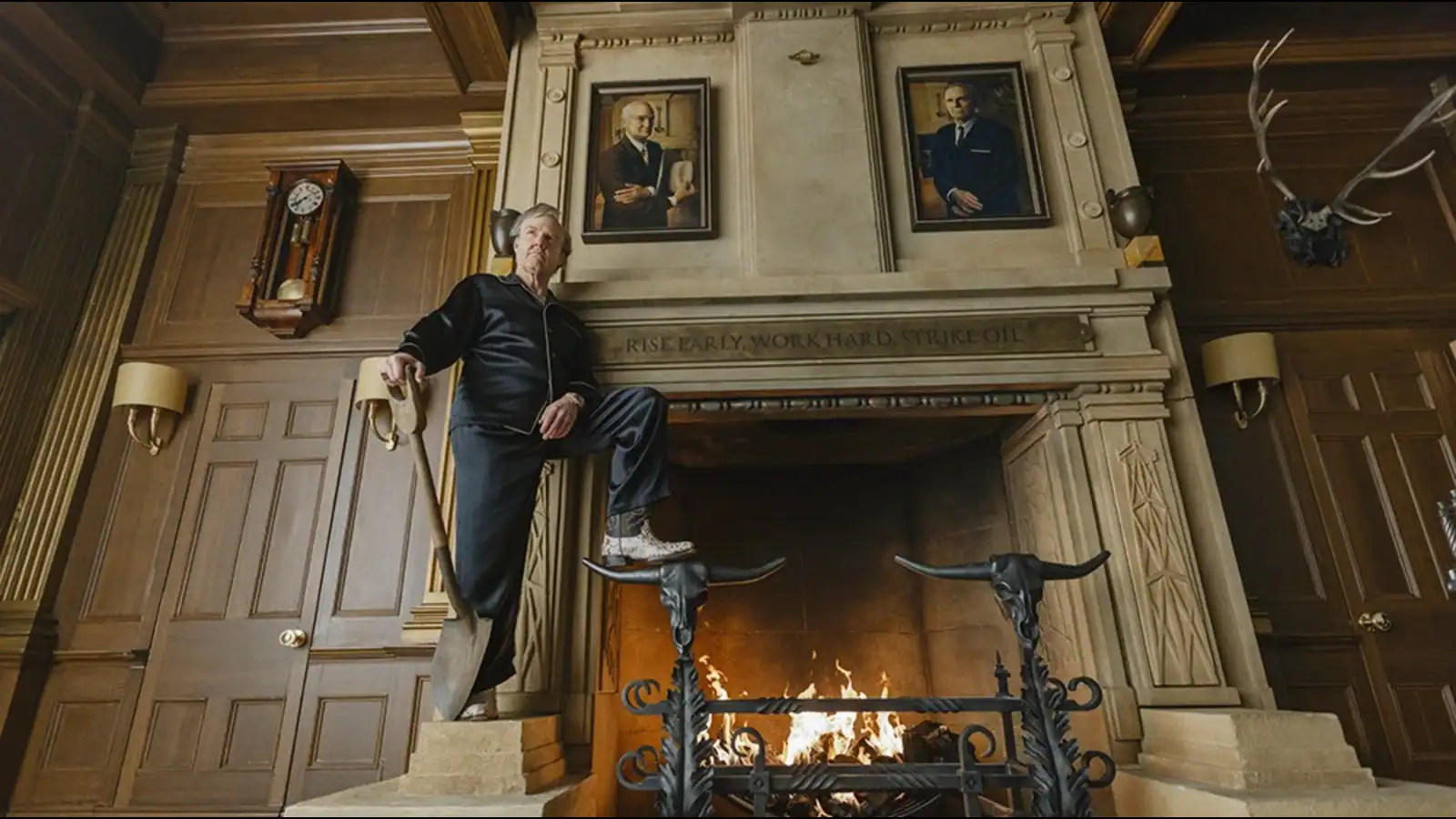
Digger buries himself into a hole in Alejandro G. Iñárritu’s latest satire-Property of Warner Bros.
However, an unignorable perspective as to why Iñárritu’s writing doesn’t feel as though it’s trying to educate audiences with new, practical ideas is because it, instead, directly recapitulate previous talking points and perspectives we are all more than familiar with thanks to CEO defence speeches, TikTok posts arguing about Capitalism and climate, which is the thread we pick at to unravel the vision the director had for his film.
Essentially, Digger is a $125 million budget picture starring some top Hollywood stars, and a growing census is that audiences maybe don’t want to be spoken to about environmental and political hazards, as there are too many to choose from right now, in million-dollar budget movies starring multi-millionaires with unlimited luxurious resources. Similar to a portion of the reception to Adam McKay’s 2021 political, satirical black comedy, Don’t Look Up, starring some major Hollywood A-listers who run in the same circles making up the same delusional celebrity culture the film strove to satirise, Digger may be tunnelling towards what Film Twitter hails as “a dumb person’s idea of a smart movie” as repercussions for its lecture format despite some necessary, yet a slightly brash, examination of subject matter.
Despite its technical efforts, ambitious presence and huge swings to reframe cinematic conversations around climate change, Iñárritu’s latest work is attempting to wedge itself into a canvas whose material is undergoing a major turnover, or one that is at least working through delicate, intricate questions of how satire should operate, who should create it, and whether it even resonates appropriately anymore.
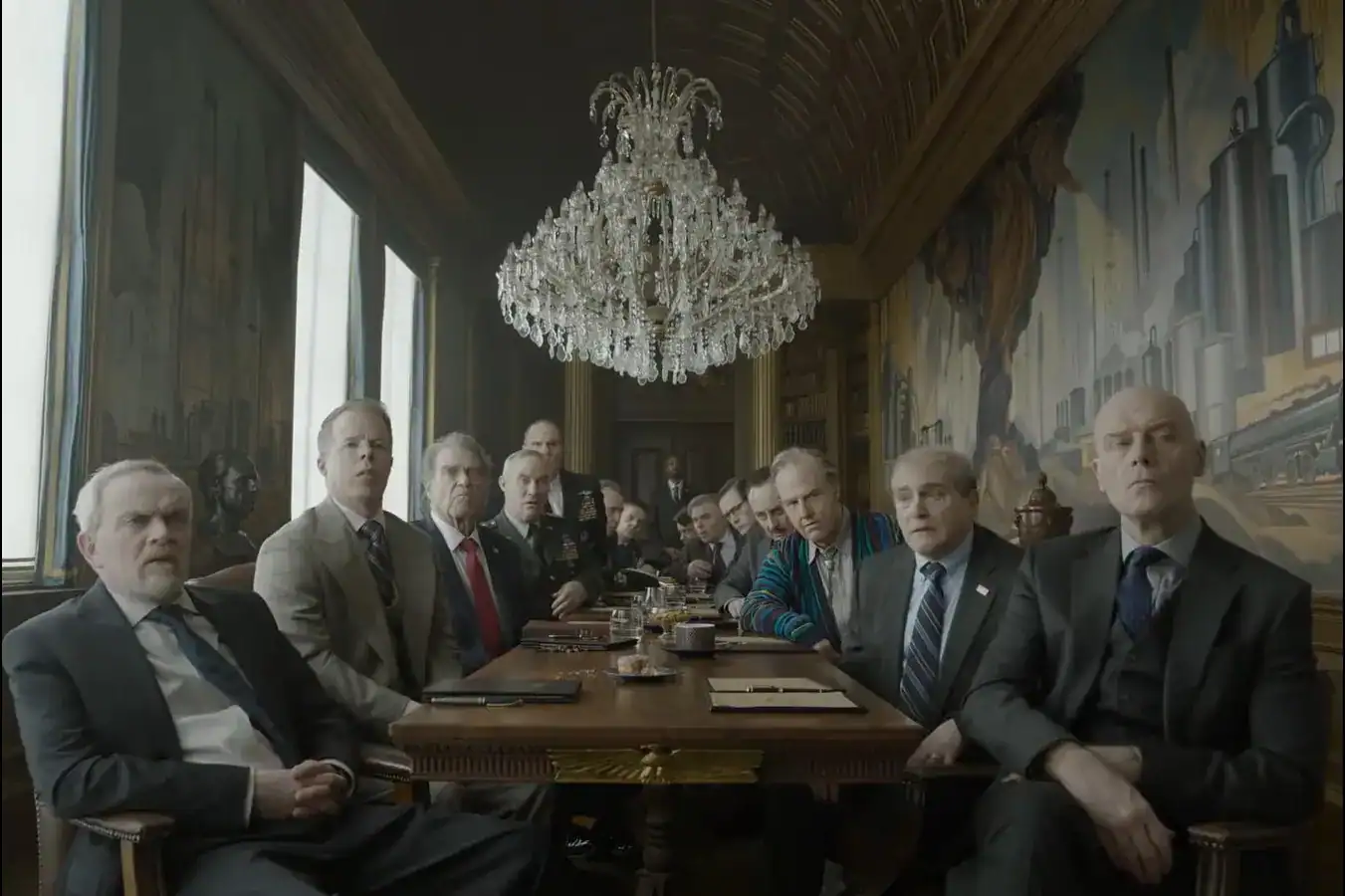
The rest of the corrupt political figures in Digger-Property of Warner Bros.

Digger is in cinemas 2nd October.