

High school is a viral hell in Mike Flanagan’s new Carrie, exposing the cracks in small-town America.
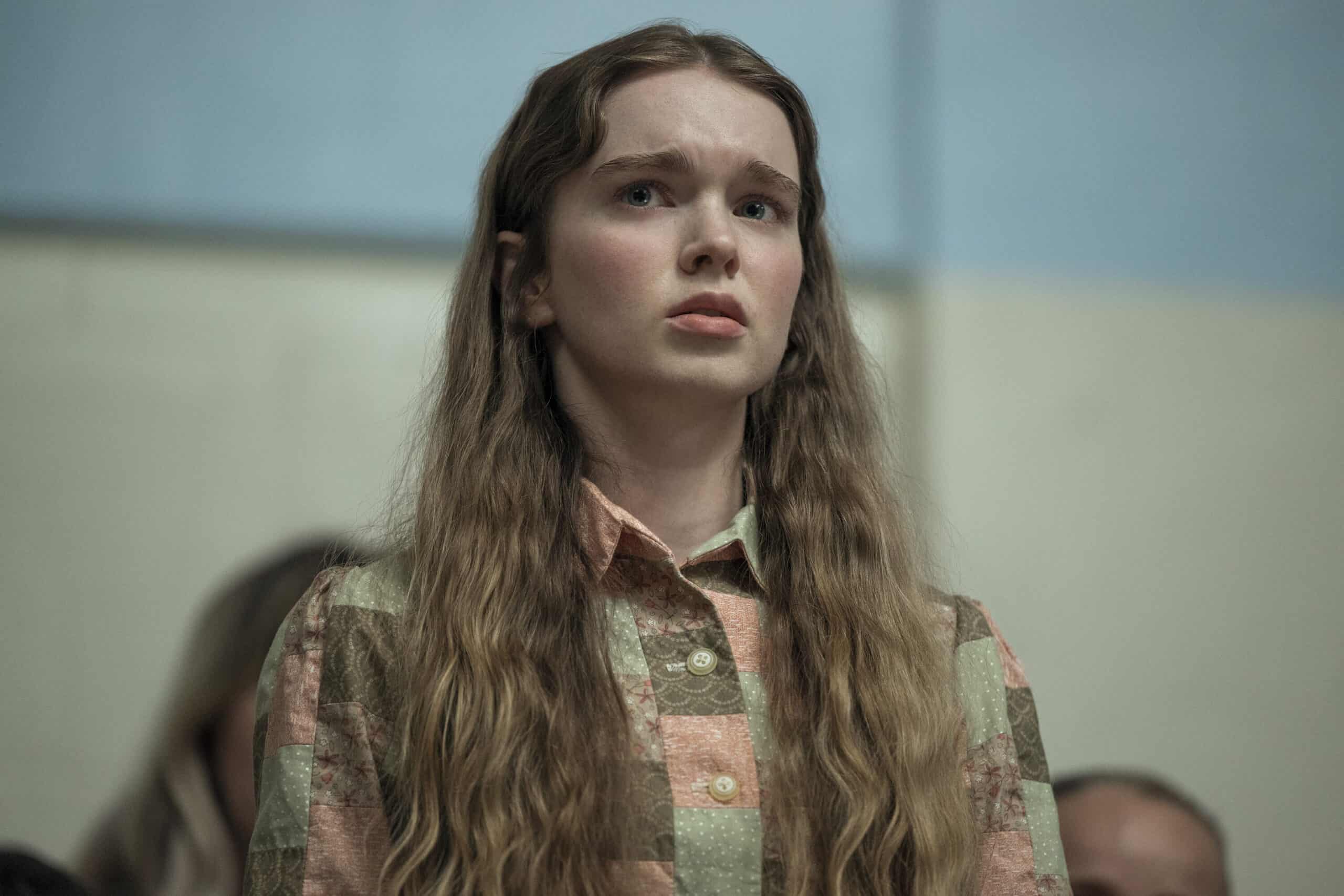
Summer H Lowell as Carrie White. Credits: Robert Falconer/Prime
To resurrect Stephen King’s telekinetic antiheroine, Mike Flanagan needed a fresh, newly relevant take on an iconic tale. His Carrie, landing on Prime Video on 7 October, only partially fulfils this premise.
Known for several adaptations of King’s works, the writer and showrunner debuts a TV version of Carrie that keeps the focus on the titular character while incorporating the contradictions of contemporary America, touching on school shootings, religious fanaticism and free-speech advocacy.
Set in present-day Chamberlain, the eight-episode drama reframes Carietta ‘Carrie’ White’s story as an extraordinary tragedy in an ordinary community looking for a scapegoat.
Bullying has meandered through new, insidious avenues since King published his novel in 1974, with Flanagan’s show exploring the pervasiveness of online abuse and shining a light on elements of the book that were sidelined in previous adaptations.
The first in Flanagan’s TV deal with Amazon Studios, the series builds on the novel’s ending to suggest Carrie might not be an oddity, but simply someone who hasn’t found her people yet.
Each episode kicks off with a true crime-like segment on people, mostly women, with special abilities. The show spotlights real-life figures, blending facts and fiction to argue that ‘gifted’ women have rarely elicited sympathy throughout history.
Carrie is equally misunderstood. Martyr or monster, or both, she’s played with wide-eyed curiosity by Summer H Lowell, whose joyous demeanour bears no trace of the fragility embodied by Sissy Spacek in Brian De Palma’s 1976 film.
This new Carrie is a thoughtful, talkative bookworm who’s endearingly excited about her grand entrance into the big, wide world.
“Always try to be a little kinder than is necessary,” she earnestly quotes JM Barrie to dead-behind-the-eyes schoolmates who are sussing her out for weakness.
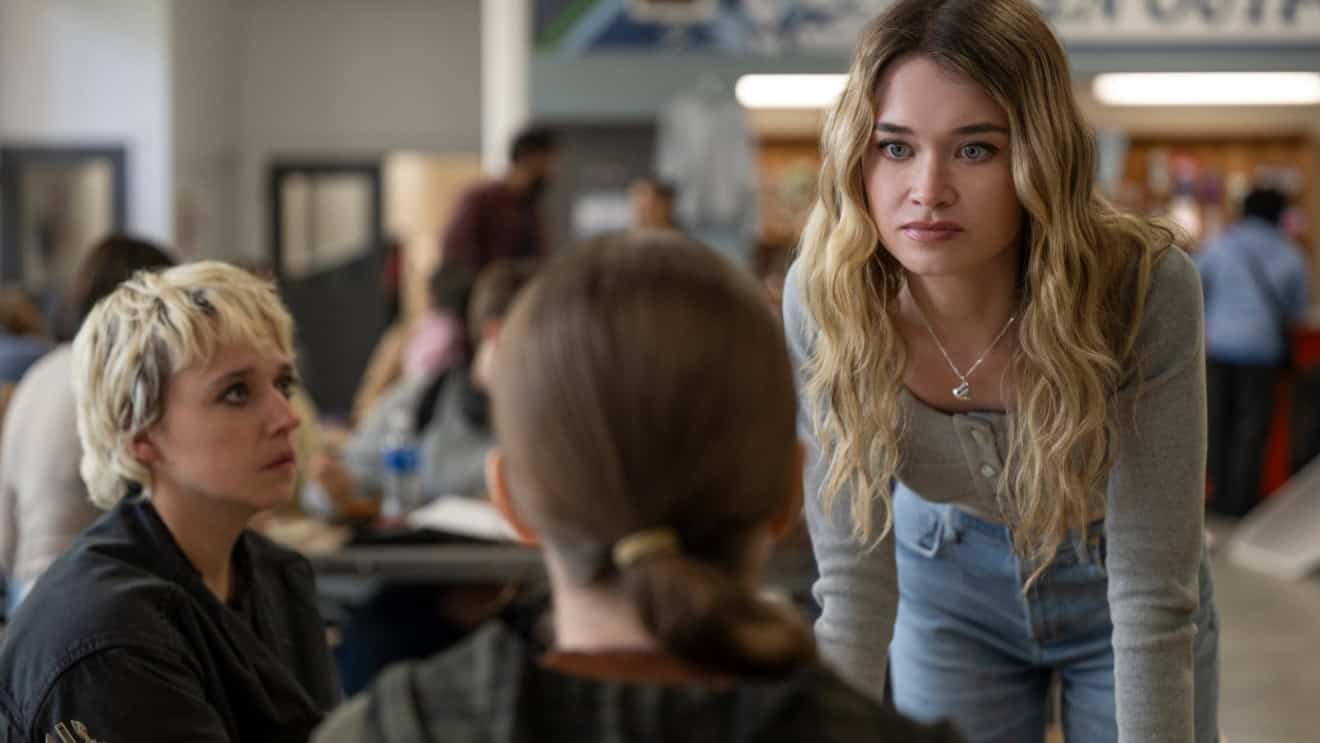
Thalia Dudek, Summer H Lowell and Alison Thornton. Credits: Robert Falconer/Prime
After years of being homeschooled, the teen learns how easily your high school peers can chew you and spit you out the hard way. Despite a helping hand from morally conflicted classmate Sue Snell (Siena Agudong) and a conspiratorial friendship with new character Emaline (Thalia Dudek), Carrie’s sheltered self proves so unprepared for the carnage at Ewen High that it hurts to watch.
With King on board as executive producer, Carrie is an ambitious project that too often feels overstuffed with hackneyed ideas, especially when it depicts the youth’s supposed relationship with technology — more a parent’s nightmare than genuine Gen Z and Alpha representations. Moving at an uneven pace, the series at least dares to do something different from the 2013 remake, putting a political spin on what is ultimately a story of identity and belonging.
Carrie draws from familiar influences and looks at Flanagan’s other horror adaptations to offer a bleak commentary on institutions failing the marginalised and communities crumbling under the weight of the ‘us vs them’ mentality.
The protagonist and her mum — played with icy fury by Flanagan’s frequent collaborator, the ever-excellent Samantha Sloyan — have largely flown under the state’s radar, squirrelled away by Carrie’s late dad, Ralph (Tahmoh Penikett). The construction worker remains an ambiguous, ghostly presence, though the series softens his abuse and fails to address his motives, regrettably relegating his apparitions to jump-scare decoys.
Reintroduced into society after Ralph dies in the opening scenes, Carrie and Margaret have opposite outlooks about what awaits them on the other side of their front door.
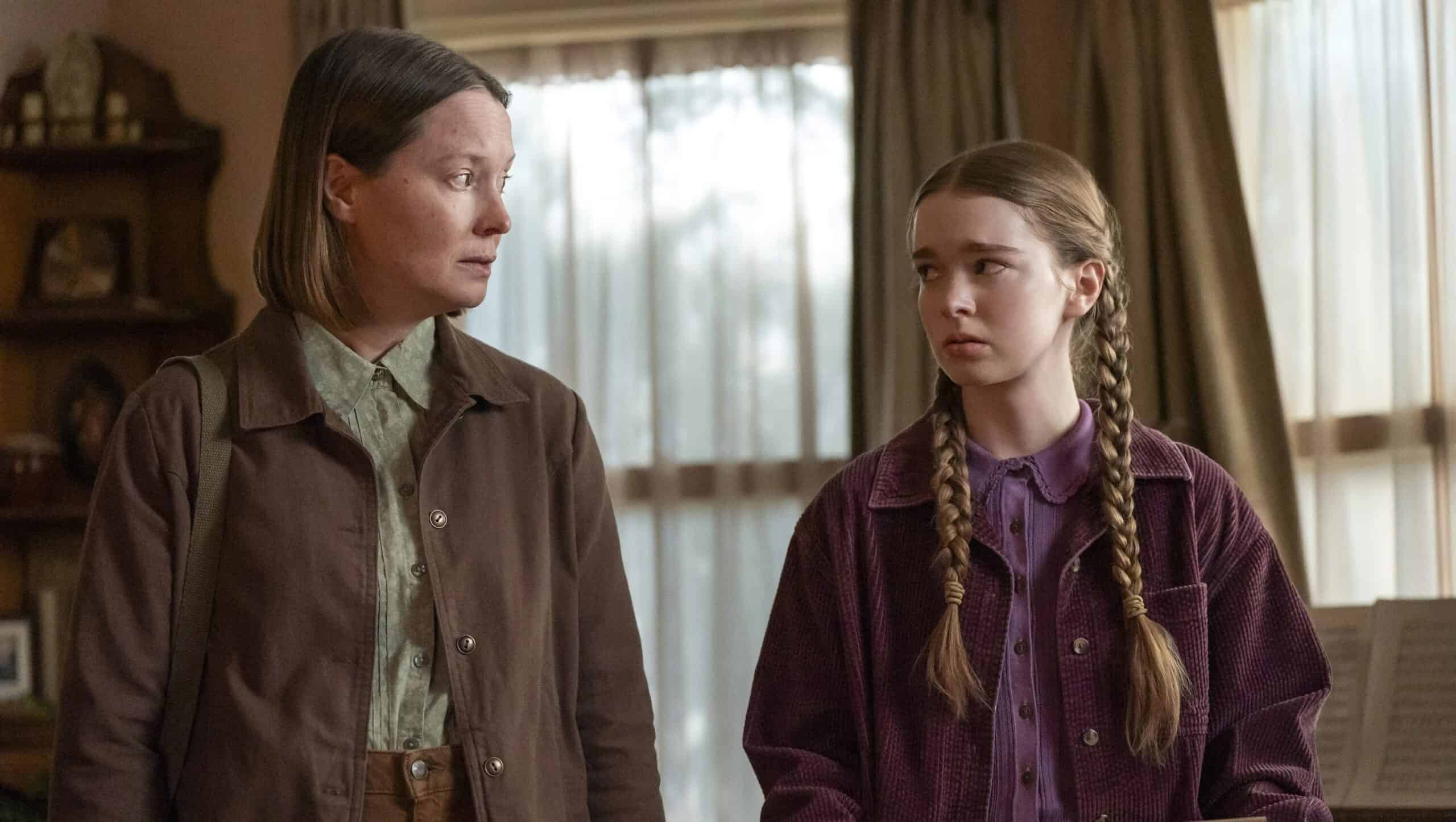
Samantha Sloyan as Margaret and Summer H Lowell as Carrie. Credits: Liane Hentscher/Prime
Margaret’s paranoia dampens Carrie’s infectious enthusiasm, with Sloyan delivering a commanding ‘mummy dearest’ turn that’s soft and terrifying at once. The star treads the line between a well-meaning helicopter mum and a spiteful, repressed bigot, with glimpses of a destructive fire burning under the embers.
Leading up to Carrie’s incendiary massacre, the show revisits the infamous period scene as the first step in her infernal descent. Steering clear of exploitation, Flanagan’s series retells the everyday incident as a relatable moment that escalates into a crescendo of cruelty.
The vicious bullying becomes the subject of a nasty Instagram account that ridicules the entire student body as well as academic staff, with consequences reverberating far beyond the classroom.
Created by Ewen’s Queen Bee, Chris Hargensen (Alison Thornton), @CarrieRed_ is a digital, viral Burn Book, if you will — you’d be forgiven for thinking Carrie is the closest that a scary series could ever get to Mean Girls, the 2004 teen classic that’s a horror film in its own right.
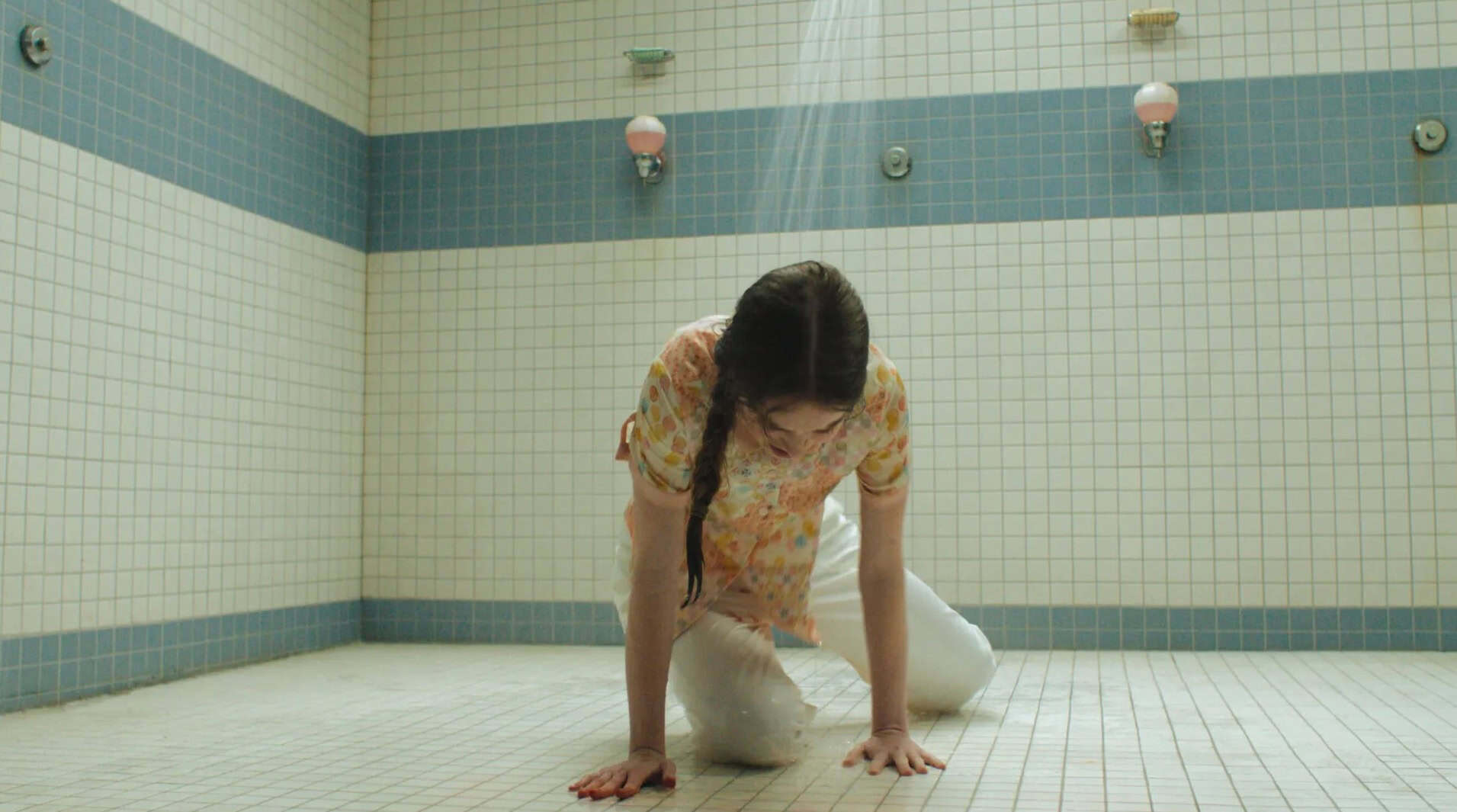
Summer H Lowell as Carrie. Courtesy of Prime Video.
A more layered version of the bully penned by King, popular girl Chris is the face of the most despicable incarnation of casual evil, one prompted by boredom and a general malaise, one that punches down and targets those who deserve it the least.
More so than Flanagan’s versions of King’s original characters, however, Carrie owes it to the brand-new inserts, particularly Dudek’s Emaline, to inject new life into a classic. The bond between Carrie and her mysterious pal drafts new paths for where the show could go from here — should Flanagan’s latest revoke its own limited series status, that is. Yet, some things are better left to rest.
An amalgam of staples from the book, translated into spectacular set pieces, and imaginative visions filling in the blanks, Carrie is carried by engrossing performances from Howell and Sloyan, but struggles to control its power in a bid to over-explain and over-expand.
Carrie starts streaming on Prime Video on 7 October.