

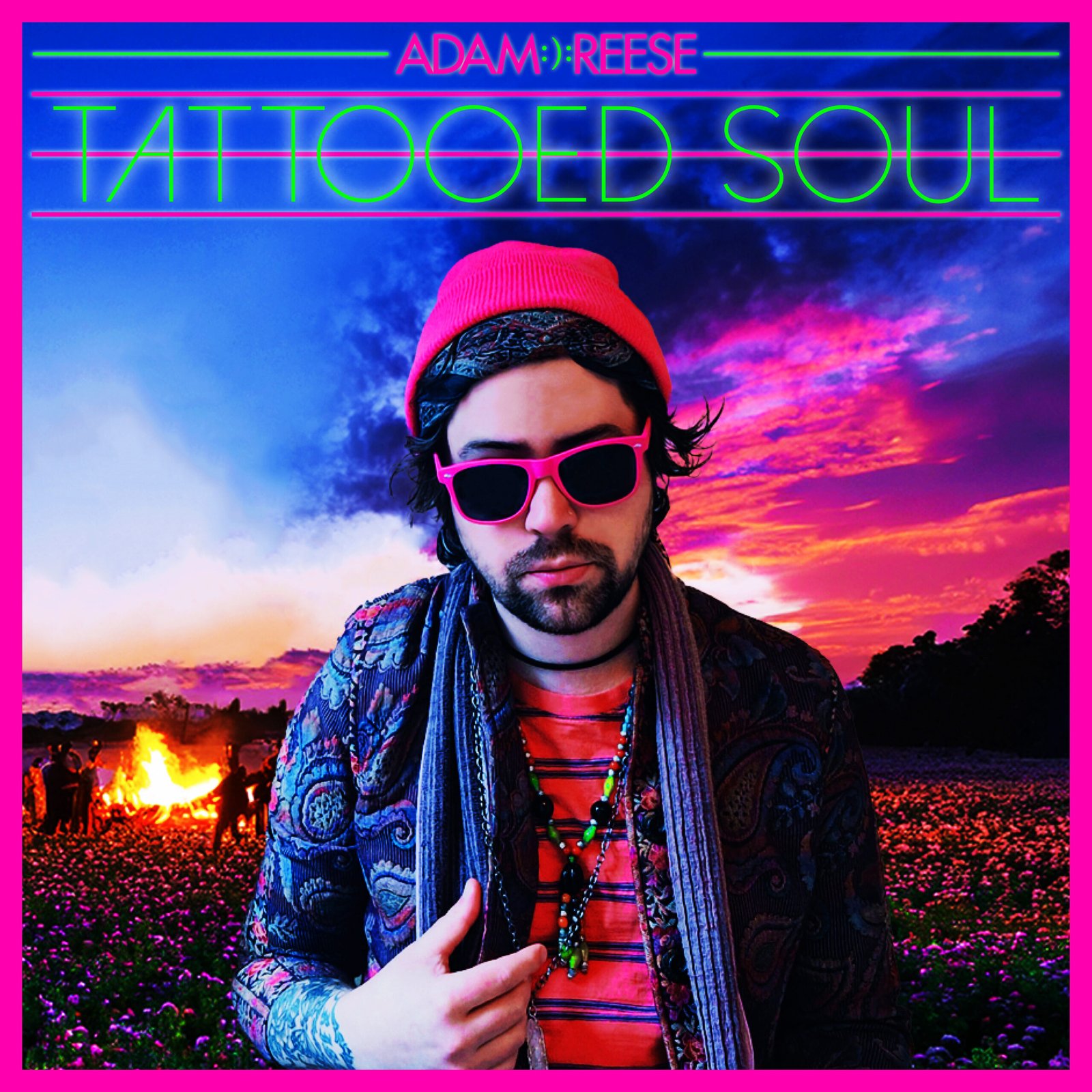
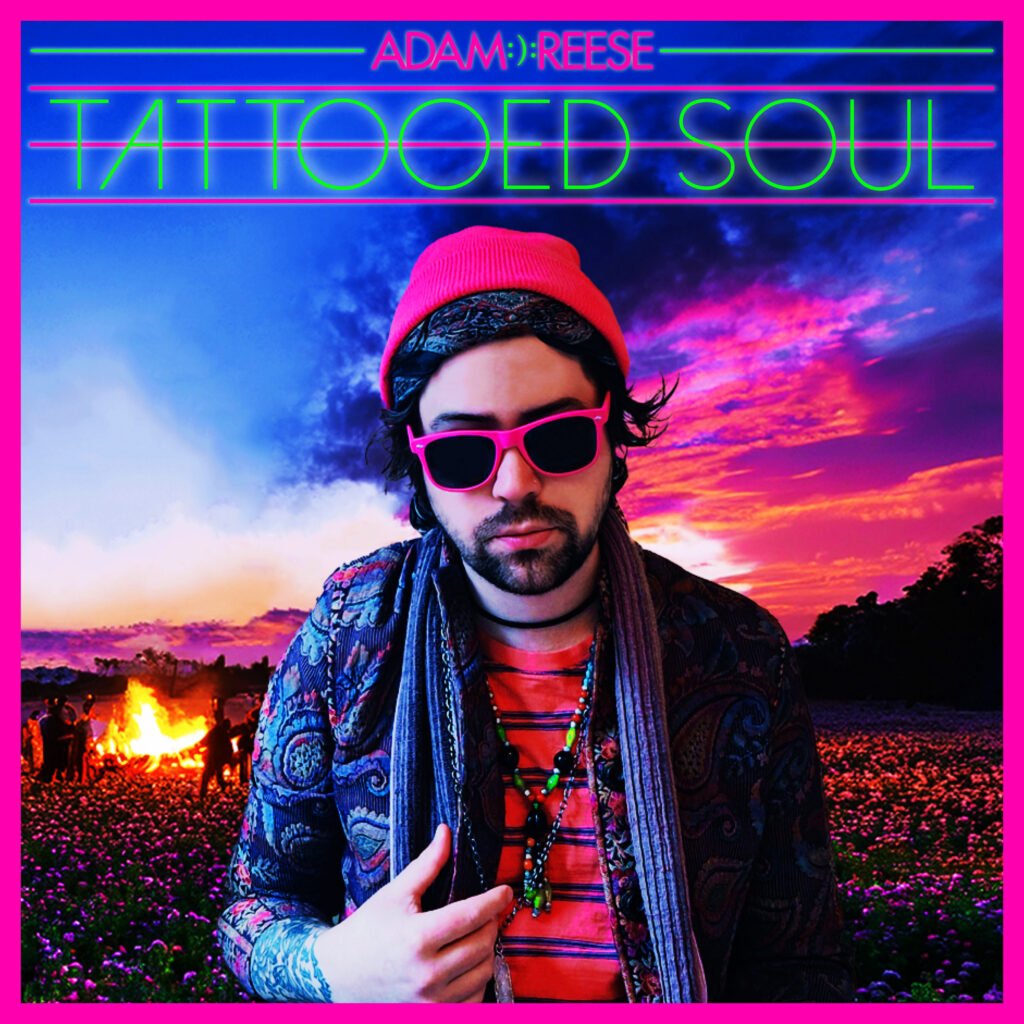
Adam Reese is a singer-songwriter, musician, and poet from the Northwest Chicago area who has released his debut album, Tattooed Soul, through Spectra Music Group. This full-length release showcases a broad portrait of Reese’s artistic identity.
Reese’s music blends storytelling, hip-hop-inspired rhythms, and memorable choruses with instrumentation that shifts fluidly between electronic textures and guitar-driven indie pop. “I grew up on hip-hop all the way until 8th grade when I discovered The Beatles,” Reese says by way of explanation. From there, he gravitated toward the songwriter-poets of the 60s and 70s before discovering how MGMT incorporated synthesizers into emotionally resonant pop music. “It felt like the last piece of the puzzle that led me to the music I create now.” That eclectic foundation is evident throughout Tattooed Soul, which comfortably moves between genres without sounding unfocused.
Reese’s logo makes use of the bipolar symbol, and while Tattooed Soul often carries an upbeat, sun-soaked atmosphere, there’s a deeper emotional current running beneath its bright production. Early tracks evoke the carefree energy of lakeside summers and youthful nostalgia, but Reese gradually reveals themes of anxiety, isolation, and emotional imbalance with a candor that gives the album added weight.
“The Burbs,” for example, opens with a collision of guitars, layered vocals, and a fife-like synth melody that initially feels chaotic before revealing itself as a deliberate stylistic choice. The uneasy mix of sounds mirrors the song’s lyrical tension, as Reese reflects on prescription pills, LSD, and MDMA as temporary escapes from emotional strain. Lines like, “And we’re living for the weekend / but we’re drowning somewhere in the deep end,” capture the disorientation of searching for relief in modern suburban life. Rather than polished perfection, Reese leans into atmosphere and emotional texture, giving the song an authenticity that lingers.
Mental health themes continue throughout the confessional “Days Like This,” which recalls the introspective vulnerability of Twenty One Pilots. Reese delivers his verses with a relaxed cadence that suits the song’s reflective tone: “Days like this I wish to survive / I’m up, I’m down, I’m side to side.” The track balances heaviness with gratitude, as Reese lists the people and comforts that help him endure difficult moments. Whether listeners agree with every coping mechanism mentioned or not, the song succeeds because of its honesty and willingness to document emotional survival without pretense.
There are also plenty of tracks that embrace pure pop accessibility. “Summer Love” channels shimmering 1980s-inspired synth-pop with an easygoing sense of nostalgia, while “Throwback Tracks” and “Skinny Jeans” capture youthful relationships with cinematic charm and humor. The title track, meanwhile, uses tattoos as a metaphor for transforming pain into identity and growth, tying together many of the album’s emotional threads.
One of the album’s more ambitious songs is “Youth Culture,” a danceable, synth-heavy track that examines modern disconnection and generational anxiety. Reese balances critique with empathy, offering observations about screen addiction and social tension while still encouraging listeners to “hold onto your shine.” The song’s shifts in arrangement — especially its quieter acoustic moments — add dynamic contrast and show Reese experimenting confidently with structure and mood.
Reese may not possess a traditionally commanding voice, but his understated delivery ultimately works in the album’s favor. His calm, conversational style makes the songs feel personal and approachable, allowing the lyrics and atmosphere to carry the emotional impact rather than relying on vocal theatrics. Tattooed Soulsucceeds less through grand gestures than through sincerity, mood, and Reese’s ability to fuse genres into something distinctly his own.
For a debut album, Tattooed Soul shows a songwriter with a clear artistic identity and a willingness to explore complicated emotional terrain through catchy, genre-blurring music. Even when the album feels exploratory, that openness becomes part of its appeal, suggesting an artist still evolving while already offering a compelling and highly personal sound.
Written by J. Oliver