

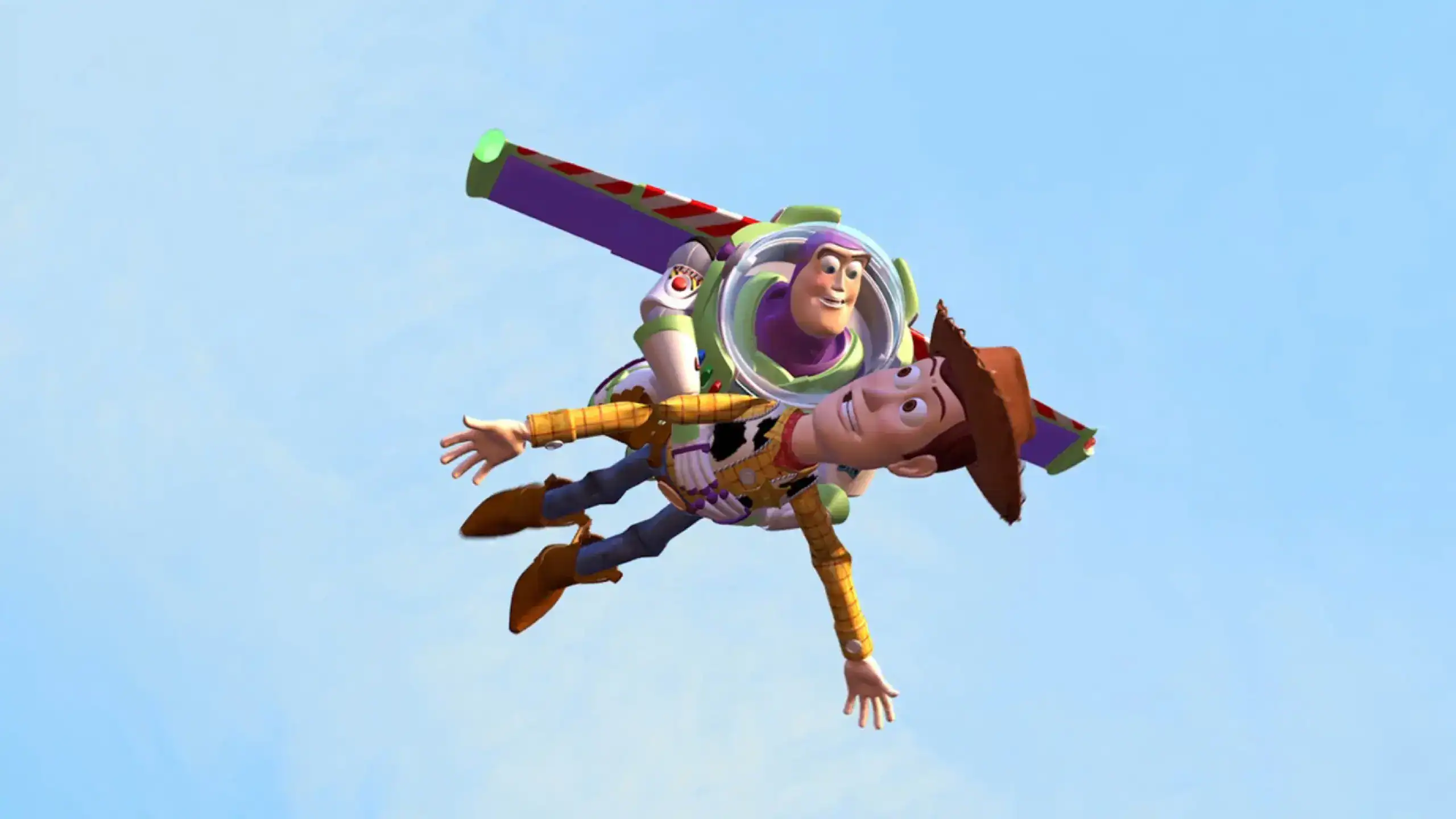
From the original Toy Story film in 1995 to the 5th instalment in 2026, Pixar have gone through quite a journey to get to this point. Over 30 years and 30 feature films have passed and yet, Pixar still feels like that place we can all call home. Whether you grew up with Andy or Bonnie, the sentiment remains the same. Woody and Buzz Lightyear are toys we instantly recognise for their moving coming of age stories, as they grow from resenting each other to best friends who in some ways ride or die for each other. In fact, Pixar and Toy Story in particular can be seen as the foundation for our childhoods across generations to learn what a friend really is. The main theme song is called You’ve Got a Friend in Me after all, wonderfully played by Randy Newman all those years ago and still holds up. This theme extends across all 5 Toy Story movies and is most clearly felt in the latest entry where Bonnie is struggling to make friends in this technological era of the digital social media world. Time has changed and people change too. So that’s where Wall-E and Finding Nemo director Andrew Stanton and Pixar producer Lindsey Collins come along. Both veterans of the celebrated and pioneering studio for computer animation. Both Andrew and Lindsey walk us through the early days of Pixar with the original Toy Story and takes us through the decades during the highs and lows to their latest collaboration with Toy Story 5.
Soundsphere] Each short and feature acted as a gateway for you to enter the world of technology through animation.
Andrew Stanton] Sometimes that wasn’t the goal. The goal was very different every time. The early days was to show up for technology. But at the end of the day, that was the wolf in sheep’s clothing. The desire was just to be an entertainment company. That’s why I still think people watch all the shorts to this day, because they’re driven by the desire to do character animation and to entertain, but sometimes you double duty on it by showing off some new technologies or new artists that you didn’t know they had the chops to do something greater.
Soundsphere] Do you need to decide where the location’s going to be? I need to decide on who the characters are going to be and what they’re going to look like. For example, Woody was not going to be a sheriff, he was a ventriloquist, quite frightening doll.
Andrew] Yeah we learned. You got to remember none of us had ever made a movie before. John and Joe worked on a movies before, but they’ve never held them on. So everybody learned together, good and bad on every level. So we knew the toy story shorts, that was really Joe pushing John saying I think there’s more to explore there than what you’ve done in that short, and he was right. But we didn’t know how to do a feature story. We didn’t know what we had the right toys. We were comfortable with Tinny because he had been in a short before. Then we thought how about a virtual dummy because some of us had those as kids, that shows how old and weird, we were. Then the evolution went to, wait a minute, who has a tin toy? That’s just weird. So we said no, how did that work? I can’t remember the order now but basically, we came up with changing the ventriloquist dummy to a cowboy, because it seemed a little bit more logical kind of doll, and then we thought we need to have a new toy to come in to replace it, to be jealous of, and the tin toy doesn’t make any sense. So then we all put our heads together, came together, asked what’s the coolest toy that doesn’t exist that we wish we had? The amalgamation of everything was Buzz Lightyear. Well, the ventriloquist dummy’s kind of creepy, but John had in his childhood, a soft little upholstering Casper toy that was very comforting to a man. So this plush toy became more of the model of what he was. I just described eight months of her life. slowly figuring it out.
Lindsey Collins] I saw Toy Story in theatres and my mind was blown like everyone else. So I started working at Disney Feature Animation and I just graduated from college, and would have gotten to see it in the theatres. Who made this movie? I need to go work immediately and I found out they were from Northern California, which is where I’m from. I saw that there was some connection to Disney, because I had seen that Disney distribution tag had come on at the end of the film. So I went to my bosses and I asked hypothetically, if one wanted to go work at Pixar, could one just go do that? They said yes we distributed them, but we’re not really the same company, and by the way, we’d like you to sign this three year contract. I was thinking I don’t really know about the three-year contract. So they said how about a one year contract? I was like great, I’m going to think about that and I went up to interview at Pixar and I left. I interviewed Island in Pixar and Island called me back and said great. We’d love to hire you and Pixar never called me back. I was like, what? And so they never called me back. They were just starting A Bug’s Life at the time. So I went back to Disney, it was like the worst boyfriend ever. So I went back to Disney, and I was like, I don’t think I want to work in effects, and I loved making movies from inside the house so I guess I’ll sign the contract. I went in and I signed it, and then I went home, and I threw up all the way home. I was thinking this might be a bad decision. Clearly something was not feeling right. So I went in the next day, and I said I quit. I’m not going to sign the contract. I don’t know what it was, but sometimes my body was like this. 2 weeks later, Pixar called and said we’d like to offer you a job working on A Bug’s Life.
Soundsphere] Toy Story had a huge effect on the industry and the world, and the global domination that followed. The impact of this film had crossed the board in lots of different ways whether it is technology, the story or the voices. How prepared were you after the reception of the first film?
Andrew] We sat on it, we had gotten used to this by now, but the 1st time, these things take 4 years to make, it becomes your own private little movie that you’re watching so many times. You are happy with it and think it’s working, but you have no idea. It’s good, you just forget, you’re going to show it to the rest of the world, and you forget it’s going to become owned by the rest of the world, and it’s not going to be yours anymore. So that’s what I remember. It’s the impact, and everybody wowed, and everybody going so gaga. We’re thinking what are you talking about? I’ve been watching this for four years. We’re human. You haven’t been in with us. So that’s the feeling you get every time now.
Soundsphere] Now we know the end result. People loved it. But back in the day, when you were actually working with Disney and they were sending you their notes, you were having to respond to those notes and started to maybe make the film or take an address that you didn’t necessarily feel comfortable with. There was a point whether they were going to shut the production down and move you all to LA.
Andrew] They were never comfortable with us being so far away from them. They wanted to have more control. It wasn’t Machiavellian, but it was a trust nervousness issue. Disney feature animation had never outsourced. The first thing they’d ever done was Tim Burton, The Nightmare Before Christmas, and it did okay. But it didn’t calm them. Here we were across the bay doing something different, and they could not touch us. So they were upset, not in a horrible way, but they had enough of an excuse to go let’s pull you in closer, and we were so obedient. The best thing that happened to us is that they told us what to do and the worst thing that happened to us is that they told us what to do. Because at some point, we didn’t know the basics and we learned it all from them. But then we had our taste, which we didn’t know what ours was at the time. It wasn’t until we started to differ on taste, and we were still following their lead that they kept saying we were being too juvenile, too kitty like, all these things that they called those names are what you like about Toy Story now. We didn’t know it at the time. So we just veered towards them. Then it really didn’t work. So when we were so scared, John negotiated to give us two weeks. We didn’t fix that whole movie, but we went in and just locked ourselves in, we said, we have nothing, but let’s do what we would, and we learned from then on, let’s just do what we would want to watch, and stop worrying about what anybody else thinks. We changed just enough of the movie to make the movie that you now see as Toy Story with Woody working at the beginning and dictated how we worked together, how we trusted each other. The other little secret we learned is we don’t have to do them. We can just pick up the phone and say okay sure and hang up, and then not do it. Then just make sure you go fix it. But the key is, the other habits. You got to fix it, because then they watch it and say you did exactly what we said. You don’t split hairs. We did exactly what you said.
Soundsphere] It’s this creation of a brain trust but at that point, it was a small group of the four of you that work together, that has become a thing now.
Andrew] It’s been mythologised and it’s been 36 years. So it’s changed what it is. At the end of Toy Story, we went public, and we were a publicly traded company for a while, and the promise in the prospectus was that we were going to up how many movies we made. We were thinking wait a minute, we just figured out how to do this once and the only people that don’t do it is when we get this group of people together, the four or five of us. We can’t afford to split up. Our CFO and Steve Jobs said sorry, we can’t survive economically. So you got to figure out a way. So we said, Well, we are under the same building, if we split off, you make a movie, and you start making a movie. We’ll meet every four months as the same group, and that we were to make the first movie, we’ll be like doctors advising each other. So the brain trust was a shorthand for not having to say everyone’s names. We didn’t want to have to keep saying that all the time. So we just said brain trust and that’s what that meant. That was the brain trust for about the next 10 years. But then we brought on Brad and Bob Peterson. We brought a bunch of other people who started to add to the list that helped that group. But we learned something way too late, because I’m going to jump another 10 years. Pixar suddenly became a thing that everybody wanted to be a part of, and it would be cool to be in. You got offended if you weren’t invited, and everybody wanted to learn. Suddenly, you had 20 people in a room and I learned something really quickly. When you have over 10 people in a room, you have an audience, and everybody acts differently. When you have less than 10 people, especially when you have six or seven, you’re sitting around a dinner table. Everybody has to participate and you come get them in pocket and it’s safe. That’s what you want, ’cause what was great about our group is we were safe. I can say I don’t know what I’m doing. I feel like an imposter, and you wouldn’t lose respect. You would say what you really need, get help. But the minute you have an audience, you don’t do that. I’m starting to complain that we’re losing the point of it. What it had to evolve to was a methodology, instead of people, as though, we kept saying, We’re going to have this group, there’s no way to sort of shrink it, but on your own individual films. You should find those 4-5 people that make you honest and will tell you what you need to hear, that you feel safe about, because then that part of your brain will start to work, and anybody can do that. So that’s what we mean now by brain trust.
Lindsey] That’s it. We still have directors go see other, the other directors’ homes. That is because the other thing that can happen, is that there are those that are really good at finding people who are brutal and honest with themselves, and there are others that prefer not to do that. I think they prefer the people who are nice to them. I do think there’s directors who welcome the kind of the brutal honesty, that kind of dynamic in a room and there are other directors that we have who prefer not to have that dynamic and seek a nicer dynamic. So we try to also encourage the other directors to always have the other’s back to also participate in brain trust, we kind of guard against the ones that think what if I didn’t have the mean people come in? What if I didn’t have the harsh notes? I think Andrew tends to deal well with just give me the boudoirs, and then I’ll move on.
Andrew] I feel that constructive criticism is a talent, that people need to learn. It doesn’t mean you have to be mean, it doesn’t mean you have to be brutal, but you have to be able to say something in a way that makes the student want to go redo their homework. That’s a different skill. Not saying you did it and you failed, and that was bad. That doesn’t help anybody. I already think about everything that comes out of me. I already think it stinks and I don’t need help being told that. What I need is somebody to inspire me to want to do it again. I taught, and I learned that from a lot of other people.
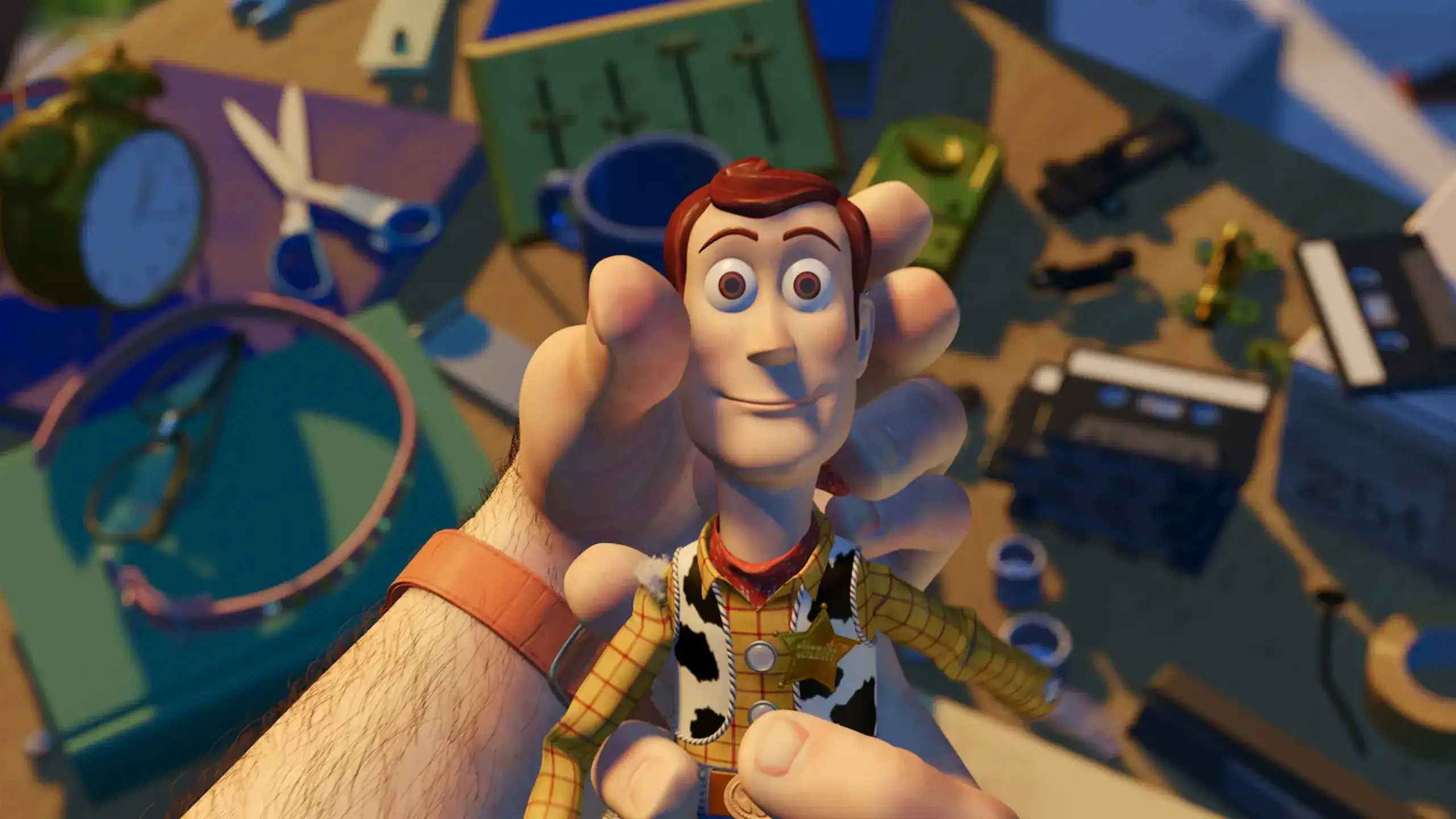
Toy Story 2 (courtesy of Pixar)
Soundsphere] You’ve been very honest about the company, when they’ve been pointing most of your productions, where there’s been some sort of programme or a crisis.
Lindsey] Toy Story 2 is a great example. We were asked was five hard in the making, and we were like, no, it was kind of like three.
Soundsphere] Toy Story 2 has entered that canon of great sequels like The Godfather but it sounds like it was a troubled journey.
Lindsey] 2 goes down in Pixar history as the movie that almost broke the studio.
Andrew] I was going back to deleting old old emails and really clean house, so instead of starting from now and going back, I decided to go all the way to the front where you’re saving very little at the beginning. So I’m getting into late 98. In October, we’re doing a post on A Bug’s Life, in November, the movie’s coming up and then they asked me to do some help on this new movie that we’re doing with Monsters, Inc. on its outline. In December, I have 2 kids and I’m 30-32 or something and then by December, we get wind that things are not going well across the street with Toy Story 2, and John’s taking a look at it. By the end of December, we’re asked to go off site and talk about what to do about it. By the beginning of January, we decided that we’re going to scrap it all, keep about a quarter of the movie as pieces to work from, and we re-pieced in an outline what it’s going to be. It takes 4 years to make these movies and by the middle of January, I’m writing several sequences a week by Monday. Now Friday, and it’s already boarded and we put up an editorial. That goes on for another 8 weeks, and then I’m done. I move on to go back and help on Monsters. By March, I’m thinking about an idea about a fish. All those emails…I’m thinking I would not believe that timeline if you told it to me now. How did that happen? How could that happen? And I realised, well, what they did is they called back the exact team that had made Toy Story one. So everybody was psychic. Then we had so much leftover material. We had almost two other movies worth of material that we didn’t use on one, that we had a costume prop box to pull from. Remember Squeezy from the early outlines? So we do stuff like that, and I realise, it’s the combo of those two things that really made the impossible possible.
Soundsphere] The first Toy Story looked great and changed the world of thinking in terms of animation. But then you see the second, you see how everything looks sharper and clearer, and all those things, the toys themselves. Everything has been restored, had to be reprocessed and redefined.
Andrew] How fast technology changes. We said during Toy Story, this will be the ugliest movie we ever made. Because for technology, we knew the rate of change and how much we would invent just trying to make the other movements. So every movie benefits from the learning of the advancement of the movie that came before it.
Soundsphere] The audience are watching these films, and they’ve got this emotional relationship with them, they’re not necessarily thinking how incredible the hair is moving, or in that scene with the slinking dog itself. The animation is a huge challenge and would have taken years.
Andrew] Well, that’s a simulator. That’s a learning tool that we call AI now. Technology automation was your friend. Nobody wants to animate that. That’s maddening.
Soundsphere] When you think about the challenges with each film, because everything is a challenge in this world. For Finding Nemo, you had water and Monsters, Inc. you had fur.
Andrew] It turned out to be a good headline on press, to say that we had this technical thing. We saw fur on monsters, whatever, but it was never required. It was just that odds are that we’re going to come up with a story in the world that we haven’t done exactly before, with characters, we haven’t done exactly. Something new was going to come up. But that comes back to what I said, with commercials, we would say, well, we’re going to do something underwater. We can’t do water. Well, we are now. We’ll figure it out. I drew this cartoon on A Bug’s Life, when our head of TV was listening to a little cartoon of him.
Lindsey] So many fish stuff. To me, the biggest jump was two to three, visually. I think one to two, you’re thinking okay, you start to see that things are looking a little bit better and that the animation is smoother. But I think 2 to 3, you really think wow.
Andrew] There’s a decade and a half in between to figure out how to do skin better, how to move the muscles of human beings better.
Lindsey] There’s a time frame between 1 and 2 that was about 5 years, because it was supposed to go direct to video, right? So 2 was not intended to go to theatres. It was intended to be this side show thing.
Soundsphere] There’s always that worry with sequels. Maybe you touch something that is so beloved, and you don’t deliver, because that’s going to spoil the whole thing. How reluctant or keen were you to do a third?
Andrew] There was a threat between about Disney just doing their own. They were going to do this. So by the time that had been figured out, John really had it in, I’m thinking we’re going to prove that we should have done this all along. That gave us a lot of time thinking about it if we were to make it. What I remember is we went to the same off site that we’d come up with, the initial bones for Toy Story, and we give us two days because the 1st day, you come up with all this stuff, and you fix, and you’re feeling great by lunch, and by dinner, you go, wait, and none of this works. What are we doing? You sleep on it, and then you come back. That first night on that retreat for Toy Story 3, it was like, what if Andy goes to college? That broke the whole idea of ever doing more toy stories because I realised I stopped looking at the movies as one, two, three, four, five, six, and I looked at them as children. The Andy years and then his ends, and then you’ll have the Bonnie years. If you want to keep going and you’re honest, you’ll go with another child, because if you have children in your home, it’s a very different bedroom between siblings. It’s the same parents, but if you do a different child, it can be a different gender, a different culture, a different economy, a different land. The varieties of life just suddenly open wide, and you can be honest. The other big thing that hit me was we embrace time. We let time pass. You realise not every movie or story idea lends itself well to that. But when you’re dealing with toys and child and growth, and advancement, that is a perfect marriage. So that’s been sort of the key to any of these other sequels. Is there something to tell? Has stuff changed about time? To our benefit, it’s taken a long time to come up with these stories. So all of us have grown older. All of our perspectives change, and we learn to appreciate things from a different angle. Some of that comes out of us when we write it, but it also comes out of you when you’re watching it. Again, if we’re honest and we’re truthful about what we’re trying to say, then it should hold.
Soundsphere] There is an emotional relationship that the viewer has with the characters we see on screen. In Toy Story 3, we see that when there’s a handover over the end from Andy to Bonnie. But Woody at the start was not the most likeable character, he was quite jealous, he was wanting to keep Andy intentionally to himself, and he went through a coming of age, and then each villain, we can kind of empathise with the sense that there’s a backstory that makes them what they are.
Andrew] I never used the word villain. I just find it a kind of moustache twirling and it feels like kid’s play. There’s somebody in life who has a different agenda that happens to conflict with yours. So I wouldn’t call Buzz a villain, but he was the antagonist of the 1st movie. Sid wasn’t a villain. He was just a thing that was in their way. But Buzz was a character who had an agenda that got right on the way of Woody, and the antagonist of Nemo was the ocean. So I never think of villain. They’ve all got their story. What do they want, and what character and situation, I’m wanting things that are in the opposite direction. That’s what keeps it sophisticated and complex, and not a little kid book.
Soundsphere] In each film, you’ve got some decision you have to make about which of the past toys you’re going to bring back.
Andrew] So many mouths to feed. If I gave everybody a line, the movie would be over.
Lindsey] It’s like the worst casting room ever because these are all below the characters. You love them all. They all kind of earned their way in to the room and to the story and you are making now the decision, are they are they here for this version of the film? Also, you have to make room for the next cast of characters. So you’re making sure that you’re not having the current cast take up all the room. You want to make space for the next passenger.
Andrew] On five, I literally had to make a list, ’cause I didn’t remember everybody that still existed. This one again? Then just write the story and not worry about it because it takes years, so you have time to just go, where does the story want to go? What does the story want to pay attention to? And figure that out first. Then I slowly look at the list every once in a while and think should they be gone? Because with toys, there’s a nutrition for overtime. As you get older, there’s less and less toys in your room, just naturally. So, you kept checking in on it, and then you got to the point where you’re like, well, do they need a line? Can they just be in the background? Because you want to tell a story first, not be handcuffed to the past.
Soundsphere] At the end of three, so many people consider it to be the perfect ending for a trilogy. Now you’re making four and let’s go to Bonnie’s story.
Andrew] I’m not a fan of the numbers. People think Rocky one, two, three, four. I’m so happy that sort of episodic storytelling has become normalised on streaming. We’re used to the season finished, but the door is left slightly ajar. Hopefully they’ll get picked up, but if they had to land the plane here. You’re used to good storytelling continuing it, if it earns it. That’s always been the mentality I’ve had on the Toy Story movies. Not that I’ve been in control of it, but whenever anybody asked, I said I have no puncture that you keep going. What is it? Is it good enough? Everything should end well? Every chapter should end well. Every episode should end.
Lindsey] We’re never planning the next as we’re writing the current. There’s never an assumption that there’s another one coming.
Andrew] We didn’t know we’d be here 13 years after two. We didn’t know that we were going to be seven years after four. You just can’t plan for those things.
Soundsphere] When Pixar was first starting, you were working on the original Toy Story, you came up with rules and now you are well into over 30 films.
Andrew] Well, that was 36 years ago. It was a reaction and still seems to be. They were in rebellion to what everybody thought the animation was. At the time, it seemed like, unless you were in a fantasy world and somebody was singing about a village, you couldn’t make it animated. That was an agenda. We had a lot of piss and vinegar then on our trip. You could make something modern day, something that was a different storyline, and now so much time has passed. Now we just want to be fresh, sometimes being fresh would be to do one of those kinds.
Lindsey] That’s what I mean. This next generation is coming in, they’re rebelling against us. They want to make a new Pixar film, and we’re like wait we’re working. Cause they’re all grown up and they’re now in our story rooms, and saying let’s make it feel different. We’re thinking, what? How dare you? I suggest that there is a formula to the Pixar film. One of whom is the co director and co writer of Toy Story 5, who is 30 years old. Toy Story 2 was the first movie they saw in theatres. They are like let’s talk about Jesse. Let’s talk about Woody. Let’s talk about what my take is on all of it.
Soundsphere] In Toy Story 4, there’s an opportunity to do a reset with all of the new characters. Bo’s character is kind of elevated and there’s a whole opposition making around that. The technology continued to evolve too.
Andrew] I would mark that if you’re measuring toy stories as an era, then we could pretty much do anything photorealistic if we wanted to. Now it’s a choice artistically for what’s the look? If you take a frame of Toy Story and put it up against Toy Story 4, there’s a big jump. There was no way around that. Stuff looks too good out of the box at that point in 2019. We just had to make a choice that this is the more advanced look, but it’s still in the style of Toy Story, the hyper realistic, believable world of Toy Story. We kept to that for five, even though it’s been 7 years since. Now, it’s on an artistic level.
Soundsphere] You see this change in Woody and Bo side by side. the porcelain that Bo has and Woody’s toy texture.
Andrew] I would also argue that shows you how professional, how good the artists became. We have real knowledgeable, experienced cameramen, lighters, artists and fabric makers. You’re just seeing people, more so at the top of their craft knowing how to use the tools they’ve had all along, that there are better tools, but they didn’t solve them. They’re just that good. So you’re seeing artists, human beings work after doing decades of their craft.
Soundsphere] You appreciate the detail that goes into these designs and the attention to detail.
Andrew] How much more sophisticated we can make the models, and how much easily they were to manipulate for the animator, so we can get even subtler facial action.
Soundsphere] You have voiced a number of characters in Pixar films over the years.
Andrew] I’m the, I’m the shark that says “I’m a cowboy. Howdy, howdy, howdy.” And I’m Zurg who is misunderstood.
Soundsphere] That voice work is vital as you need actors who are really at the top of their game and are able to use their voice to emote what you need for themselves. The lines, the sound, tone, personality and the emotions.
Andrew] Lee taught us that in Toy Story. If you can get the actual actor doing the break, the breathing and the efforts, it’s a different quality from each actor. It may not seem like that, and it seems embarrassing to ask an actor to do that stuff. We’ve gotten over that. The least favourite thing to do, but it really helps keep them consistent when they’re watching them. You heard the term when the camera loves them, people are very photogenic. There’s people where the microphone loves them, they have a voice that you just can’t forget their quality. That’s always what we’re looking for. It’s something that sort of catches the ear, is not forgetful. Ideally somebody that you can identify, even if you’re not looking at the screen.
Lindsey] Most of the times it’s interesting that when we cast actors, they come in assuming we want them to put on a voice because it’s animation. It’s cartoon and I’m going to be playing something. No, we cast you for your voice, we want your actual voice, we want your natural voice. Never or so rarely do we ask them to put on a voice.
Andrew] The only time I could think of where we asked to put on a voice was Billy Crystal, to find the character for Mike Wazowski in Monsters.
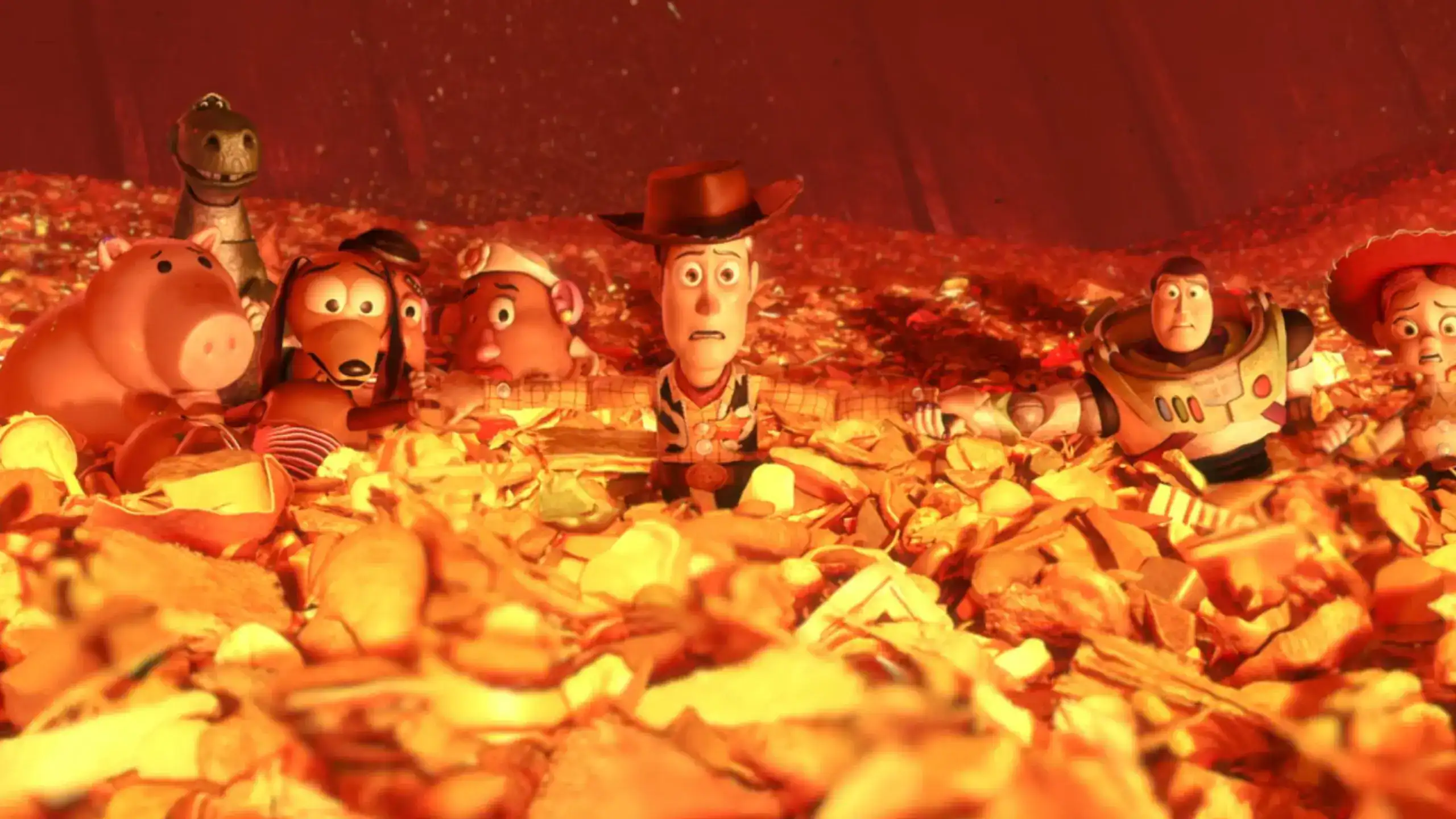
Toy Story 3 (courtesy of Pixar)
Soundsphere] In terms of the original toy story, when you brought in Tom Hanks and Tim Allen who are both very established actors in their own rights, the film is not ready at that stage so what would you have shown them?
Andrew] For that example in the early days. We had to do a test on a finished look with Woody from another movie just to get him to take the part. By the time we got Tim on, we already had enough of the movie boarded, but we could just show them sections of it. But the way it usually works for any movie is, we sometimes don’t have anything animated yet, but we have our artist renderings, sometimes we have a computer model made. Then we can still put their audio from an existing movie or TV show or something, a radio show that they’ve done, and put it against it, so that they can even just see themselves as another character. and it’s usually pretty obvious. Now it’s at a place where people so badly want to be in a Pixar movie.
Soundsphere] There are some roles that are always going to be with you. These films have a global reach and they connect with families and kids in particular.
Lindsey] I think that that helps us most of the time when they take that part of it very seriously.
Soundsphere] Toy Show 5 is quite a time from 4, and this is the first time you directed one.
Andrew] I never planned on it. Well, they asked me. I thought Dory was the last animated film I’d direct, but I never left Pixar from the advisory role that I had. I’m always helping out. Even a lot of other live action stuff. But I was ready to do 4 things in one year instead of one thing in 4 years. So I went off, did a lot of TV, learned a lot and enjoyed it. I loved it for the anonymity. In animation, you measure things in days, weeks, and months. When you’re just saying how long it’ll take through something in TV, you are talking in minutes, hours, and if you’re talking days, we’re in trouble. I didn’t see a quality drop, it’s sort of a mindset.
Lindsey] Andrew’s always been super efficient. He’s always been quick and fast relatively speaking in Pixar, but coming back, his commitment to making the day, so to speak, and bringing that kind of mentality into the film has been really palpable.
Andrew] One of the advantages you have in animation is it’s going to take a long time no matter how fast you go. So you get that many more times at best to try something. I have no problem being wrong and looking like I don’t know what I’m doing. So you get to find the answer and perfect the answer. You have a much higher percentage rate of getting there. Because you just got that many more tries. I equate it to whenever you’re making it, you’re trying to make a new movie, you’re creating a new instrument and nobody knows how to play it. You would not want to put off practising playing. I want as many times practising, as I can.
Soundsphere] We’re here in 2026, the film is out. What is the point where it’s decided that there is going to be a Toy Story 5?
Andrew] Early 2022, I was shooting on 3 body problem and Jim asked me for dinner. Then he sprung it on me, how would you like to do Toy Story 5 and I stopped laughing after a bit. I said, oh, you’re serious. Then I thought the last one I was called on was because it was in trouble. It was under a lot of stress. If they’re asking me, that means they’re going to keep asking somebody. I don’t want to be having to go under stress. I never had been asked to direct one but is there something there? That matters more than anything, whether it was an original being asked or whether it was a sequel.
Soundsphere] Did they have an idea?
Andrew] There was none. So then I said to them, let me just write what I think what I might want to do. What I might want to see, frankly. I said, it won’t be a great first script, but it’ll be an honest one. I have the summer free. Let me just try that. Then we can part ways If you don’t like where I’m going, worst is, I won’t find anything and I’ll say, there’s nothing here that I want to spend three to four years doing. That’s what it’s really got to be. Or best is, it’s something that I like, but then you don’t like, or the best scenario, is that we both like it. So I wrote with most of the ingredients of what’s in the final film. Knowing it was a starting point, but it was a very opinionated direction and subject matter, and they agreed. So that’s where we’re off to. My next decision was I wanted to co-direct. I wanted to have somebody that was from the next gen, because I didn’t want to always be called out of retirement to do a Toy Story movie, so can I pass on the knowledge that I learned after all this time? The only way I didn’t want to give a lecture, can I have sort of an apprentice? I lucked out so much by getting Kenna Harris, because they became an equal co-writer. They brought so many more elements to the table that were huge on the story, and it feels right, because to me, all the other Toy Stories weren’t a singular vision. They were made by these teams that had this collective vision, that just worked. It was this great chemistry in each of those things.
Lindsey] They’ve been amazing. You guys were such a great compliment to one another creatively and not in the sense of your opposites, but more in the sense that you were such a great match for each other’s abilities.
Soundsphere] In terms of a hook for the film. We noticed that there’s new technology with the traditional toys and so forth.
Andrew] The hook for me was, it’s Jessie’s room now. She’s the sheriff in town, and she’s got a different child, different time period, and a different thing coming on the bed.
Soundsphere] At the end of 4, Woody and Bo go off and they’re around looking for lost toys.
Andrew] There was a conscious decision. I would say to Joshua, can we have a moment and a shot where Woody passes his sheriff’s badge onto Jesse, because I want to know that she’s got that role now. I’ve been rewarded with that. If we ever come back that’s where I think we should start.
Soundsphere] So Lilypad, that was the new character.
Andrew] Greta Lee did an incredible job.
Soundsphere] Toy Story has become a huge part of the toy landscape now.
Lindsey] For sure. Toy Story has been huge, obviously.
Andrew] Not from the direction you’re set, but it does come up in a weird way. I came up with 50 Buzz Light years for this movie, because I was thinking, there’s been so many versions of Buzz made out of the real world to keep it interesting for the last 30 years. There’s got to be one that’s so high tech now, like you can link with other buzzes, and I thought, what it would be like, with 50 buzzes, They’d have a hive mind, they could all work together. That started that idea. So that’s a weird hybrid of that world. Then what happens is more than reverse, you come up with a character like smarty pants and I really hope they make this. Your first toilet training device. If you’re a parent, you’re like, what? It has two buttons, one and two. Conan O’Brien’s the voice of it, and it’s just meant to be.
Soundsphere] Andy moved and now we are with Bonnie. Children are growing older. How was it like developing Bonnie as a character?
Lindsey] This one’s interesting. I would say this story in particular focusses on Bonnie a little bit more than the other films have focussed on the kids. I think they always have been toy centric. The toys have been very concerned about whatever’s going on, this threat in their lives. This film is where the toys are worried about Bonnie. She’s going through something. She’s struggling to make a friend and to have connections.
Andrew] She is 3 years older, she’s eight, where she’s making friends and socialising is a big developmental thing at that age.When Ken and I were writing, we realised that we’re sitting on a very huge, impactful none of us forget it moment in life, which is that first time we risked exposing ourselves to ask somebody to be a friend. We all remember when it didn’t go well, and we never forget it. It’s that deep. It’s that scarring. This is too big to make a side thing. This is high stakes in a child’s life, and it’s high stakes for the toys, because they care so much about their child.
Soundsphere] People would probably make assumptions that if you’ve got Woody from 2015 you’ll reanimate it and plug into the Woody box.
Andrew] Because every new time we upgrade the software is like a new OS system. The last one was 2017, somebody has to upgrade it. Everything is back to basics.
Lindsey] You get a little bit of a head start, but really you have to bring him all the way back.
Andrew] There’s literally a job at the Golden Gate Bridge to paint it, and it never finishes. By the time they get to the end, they got to go back. There’s a job at Pixar to just keep upgrading the models.
Soundsphere] The toys have always been a metaphor for parenthood. But in Toy Story 4, they are a metaphor for different paths of parenthood. Forky was unexpected. Bo is choosing to be child free. And Gabby Gabby had difficulties. She even had surgery with the voice box and ended up adopting. Is that intentional?.
Andrew] No, but I love it. Sometimes you follow paths of truths on something you’re trying to do in a film, but you end up accidentally crossing over other truths, so that doesn’t shock me. It’s impressive that it holds. But I was unconscious of that.
Soundsphere] Pixar has always been this interesting cross-section between technology, creative expression and art. The big disruptor in our technology is AI, so what is your view on how this has impacted the industry overall, but also the specific movie.
Andrew] It’s a big question. I can’t speak about the industry. It’s like saying we come up with fire, what are we going to do with it? Some people are going to burn shit down and some people are going to warm each other and it’s going to be such a massive concept. We’ve tried to figure out how to use it and we haven’t really figured it out. The idea of machine learning and automating things has always been part of computer technology, and we’ve always adopted that to some degree as we’ve developed things to make the jobs easier for the artists. So that they can do more work and we can work easier and better together, but I don’t spend any part of my day talking to a computer or hoping that I could just say something and it happens. I enjoy what I do because I like playing the game. I don’t want to just get to the end of the game, I want to play. That’s where I’m spending 4 of my years, working with other artists, discovering stuff. So we haven’t figured a need for it in our studio.
Lindsey] The process is what gets us the end. We are always coming at it, if it is inspiring the artists, it’s making our artists lives easier or better. Great. We are not seeing that yet. We haven’t seen it yet and we are so proud of the fact that we make our films together in one building. We’re the only company that does that in the world or at least in the United States. We want nothing to jeopardise that. That is something we hold to be the very core of what we do and what makes our film so great. That is the most precious thing in the world as us artists speaking to artists making these films over 4 years. So that is the core of what we do, and we’re not saying what we want enough, right?
Soundsphere] What advice would you give to young filmmakers hoping to get into this industry?
Andrew] You have something I never had. You have YouTube, and iPhones. You used to have people put money in the gatekeepers and the equipment you couldn’t get to, and you couldn’t express yourselves. But now you can go out and try stuff, so I would go out and be messy and put it up, and keep making stuff, but the best muscles I had ever turned to was stuff that I realised I learned when I was young, by running out and making movies all the time, good and bad, with my friends. We borrowed my mom’s dress, and she didn’t know, and we had to get back before the sun went down, thinking on your feet and pivoting, and that kind of thrill and 11th hour stuff, you only learned by doing. So, there’s really nothing stopping you from being creative now. There’s something stopping you from making money at it. But that doesn’t mean you have to wait. You don’t have to wait for permission to be creative now in this day and age, which is amazing to me. So it’s you getting up and making something again today, and the next day, and eventually, you’ll get better at it, and eventually, somebody will see it, and want to do something with you. But you can’t know when that’s going to happen, but you can be ready. You’re only ready if you keep putting yourself out there because if you don’t, nobody knows you’re there. That’s it.
Toy Story 5 is out now in cinemas