

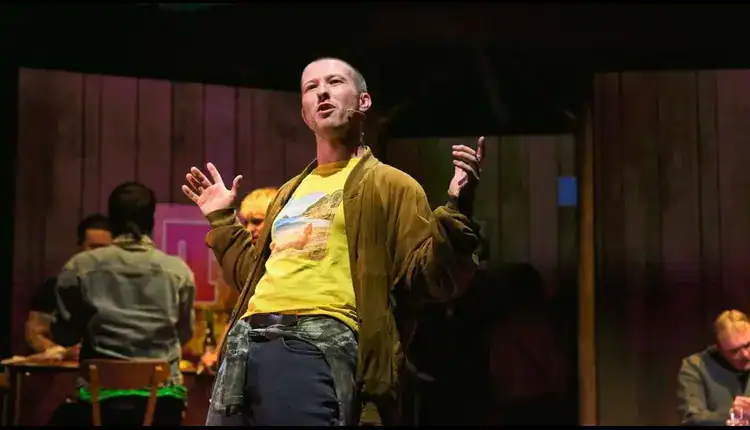
In case you’re searching for a uniquely conceptual, eventful and insightful musical production this summer, consider checking out Trainspotting the Musical. That’s right, Trainspotting the Musical. This summer you can sit back and enjoy the black comedy drama stage musical based on the Irvine Welsh novel of the same name from 1993, centred on a gang of Edinburgh locals caught in a lifestyle defined by limited opportunities and the battle of substance abuse, with energetic or emotionally charged musical numbers threading the intense moments together.
Welsh’s debut book, which went on to sell over one million copies by 2015 and has been cited as “the voice of punk, grown up, grown wiser and grown eloquent“, also inspired a smash hit 1996 film of the same name by acclaimed director Danny Boyle. Cited as the tenth Best British Film Ever Made by the British Film Institute, 1996’s Trainspotting stars Ewan McGregor, Ewen Bremner, Jonny Lee Miller, Kevin McKidd, Robert Carlyle and Kelly Macdonald and is the retelling most people would recognise and be attracted to the musical from. 1993 soon saw a play adaptation of Welsh’s book, travelling from San Francisco to LA, with In Your Face Theatre and Seabright Productions then bringing an immersive theatre adaptation to London in 2013.
Trainspotting’s story is deemed a cautionary one on fatalistic, nihilistic attitudes combined with drug abuse and loss of hope for life, with its characters descending deeper and deeper into their distinct bleak holes. To move such an intense and important story from page to screen to stage, original writer Welsh penned an updated script for the medium and was then accompanied by composer Stephen McGuinness in curating and writing the musical numbers, brought together by developer and director Caroline Jay Ranger.
Running at London’s Theatre Royal Haymarket until the 5th September, the musical stars Lewis Kidd and Robbie Scott as Mark ‘Rentboy’ Renton, Sheridan Townsley as Simon ‘Sickboy’ Williamson, Kieran Andrew as Spud, Finlay Paul as Tommy and Frankie O’Connor as Franco.
Additional cast members include Rebecca McKinnis and Gordon Cooper as Rentboy’s parents, Rosie Dignan as Sickboy’s lover Allison, Yana Harris as Rentboy’s lover Kelly and Ashley J Russell as Colleen.
“I believe the musical has a bigger, loudly beating human heart than either the book or the film,” author Welsh shared. “People need to think about the world we’re living in, and we offer that inspection, but they also really need to sing their hearts out and laugh their heads off – it’s what being human is all about.”
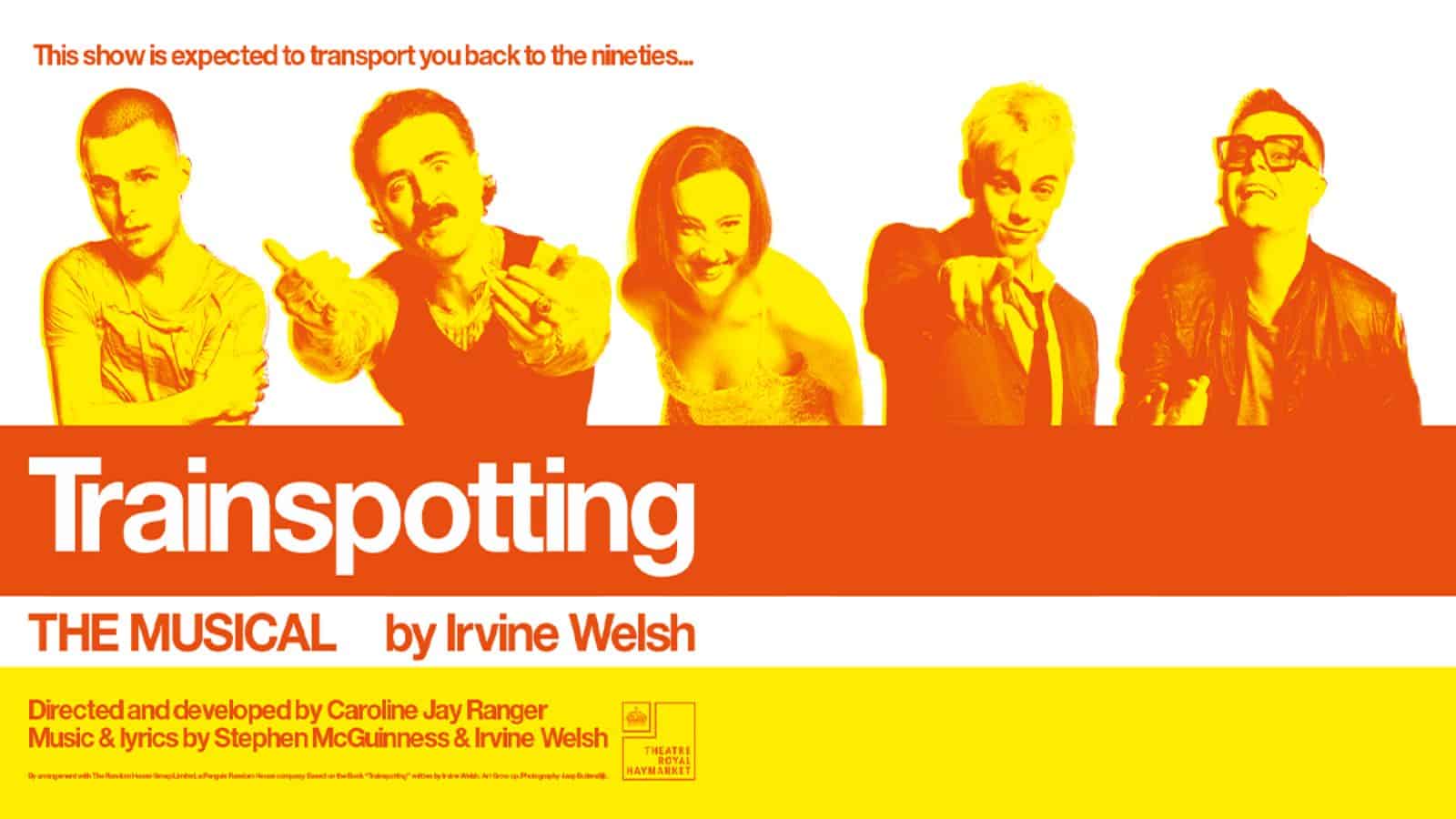
Trainspotting the Musical by Irvine Welsh.
Politically Charged and Cathartic
Coming in unapologetically as a bizarre yet intriguing concept in adapting such a heavy story into a musical production, as for every musical number we see ten cigarettes being smoked, Trainspotting the Musical offers additional spark in its occupation of a space heavily influenced by the social politics of the time; as noted in the dialogue, these young men are forced to choose between “dodging bullets and dodging needles.”
The show, and previous formats of its story being told, relies on the cultural backdrop (comprised of political shortcomings and exploitations) to generate audience emotion and a more in-depth, rounded explanation of how its central characters ended up in the circumstances they did. To assure this is immediately driven home, the first time we see Rentboy and Sickboy take drugs, they sing a number about how corporations have purchased areas of their homeland and eradicated most jobs and chances at life. We also witness a punching, rock-inspired number calling out the faux potential and hope job search services half-heartedly offer and how the boys mock and belittle them. We see families torn apart by wars started by men who won’t go near the battlefield and instead toss young boys towards it.
The political inspection, as presented in a vibrant, layered format of a musical, signals a huge highlight to Welsh and Ranger’s adaptation of the original novel.
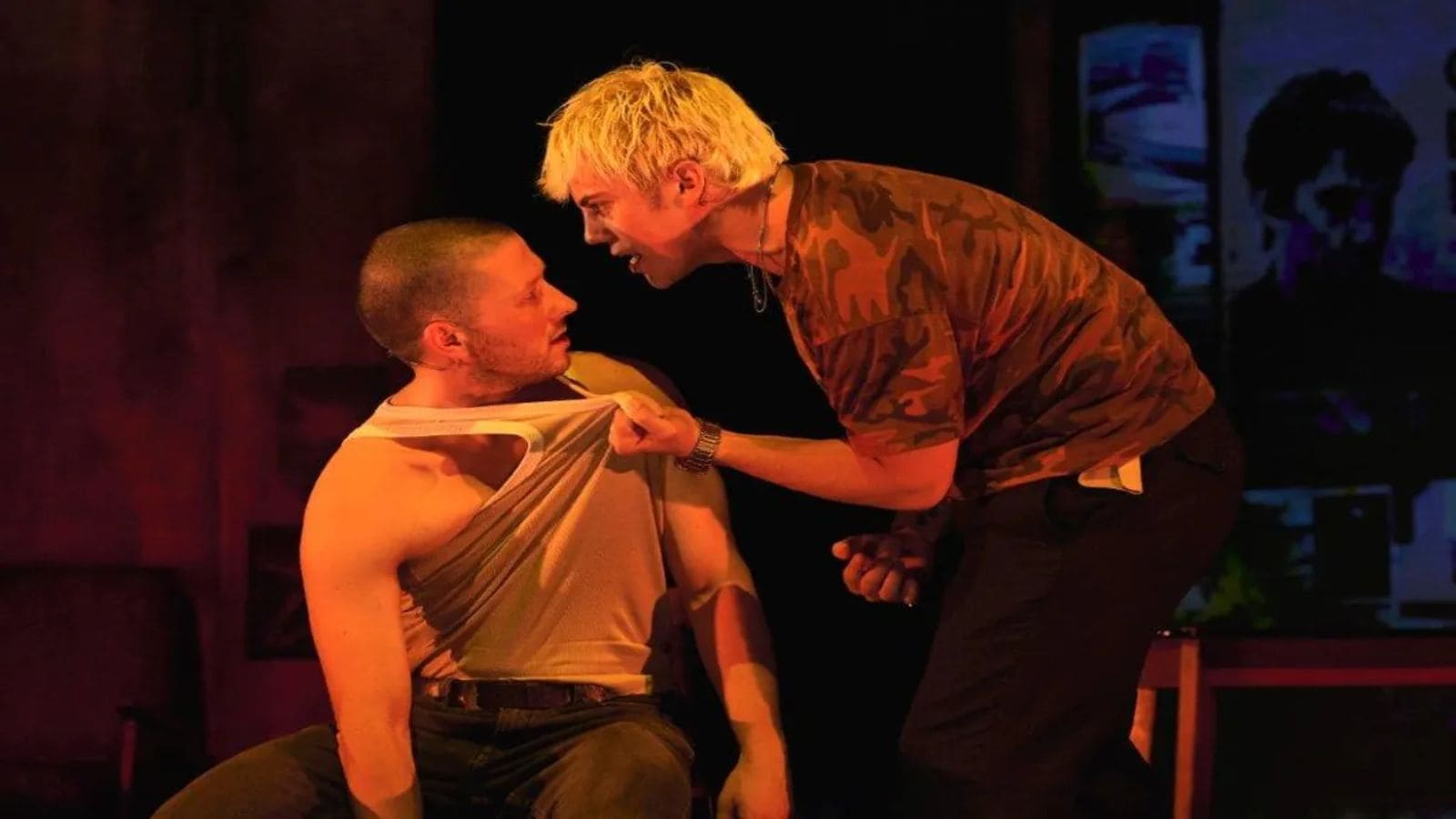
Emotions run high in this Scottish-based musical
A Crazy Sounding Idea But It Works In Musical Theatre
When it comes to the musical aspect, the show’s dance numbers elevate the unique and juxtapositional tones, as it feels organised and energetic yet completely natural and weighted. The characters move alongside each other as their bodies visually portray their inner anguish and co-dependency on one another, showcasing detailed choreography by Christina Andrea, whose efforts amplify how powerful musical theatre can be in telling such narratives.
Familiar songs from the 1990s are also chosen and performed in brilliantly selected and deeply emotional moments, packing a great deal of power and punch in expressing the accepted sense of immense loss and isolation these characters buckle under. The era of creation triggers a deep sense of nostalgia for audiences who were there for the ’90s, bridging the contextual backdrop effortlessly with the narrative’s emotional tapestry in a stimulating presentation. Additionally, the vocals translate the agony and bleakness, scattered in between scenes as cries for help or call-outs of societal restrictions.
Costuming Brings You Back To An Iconic And Missed Decade
Designed by Colin Richmond, the costumes are another success, capturing being a ‘90s Brit fantastically with washed-out plaid, grunge tees, bleached pattern t-shirts, Doc Martens and heavy cardigans. In a real visual treat for those who miss or love the era, everyone enters with a personalised touch which loudly blasts the calls of the ‘90s, as the show promises to “…transport you back…” to the decade. The costumes complement one another while maintaining characters’ arcs in between, elevating the significant time era of the play.
Despite the grit and grime infesting the play’s atmosphere, the set design brings forth some illuminating colour and personality to clash, hinting at the potential these characters are holding on to by a thread. Furthermore, the set is complemented and elevated by the use of screens, with the video artistry being handled by Douglas O’Connell, designed both to add background settings and amplify the atmosphere of key scenes through a display of heavily edited art visuals to illustrate pivotal emotions.
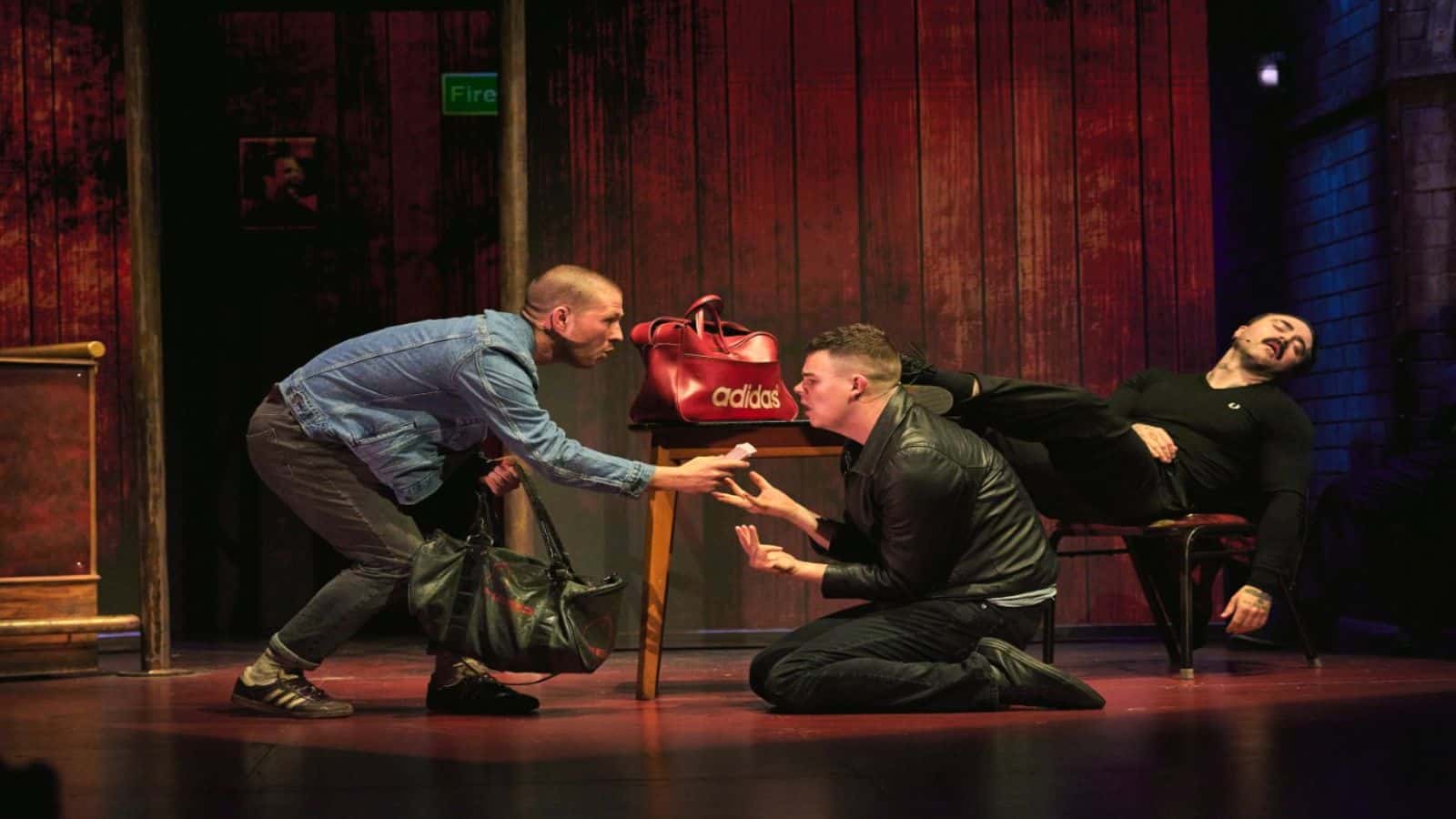
Rentboy and Spud in Trainspotting the Musical.
It’s refreshing and captivating to see numerous, expressive art communications gel on a stage to translate numerous ideas and insights into one image.
Staging is also layered and creative, with weak, frail bodies curling up on the floor like a wounded animal while loved ones confess how far and helpless they feel just a few steps away. People stand isolated on one end of the stage while groups merge in social settings on the other. Characters get to stand on a high balcony above others to gain a fleeting sense of power and thriving before it all comes crashing down.
Every little detail comes together.
Emotionally Grappling Performances Balancing Humour and Tragedy
As expected with a work which relies deeply on intense, emotional weight and events, the musical’s performances deliver on the commitment and challenging landscape. Everyone delivers a solid, thorough and dedicated execution. However, some electric and shining performances lie within Andrew’s Spud and Didigan’s Allison, the former blessing us with a consistent and relieving sense of humour and the latter anchoring an important part of the piece’s tragedy and hopelessness.
Essentially, this musical mostly hits its target of presenting such a story extravagantly as it combines dialogue with stylistic components specific to musical theatre to inspect all sides and effects of drug abuse. These include the deterioration of relationships, emotional strain and internalised blame of parents, disapproval from employers, lack of trust and stability in friendships, personal agony and crushed self-esteem, to name a few.
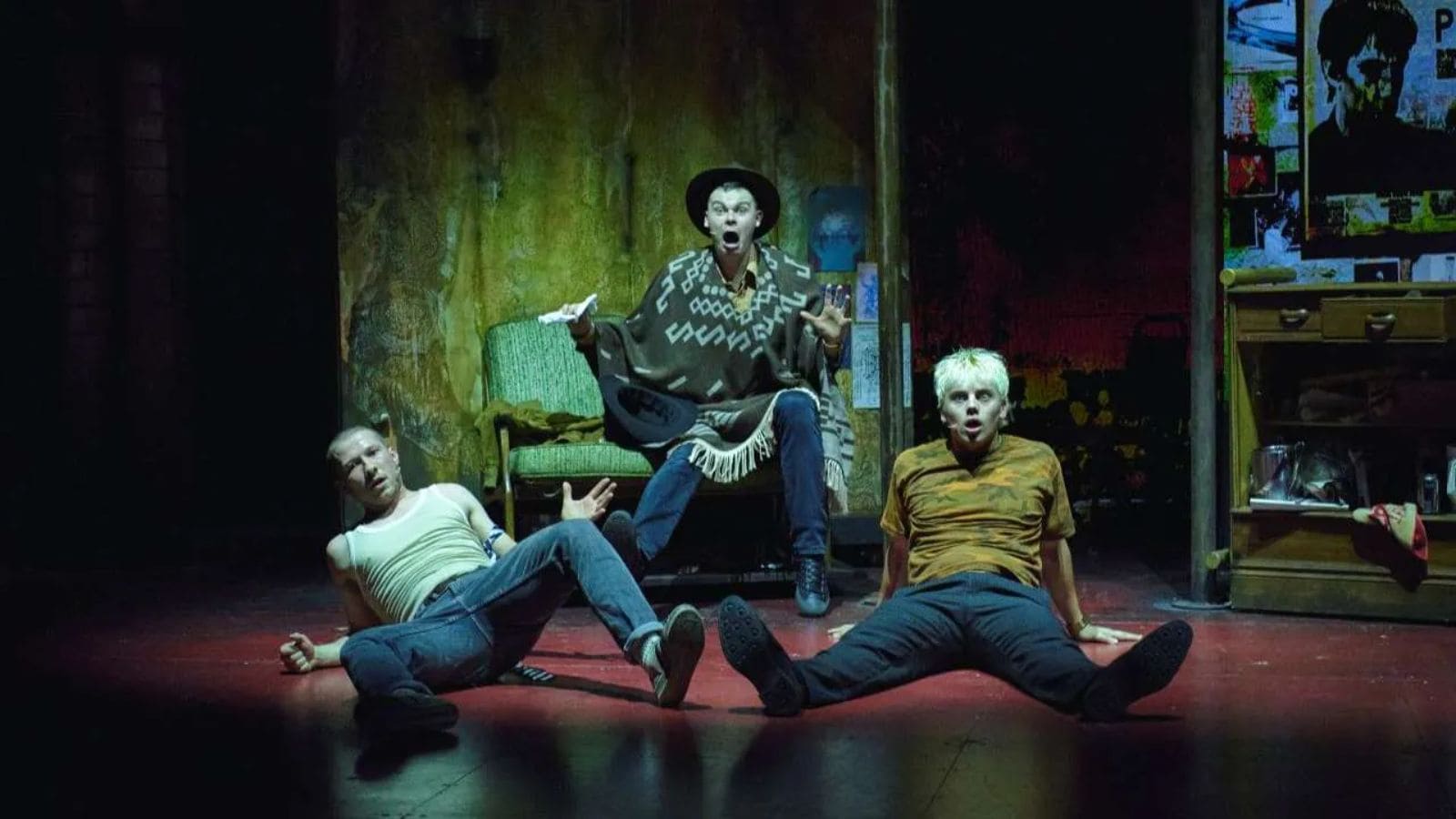
Rentboy, Sickboy and Spud in Trainspotting the Musical.
The Scottish Highlands Are Not To Be Mist!
We also see a solid deal of the contextually significant factor in the setting of Scotland and what it means to be a Scot, with accents and slang coming in vast, loud and unapologetic, such as Franco. The background screens also amplify this, with Scottish landscapes such as its countryside and factories being displayed behind the character action to paint a unified picture of the land.We can feel the internal battle of patriotism and feeling let down by their country, which the characters grapple with, feeling tempted to pack their bags and leave their home now it’s made them feel as though they have outgrown it.
Some Shortcomings
To note a few minor downsides, we do have key moments falling slightly short in delivering the utmost intensity, such as a sudden and tragically devastating death, yet there is still a clear strive to exemplify them in an artistic manner which utilises the medium of musical theatre. Moreover, famous lines, referenced and noted for their thematic weight and social contextual signalling, occasionally feel tossed into the dialogue flow almost as though the writing is just aiming to score full marks on a generated checklist to be presented/accepted.
Conclusion
Overall, Trainspotting the Musical should not be missed by any fans of the book or film, or anyone who wants to see a show which balances between tragedy, comedy, political inspection and art forms. You’ll get teary-eyed between the laughs and winces, dance along to the music before finding yourself in awe of the emotional tunes. As predicted by its author, Trainspotting the Musicalopens the story’s wounds even further, immersing the audience in a captivating world which will open their hearts and minds to the issues of drug abuse and political faults impacting personal wellbeing.
Trainspotting the Musical is playing at London’s Theatre Royal Haymarket until 5th September.
