

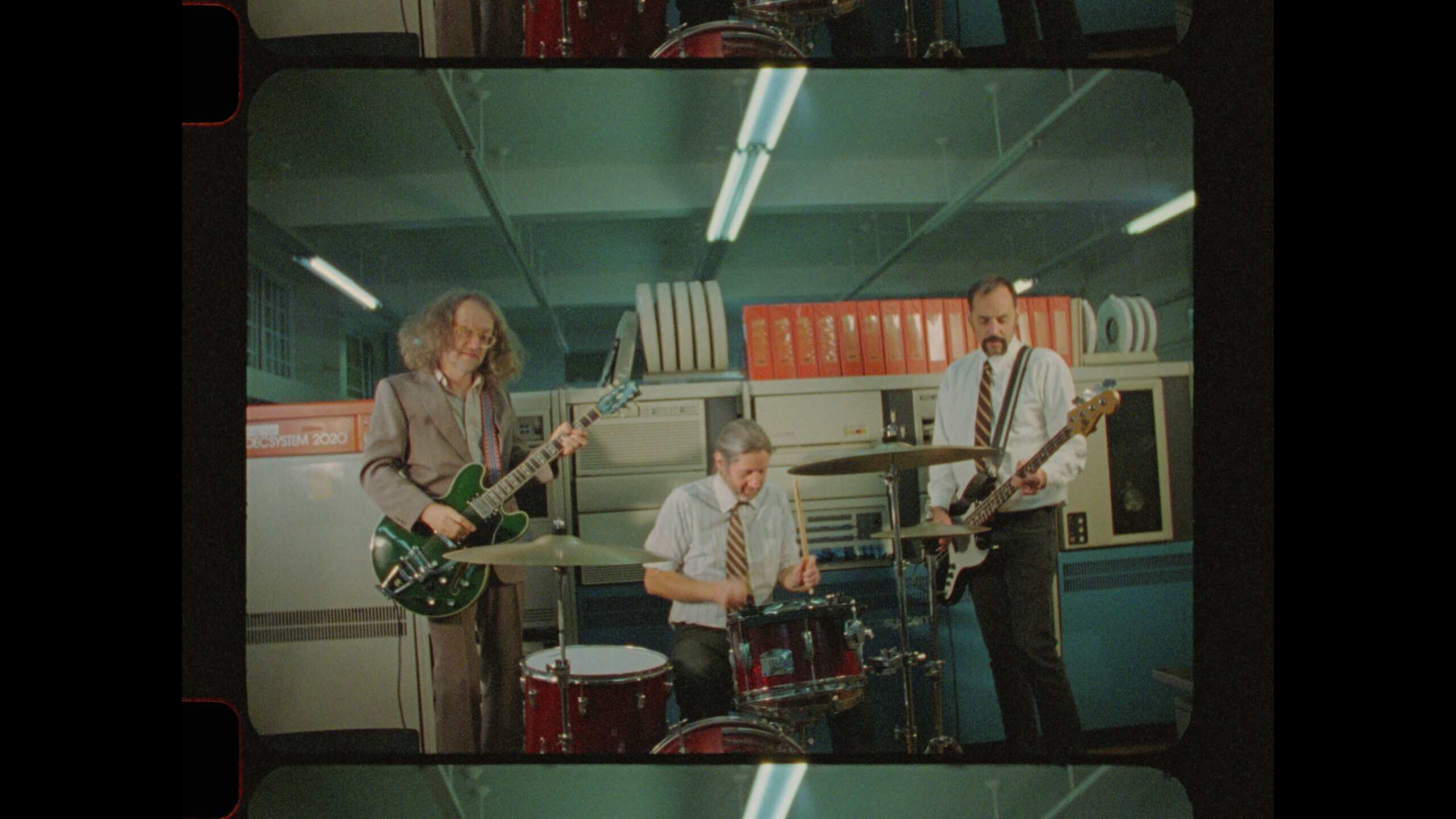
With second album Functional Music, Pennsylvania-based American Motors explore the forgotten corners of American life. Vocalist and songwriter Dustin Travis White talks to Christina Brennan about growing up in West Virginia, the stories behind the songs, and making music in an increasingly bewildering music industry.
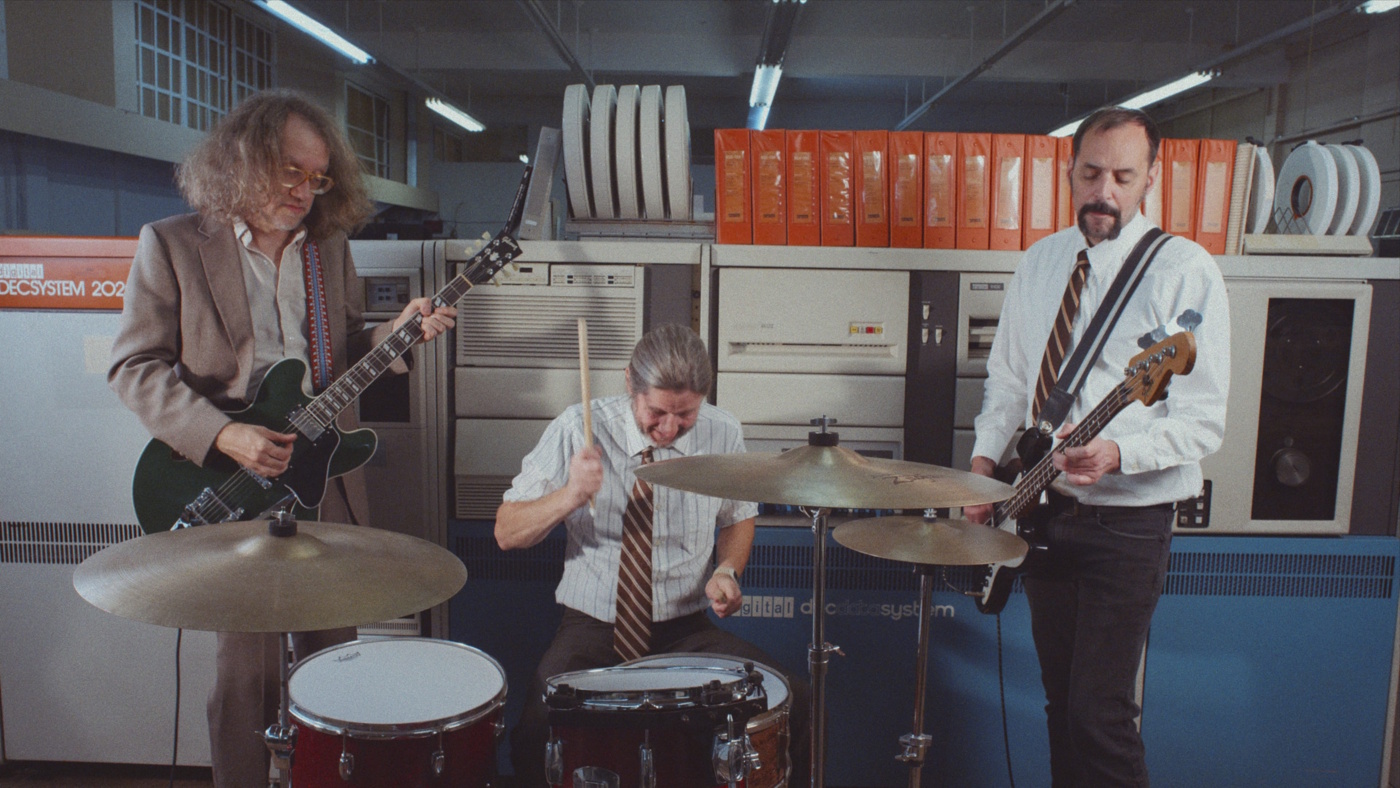
For American Motors, the crumbling buildings and overlooked communities of West Virginia are part of the landscape that shaped vocalist and songwriter Dustin White and continue to provide inspiration for his music. Released on 6 November 2026, the band’s second album, Functional Music, follows 2024’s Content, shifting its attention from a broader picture of a society in decline towards the people living within it including young people who are growing up in a rapidly changing world.
It’s a development that White describes as largely instinctive. “I think it emerged pretty naturally,” he explains. “Maybe this time I had a little bit more confidence that I didn’t have to go and dig. I could kind of zoom in a little bit more.”
Recorded with producer J. Robbins (Jawbox, Burning Airlines) at Baltimore’s Magpie Cage studio, Functional Music draws on the abrasive, angular traditions of American underground rock. Yet beneath its muscular guitars and uneasy atmosphere lies a fascination with everyday lives and the places that shape them.
For White, those observations begin in West Virginia, a state with a particularly complicated history.
The places left behind
“It’s got this nowhereness to it,” he says, describing a place that doesn’t quite belong to the American South, Midwest or East Coast. “It’s kind of right at this perfect crossroads.”
While West Virginia is commonly associated with coal mining, White grew up in an area known locally as Chemical Valley, where factories once provided employment for generations of families, including his own.
“My grandfather and my stepdad, they all worked there,” he recalls. Many of those plants now operate at a fraction of their former capacity, while others have disappeared altogether.
The consequences are visible everywhere, although White is equally keen to emphasise the area’s extraordinary natural beauty. It’s this contradiction, between what has been lost and what remains, that informs much of American Motors’ music.
His fascination extends to the strange details of local life, including the former community of Jefferson, West Virginia, whose abandoned businesses and declining motels have inspired several songs.
Years spent working in bars also introduced him to the characters who inhabit his writing. Importantly, he insists, his intention has never been to look down on them.
There’s a wider musical tradition behind this approach, too. Appalachia has a rich history of folk music, protest songs and working-class storytelling, particularly those emerging from the struggles of coalfield communities. White sees something of that tradition continuing through his own work.
From West Virginia to the wider world

It’s an approach that has begun attracting attention beyond America’s independent music scene. Recent single ‘No Horses’ featured in The Guardian’s Film & Music playlist and was recognised by influential US music publication Stereogum among its five best songs of the week.
The response overseas has nevertheless surprised White. American Motors’ music is so closely connected to its place of origin that he sometimes finds it difficult to imagine how listeners elsewhere might interpret it.
“What we’re doing is so deeply American,” he says, reflecting on the attention the band has received in countries including France.
Yet the experiences he describes have echoes far beyond West Virginia. For British listeners, the parallels with former industrial communities in South Wales and northern England are particularly striking: places where strong local identities coexist with the disappearance of industries that once sustained them.
Before American Motors, White had established himself within the independent music scene through work with artists including Pink Mountaintops, Times New Viking and Dead Meadow. Much of his experience involved contributing guitar to other musicians’ projects, developing a reputation for bringing unconventional sounds into singer-songwriters’ work.
The pandemic, however, prompted a desire for something more immediate.
“I really just wanted to do something loud and visceral and physical,” he says. American Motors offered an opportunity to reconnect with the heavier, stranger music he’d played when younger, while bringing the perspective he’d developed through years of collaboration.
Making music in the age of content
Making records, though, is only one part of the challenge facing independent musicians. Finding an audience in today’s digital landscape presents an entirely different set of frustrations.
For White, the internet’s supposed democratisation of music has come at a considerable cost. Although traditional gatekeepers have diminished, the distinction between genuine enthusiasm and paid promotion has become increasingly difficult to identify.
“Everything is a paid advertisement now,” he observes. “So what’s real? What is someone actually caring about? What is organic?” He has little appetite for the demands of contemporary social media marketing, with its endless pressure to create content rather than concentrate on the music itself.
“I just want to make records,” he says. It’s a sentiment rooted in something deeper than frustration with the industry. White recalls hearing an American radio interview with a subsistence farmer who, when asked why he continued such demanding work, replied that he simply didn’t know any better.
The phrase became a running joke during a previous tour, but it has stayed with him as an explanation for his own creative instincts. “I kind of don’t know how not to make art,” he admits.
And there is already more on the horizon. With ideas taking shape following a recent run of shows, White is eager to push American Motors further, particularly the contrast between the band’s melodic passages and its harsher, more abrasive moments.
For an artist drawn to extremes, contradictions and the overlooked details of everyday life, there’s evidently plenty of territory left to explore.
As Functional Music demonstrates, sometimes the richest stories are found in places the rest of the world has stopped looking.
Functional Music is out now via Expert Work.