

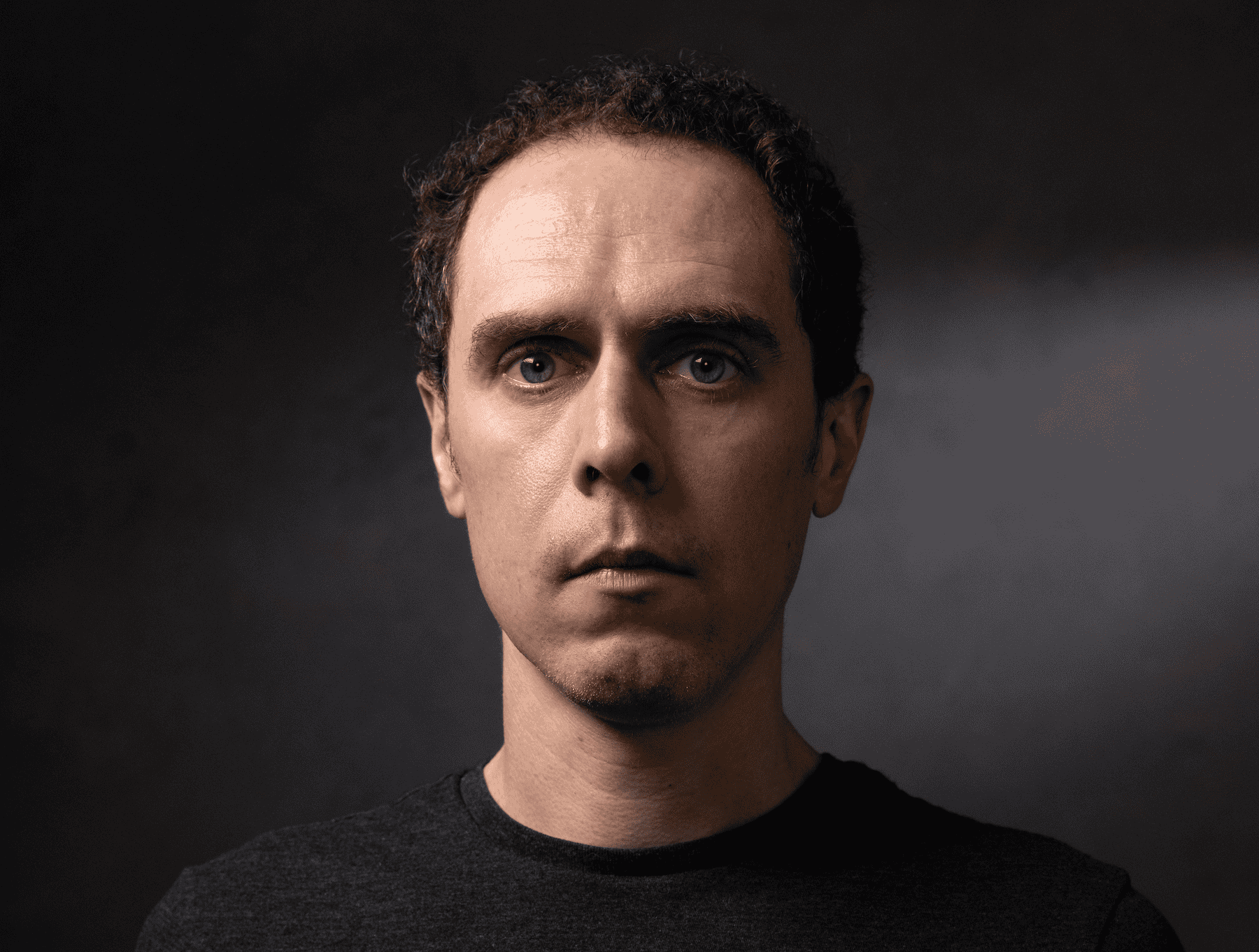
Cody Carpenter is speaking to me from Tokyo, where he’s been based for the last few years. He’s just re‑listened to Cathedral, the thunderous, synth‑driven metal album he’s created with his father, John Carpenter and long‑time collaborator Daniel Davies, to accompany their new graphic novel of the same name.
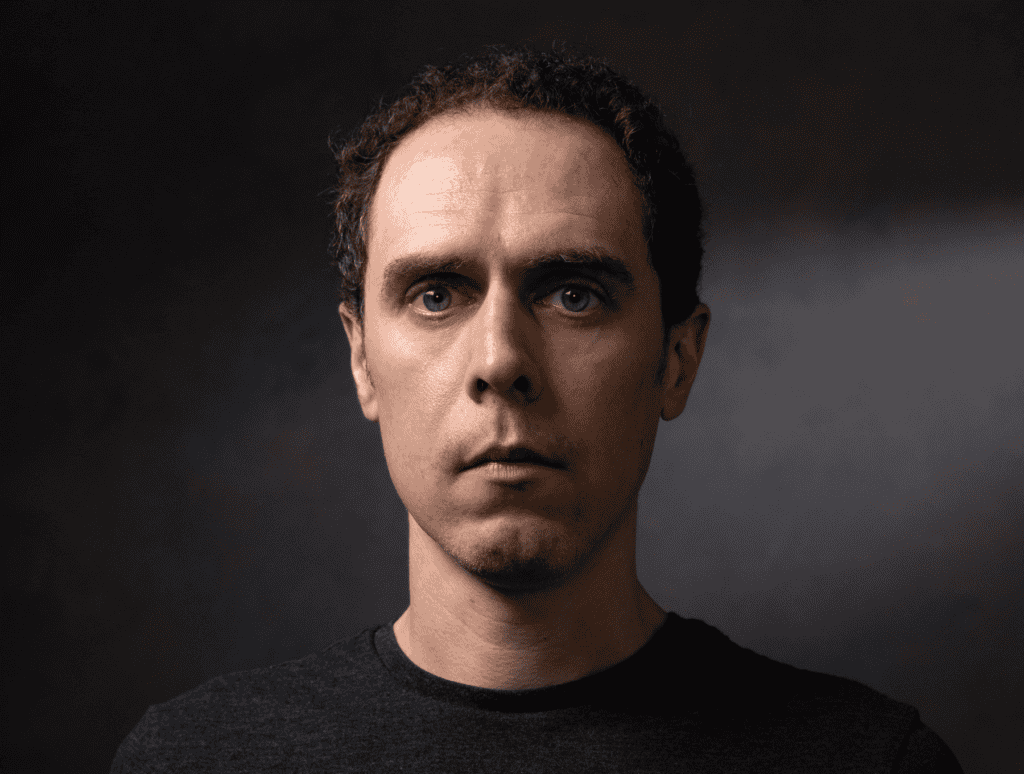
Credit: Sophie Gransard
“Just before getting on the Zoom to talk to you today, I re‑listened to the album,” Cody says. “I was really happy with the work we did on the album. It came out really well.”
Cathedral isn’t just another record in an already impressive run of collaborations. It’s a score for a world that exists on the page rather than the screen – a narrative born from one of John’s vivid dreams and expanded by Davies, and it has pushed Cody into new creative territory. At the same time, it sits at a crossroads in his career: between his solo work, his life in Japan, and the unique, complicated privilege of being part of the Carpenter creative dynasty.
Scoring a dream: how Cathedraltook shape
The starting point forCathedral is classic Carpenter: a weird dream created, and manifested “For most of the production for this album, I was in LA,” Cody recalls. “So we were able to work physically together as opposed to remotely, which is obviously different when I’m here [in Tokyo] remote‑controlling my dad’s computer.”
In that period of being in the same room, John walked in with a story seed. “He had this dream,” Cody says. “He came and he said, ‘You know what? I want to make something out of this dream.’ It was a very cinematic dream. So, we started formulating the music to go in line with the story, which was something I don’t think we’d ever done like that before.”
That difference – scoring a narrative without a moving image, changed Cody’s mindset. He’s used to two distinct modes: the free‑form imaginary films of the Lost Themes albums, and the very precise demands of traditional film scoring with locked picture. Cathedrallives somewhere in between.
“Different from theLost Themesalbums, but also different from when we scored the movies,” he explains. “There is no image that we’re working with, but at the same time, there is a narrative that we have to work with. That was definitely a new experience for me.”
Instead of reacting to edited scenes, the trio worked in tandem with the evolving story. “Maybe the music and the story are kind of working in tandem,” Cody says. “We’ll come up with some music and [ask], ‘How does this fit the story?’ Or, ‘How does the story fit the music?’ You can come at it from the two different ways. It’s all sort of new and very fun for me.”
Building the sound of Cathedral
On paper,Cathedral could be framed as a metal record, and Cody understands why. There are moments of genuine heaviness, “epic synths and mega riffs,” as I put it to him, that go straight for the jugular. But the route to those moments is rarely straightforward. “We usually start with either a riff or a sort of demo, or an early formulation of an idea,” he explains. “Maybe one of us will bring it in, and then we’ll all kind of massage it out together, to a degree.”
The album’s first single, ‘Lord of the Underground’, is a good example. “That was our first single, which was kind of the metal, kind of rocking tune,” Cody says. “I think we started with the guitar riffs and stuff like that, and it kind of built from there. And then we added the synths and stuff like that afterwards.”
Elsewhere, the process flips. On a track like ‘The Map Maker’, it’s the keyboard that leads. “For something like, for example, maybe ‘The Map Maker’, the sort of melody – the piano or the keyboard melody – came first, and we moved from there,” he notes. “So it was kind of different for each tune where it starts, but we all kind of moulded everything together, and that’s how it came out.”
The end result is an album that can be approached in multiple ways: as a metal‑leaning concept record, as a Carpenter‑esque synth journey, or as a full narrative experience when paired with the graphic novel.
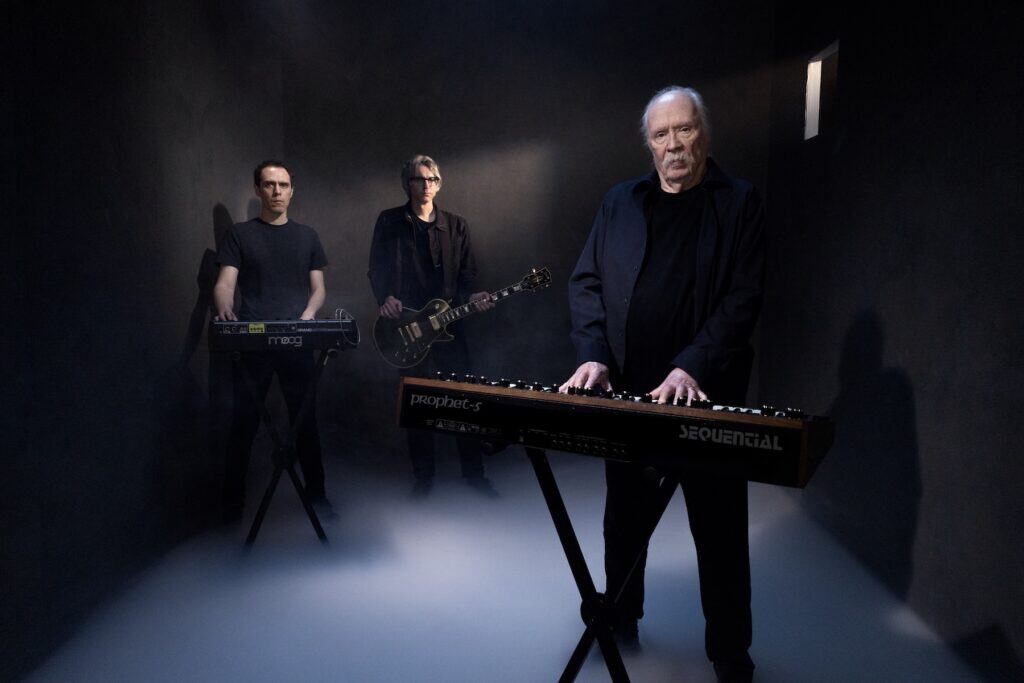
Credit: Sophie Gransard
Two paths
BecauseCathedral is so closely tied to its graphic novel counterpart, it’s easy to imagine a “correct” way to experience it: book in hand, record on, following each riff and motif through the panels. Cody doesn’t see it that rigidly. “I think there’s two ways to enjoy it. Well, there’s many ways to enjoy it,” he laughs. “You can, while you have the graphic novel in hand, listen to the music and go along with it. Or the music stands on its own.”
Interestingly, he keeps a deliberate line between his role and the visual side. “I personally was not involved in the graphic novel and any of that stuff,” he says. “So I’m only part of the music, and I think the music stands on its own.”
Even without the comic, listeners aren’t left out of the story. “In the liner notes, there’s the story there as well, so you’re not missing out on anything,” he points out. “But at the same time, it’s another experience if you have the graphic novel in front of you at the same time. I just hope people enjoy it.”
That openness mirrors his attitude to all of his work: he wants it to connect, but he doesn’t want to dictate how. Whether listeners are locked into the narrative or just losing themselves in tracks like ‘Desolation in the Underworld’, Cody’s more interested in emotional impact than canon.
Cody on his solo work
Before any of the tours, beforeLost Themes, beforeCathedral, Cody was grinding away on his own music (Ludrium) and, in his words, not seeing much traction. “Actually, before I started working with my dad, I was doing my own kind of solo stuff,” he says. “And, you know, it just never really, never really worked. It never really got off the ground, and so I was kind of, you know, disappointed. ‘What am I doing?’”
Those early experiences shaped the way he sees his solo output now. Under theLudriumname, he’s released intricate, often virtuosic records that fuse prog, synth, fusion, and soundtrack sensibilities, but he’s honest about how they land compared to the family projects.
“I still do stuff on my own,” he says. “But really, my focus is working with my dad, because I find my solo stuff doesn’t reach people as much and it doesn’t move people as much, which is fine.”
That isn’t bitterness; it’s realism. For Cody, the entire point is connection, and he’s clear‑eyed about where that happens most. “All I really care about is doing something that makes people happy,” he says. “To be able to affect someone in some way and affect their life and hopefully for the better, you know… there’s not much more I could ask for.”
In a strange way, the contrast between his solo work and the collaborative records has made his priorities sharper. Ludrium remains a space for exploration and self‑expression; the projects with his dad are where he feels the feedback loop from an audience most intensely. Both matter, but in different ways.
Growing into collaboration
Cody’s relationship with his own work and with collaboration has changed dramatically since those early, frustrating solo efforts. He’s candid about how age and experience have softened his edges and made him more open.
“Just the way I approach working with him is different, probably, than when I was, you know, in high school or whatever that was,” he reflects. “I think when we’re young, we have very… our likes and dislikes are very black and white. And it’s like, ‘No, I’m not going to do this.’”
Time – and a lot of shared studio hours – has shifted that perspective. “As we get older, maybe we get a little bit softer and we get more open to different ideas and things like that,” he says. “So I’ve definitely shifted a lot in that way, which I think has been wonderful.”
That evolution is crucial when you’re working with a parent whose name carries an enormous artistic legacy. It allows Cody to balance his own instincts with respect for the bigger picture of a John Carpenter project. “The fact that I’ve just been so lucky to be able to work with my dad and for him to give me the opportunities and stuff like that has just been amazing,” he says.
Inside the Carpenter dynamic
Ask musicians about working with family and you often get stories of friction alongside the magic. In Cody’s case, the dynamic with his father is remarkably straightforward.
“When we’re making music… because obviously it’s family, things run pretty smoothly,” he says. “We don’t have a lot of issues.”
Part of that is down to roles being clearly defined. “Ultimately, my dad has the… he’s the director, he’s the leader,” Cody explains. “So ultimately, he’ll give the say whether we cut something or something like that. But that always works fine.”
From the outside, that could sound like a tough pill for a skilled composer and player in his own right, but Cody doesn’t frame it as a struggle. The respect is obvious. “It all kind of comes out really nice,” he says. “I wish I could give you a better answer,” he adds with a laugh, when pressed for conflict. For him, the “nuance” is less about drama and more about learning how to align his own evolving tastes with a very specific, very established creative voice.
That alignment has paid off massively onstage, too. Cody still cites their 2016 tour, which took John Carpenter’s music across North America and Europe, as a career highlight. “That was something in my life I never thought I would do,” he says. “To play to these audiences that really love the music… it was amazing.”
Legacy
With the surname Carpenter (in this context, at least), the word “legacy” follows you around. When I ask Cody how he feels about his own, separate from the constant discussion of his father’s, he almost recoils from the concept. “You know, it’s funny. I don’t really think about it at all,” he admits. “I’m just trying to survive. I’m just trying to… it’s truly, I feel so lucky just to be able to do music and get paid for it.”
He’s acutely aware of how precarious that is, even for talented people. “So many people aren’t able to do [that], even if they have the skills, they have everything,” he says. “If they don’t have the opportunity, then it’s just… it’s so hard. And somehow, through my family, I have the opportunity to do that.”
That gratitude keeps him grounded. Rather than plotting out some carefully curated legacy across his solo catalogue, film scores (like the upcomingOddities, which he’s scored and which stars his mother), and collaborations, he focuses on the present tense: making work, reaching people, and, yes, getting paid.
“I’m just glad to be doing what I’m doing and being a part of something that people enjoy or that people can take something out of,” he says. “That’s the best.”
The dream
Looking back at everything – moving to Tokyo, touring the world with his dad, carving out his own space with Ludrium, and now helping build the world ofCathedral – Cody keeps circling back to one thing: the listeners who show up. “I just want to say thank you,” he says, when asked what he’d tell the people who’ve supported both his solo work and the family projects. “It’s the greatest thing to be able to create something and have it affect someone in a positive way.”
As he puts it, that connection is the real reward. “As a creative person, to be able to connect with someone like that in that way… I’m very thankful for that.”
InCathedral, that gratitude and openness is etched into every towering riff and glowing synth line. It’s a record born of a family dream, a graphic novel, and a lifetime of absorbing and reshaping the Carpenter sound – but it also carries the quieter story of a musician who’s learned to balance his own voice with a legacy, and to measure success not in prestige, but in the people who feel something when they hit play.
“It’s the dream,” I say to him at the end of our conversation. “Yeah,” he replies, modest as ever. “I’m still here. It’s just been wonderful, really.”
Cathedral the album comes out Aug 7 on Sacred Bones, and the graphic novel comes out Aug 4th on Storm King Comics.