

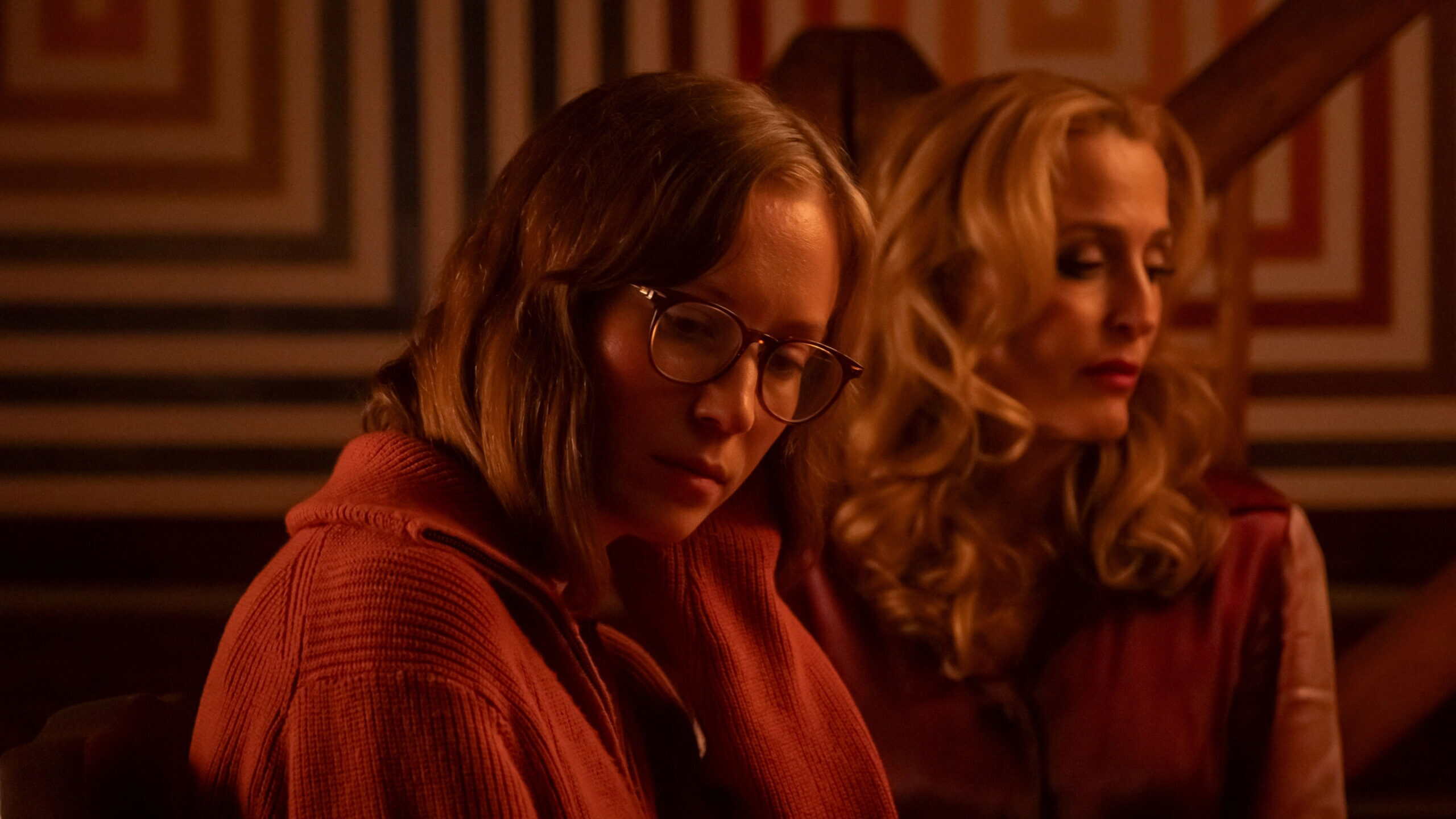
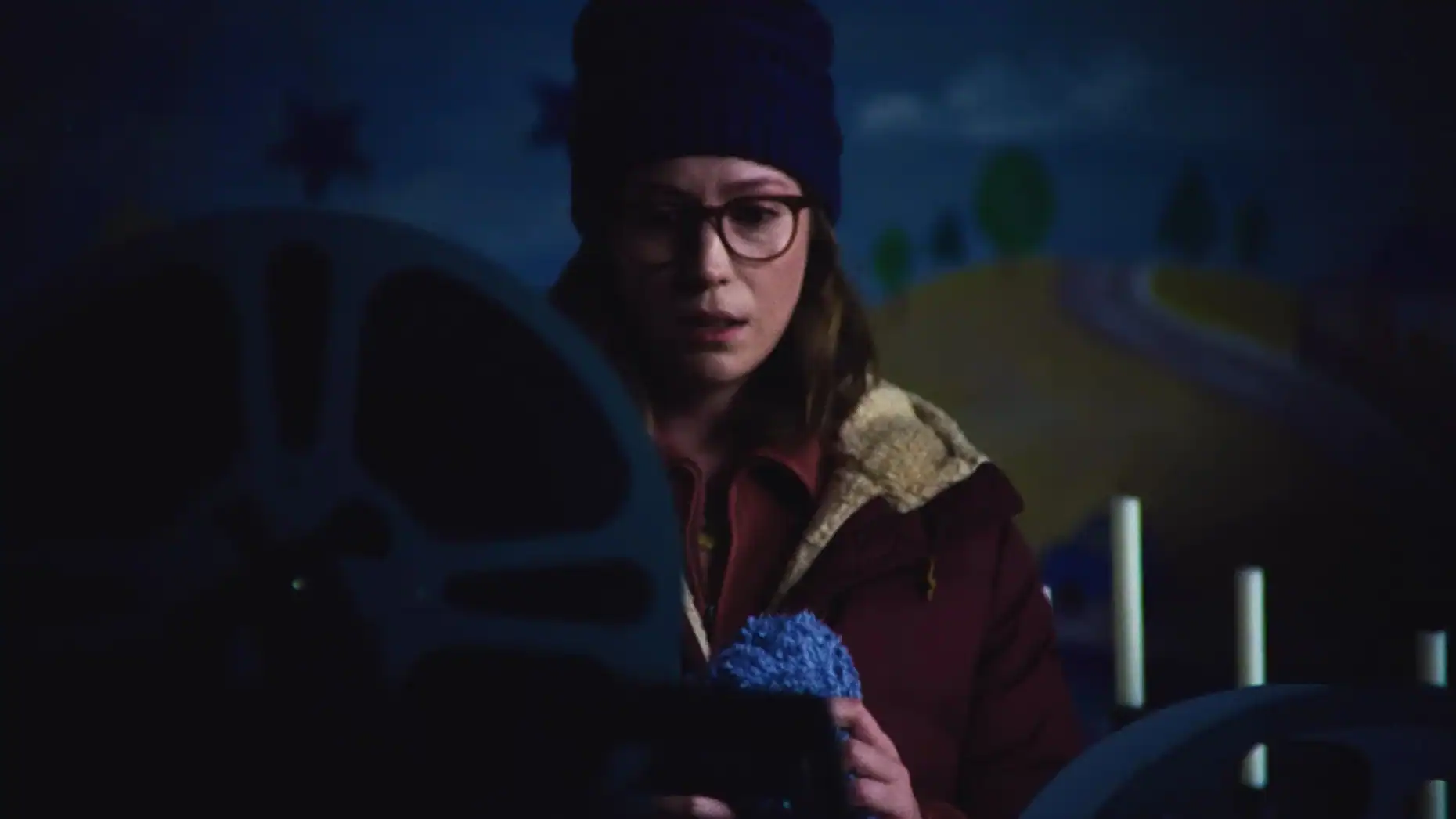
Following the premiere of Teenage Sex and Death at Camp Miasma and the ending of Hacks final season, Emmy winning actress and comic Hannah Einbinder finds herself in a very unfamiliar position. Turning 31 this year with a healthy career to boot and many dreams and achievements already unlocked, there is clear gratitude and a sense of stability that she can carry on forward while representing her values but it is clear she is just getting started. Camp Miasma is a horror slasher comedy by Jane Schoenbrun who made the trans coming of age I Saw the TV Glow starring Hannah and Gillian Anderson. an insight and play on to the Hollywood fascination of recreating horror IP through a young director that is keen to start anew and pay homage to the past while discovering her own sexual identity in the process. Meanwhile, Hacks is a dark comedy show that focuses on a Las Vegas comedian and her younger comedy writer counterpart as they explore their mentorship dynamic and beyond in the industry. Hannah shares her experience when looking back at her work on Hacks, Teenage Sex and Death at Camp Miasma and even her comic work, and we discuss what’s next in store for her.
Teenage Sex and Death at Camp Miasma (Courtesy of Mubi)
Soundsphere] How was your first Cannes Film Festival premiere and experiencing that standing ovation?
Hannah Einbinder] Totally surreal. I think there’s not a single moment of this experience that is lost on me. Jane and I were walking to the photocall earlier yesterday, and I was saying to Jane, do you ever get that feeling that you’re in the past not in a nostalgic way, but in a way that makes you feel a certain amount of perspective. In ten or twenty years, we will be looking back at this moment of us walking together and having this experience. We’re there right now. It’s interesting to bring consciousness and attention to that fact that we are in the past. It’s ironically something that helps me to stay in the present. I do have a great amount of perspective in this moment, which I’m really grateful to have. I just never in understanding the standing ovation only via online. As a viewer, I never really envisioned that being a part of it myself. So it’s really crazy.
S] How did you take in those 5-6 minutes of everyone clapping for you?
Hannah] Well it reminds me of the art of clowning. The idea of stretching something out for an impossible amount of time and it going through the sort of rising and falling of; in the case of clown and comedy, it’s funny and then you’re going: “oh my God, I can’t believe this is going on so long? How long is this going on?” And then it becomes funny again and then it stops being funny and then… It’s so interesting, it felt very reminiscent of that. It’s sort of the shape of that. It was also cool that a lot of our crew members were there, our production designer Brandon and our DP Eric and our costume designer, Kendra and a lot of the actors from the film. So it’s nice to see everyone who was instrumental in making the film get to be appreciated.
S] It’s the 5 year anniversary of Hacks, your first TV show. How do you feel?
Hannah] That is so crazy. I mean, that show has given me really everything that I have. I’m so filled with gratitude for Paul, Jen and Lucia, the creators of “Hacks” who have just singlehandedly made every single thing that I have ever done and will ever do possible. And so it’s totally fitting that this moment comes on an anniversary of the thing that made this all possible for me. So that’s so meaningful.
S] Looking back on those 5 years from playing Ava, what will you remember the most about the experience?
Hannah] The people, the community, I think something that I feel is true on Jane’s film and is certainly true of my experience of Hacks is that there’s this myth that you have to be a hard ass to get to produce good work. It’s just not true. You can be kind and warm and supportive and create a loving environment, and it’ll pay off. You can have good work and really funny work. It doesn’t need to be toxic or scary. So, I’m most proud of that. I’m proud of the people who cultivated that environment, both on the film and in Hacks. So when I look back, I’m going to think of all the love.
S] You’ve described Teenage Sex and Death at Camp Miasma as a trans sapphic ode to marginalised communities. Could you elaborate?
Hannah] This film is genuinely a large product of Jane’s experience. It’s a trilogy with Worlds Fair and I Saw The TV Glow, and it speaks a lot to their experience of coming in to themselves and the feeling of liberation from shame and embracing desire and embracing their identity as a queer person. So in saying that I’m basically recognizing that there is an emotional throughline for our filmmaker, Jane, in the film. I think that a lot of people who are members of marginalized communities can identify with that.
S] How was it like working with Gillian Anderson on this film with Jane?
Hannah]We had a lot of long conversations on tree stumps. We shot the movie in Canada. It was so beautiful. I mean, Vancouver Island, surrounded by nature and, really isolated. It was really just us, in these very small towns. We just sat around and talked a lot. I found that our conversations were really deep and intimate and helped me to connect more deeply to Jane and also to what I found true for myself within the film. There’s certainly a lot of that. Gillian and I just been asked a lot about our chemistry and how to build it, but I really don’t think that chemistry is built. I think it’s instant. It’s something that happens organically. That was certainly my experience there. It was just swell.
S] The film is a satire on entertainment and how we constantly revive these franchises. Chris is tasked with taking something that she loved in the 80s and bringing new life to it while paying homage to what came before. How did you relate to her?
Hannah] I really related to Chris’s difficulty being comfortable in her body. The film largely reckons with a thing that probably most people in this room have experienced in one capacity or another, which is shame and discomfort around sex. I definitely, in doing this film, had to examine just how true that was for me. I think it’s something that we do not talk about. And, that’s why I think the film is so important. It certainly was important for me. That’s my hope that people have a similar experience. So that throughline really rang true to me. As I shot the film, it became more and more true as I tried to dig deeper and bring more of my actual pain to it.
S] What is your creative process like in navigating both humour and vulnerability?
Hannah] Jane is an incredibly safe person. They made an environment where they were vulnerable and allowed me to meet them where they were. I mean, reading the script and seeing the film, it’s incredibly vulnerable. Jane speaks openly about the fact that there are a lot of really strong truths of theirs imbued in the text. So, I think knowing that and knowing how free Jane was willing to be with their experience, it made me want to meet them there and to open myself up and it’s a very cathartic experience.
S] What did you learn from Gillian on this film that you will take forward?
Hannah] Gosh, so much. Gillian has such an incredibly meticulous approach to the work. She’s incredibly disciplined and her physical choreography, and her really voracious desire to understand her motivation, in every moment was super illuminating to watch. I definitely feel like I will take some of that with me.
S] How important was the intimacy coordinator for this film?
Hannah] Our intimacy coordinator Erin was really instrumental in making sure they were in conversation with us around how important it was to make sure that the dynamics felt respectful and that everything felt balanced in the right way. There’s such a fine line, not only in the action, but also in the editing. Editing this movie differently could have turned it into something different. The details are so important to nail. We had a lot of conversations about that. Gillian wrote a book called Want which is a collection of anonymous sexual fantasies that a bunch of women submit. So she’s been immersed in this subject matter. Everybody really brought their own thing to it. It was very important for us to make sure that we captured this very specific experience correctly.
S] How do you envision the growth of our industry and finding your place in it now?
Hannah] I certainly think that our industry is totally imperfect. But I do feel really grateful to be able to do this work not only with intimacy coordinators, but to collaborate mostly with other women and queer people thus far. That has been really incredible. A lot of the writers room of Hacks are queer people or the cast are queer. It’s been helmed by these really incredible people who are writing to their own experience. The same is true for Jane. First and foremost, I’m after really good work. We tend to make that so that’s just a coincidence in some ways. But I think that it’s a freakish time. The response to that freakishness is going to be radical and this is a response to that in many ways.
S] Statistics show that when women, people of color and LGBTQ people are in positions of power, stories become richer. Crew become more diverse and inclusive which represent people more.
Hannah] In Wonder Woman when they’re on the planet, there’s all the babes. I’m thinking cool, I’m on the Wonder Woman planet. I feel like I look around and it’s just all my girls around. It’s nice.
S] You’re not beating the having amazing and possibly sexual chemistry with iconic older actors allegations. Now between Gillian and Jean Smart which is amazing.
Hannah] It is. I wouldn’t be surprised if my life was The Truman Show. I would not be surprised if I won some contest or something. It’s crazy. Maybe it relates to your previous question. I feel really grateful to be around at a time where people are embracing our stories. I feel so unbelievably fortunate every single day. It is never lost on me. To work with Jean from the job she is the most incredible human being and embraced me right off the bat, and taught me everything I know. I’m so lucky.
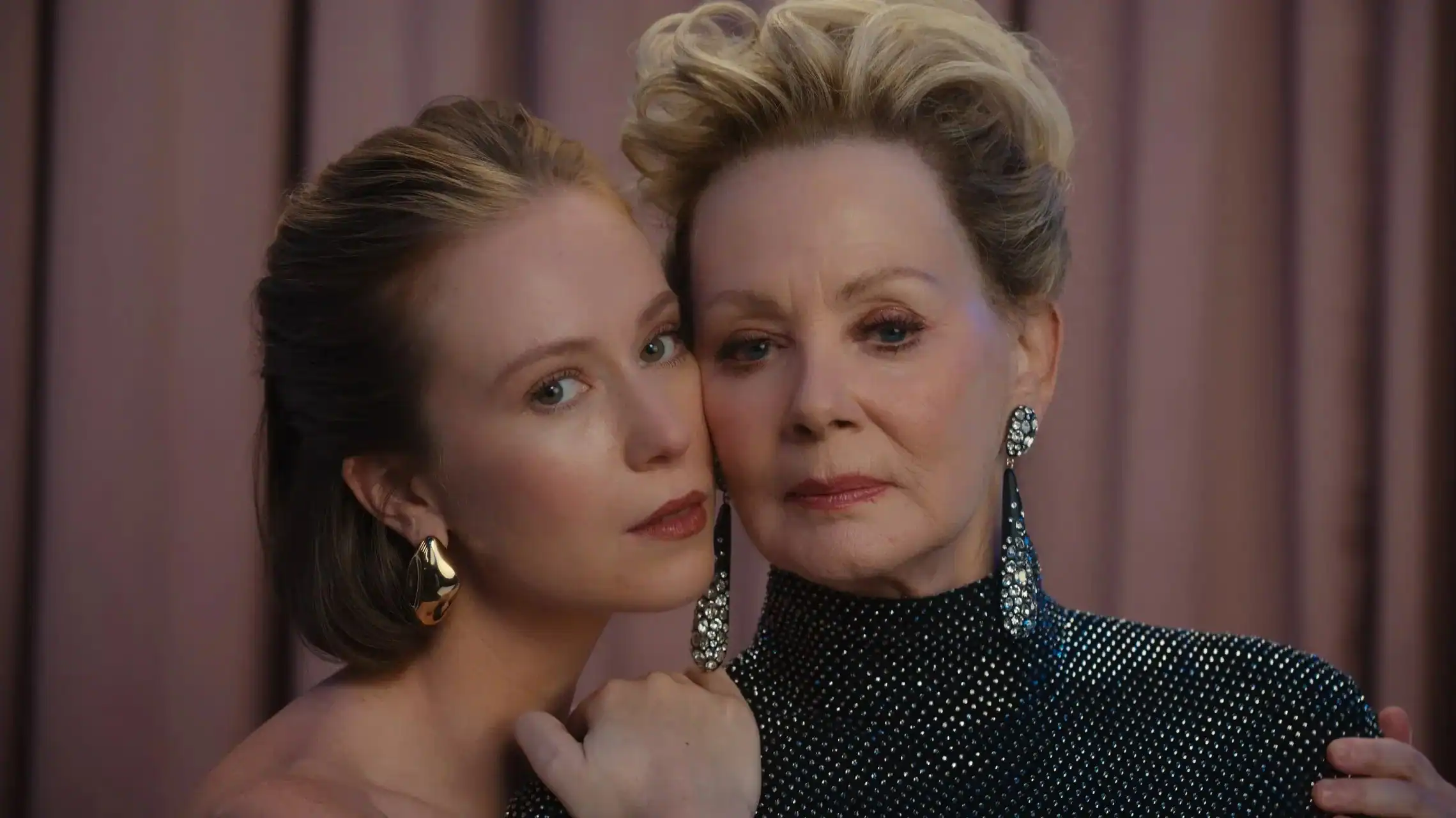
Hacks (courtesy of HBO Max)
S] What did you learn from Jean?
Hannah] Faster and funnier. If the take’s feeling a little weird, faster and funnier, get the face up. She’s also so gifted. It’s so effortless with her. She’ll be telling a story and then this week we were going, action. She pulls it right in and she’s perfect. I feel like what I observe from her is the totality of her naturalism and her performance. It’s unbelievable. She’s a gifted athlete, genuinely.
S] Your late 20s has been transformative. From starring in your first TV show and first film, having your debut standup comedy series, winning the Emmys, when you look at going to from 30 to 31, what does that mean to have accomplished all of these things?
Hannah] Wow, so significant. Such a famous age, 31 is iconic they call it. It’s so crazy. I feel like I’ve been given license to follow my heart and my artistic sensibility. It has set me up in a place where I’m incredibly privileged to do the things that called to me in that way, so I feel really stoked. I feel like I don’t really tend to think of what’s my career? I don’t really spend time totally thinking about that. Instead asking what experience can I have Jane on this movie, we have such a deep and connected experience and I feel like that’s what I’m really after. I want to connect to other artists and make something that personal.
S] How would you describe the Hacks finale?
Hannah] Pain. I would say pain. Prepare for pain. Smiles, of course. Laughing, the girls are laughing. But also it’s incredibly painful.
S] How did your goodbye go to Eva?
Hannah] Oh my God, it’s the long goodbye. I don’t think I’ll ever say goodbye. I’ve been wearing a lot of her clothes. I’ve been like a deceased relative. I love Ava. Before I was an actor, I used to think of actors being like “I miss her” and I think of her often as being corny, but I’m like: “yep. It’s real. It’s real. So personal”. I genuinely view her as a human being who is real. That’s kind of crazy. But I love her, I think of her fondly and often and sometimes me and Paul, Jen and Lucia will be hanging and, we’ll say something like “Ava vibes”. So that’s what’s crazy. Still thinking in her brain and especially from them because they created her so they can keep making her. They still have an email going with the title jokes and it was like where they first started putting jokes for Hacks like ten years ago, and they still type on the same email chain. Even now they’ll update it with little lines for even Deborah, which breaks my heart. But it’s really sweet too. We were at dinner the other night and they did pitch me the movie. There is no movie. It’s not happening. But for fun, they did pitch me. It’s like a never ending flow of love.
S] Where do you keep your Emmy?
Hannah] Okay, so my grandfather fought in World War II, and he fought the Nazis, and was in the Air Force, and he got a Purple Heart. When he died, we found it in his bottom desk drawer in a manila envelope. So, mine’s in the closet. I’m like, if he was like that, it’s fine about this.
S] You got onto the Emmy stage and delivered a powerful message. As talented of an actor as you are, you’re equally convicted about speaking up about social causes, about telling your truth and not being afraid of doing that. Where did you get that courage from?
Hannah] It’s an interesting question. I think in the case of speaking about Palestine, I follow in the footsteps of Palestinians who set the bar, who have always had to be their own advocates. I’m really pleased to join a tradition of Palestinians and Jewish allies who are committed to being vocal, in a time where a lot of people shy away from that. So, I follow their lead.
S] You’re early in your career and there’s always that question, that conversation. If I speak up, will I be blacklisted? We’ve seen a number of women like Susan Sarandon or Melissa Barrera face significant controversy for speaking out. But you do so anyway.
Hannah] I think what they know is what I know, which is that the cost of not speaking is higher, there is a greater toll in not speaking. You got to have your priorities straight, I am under no impression that my one small career could ever measure up in comparison to even one human life. So, it’s an obligation and I will always do it.
S] Melissa did say that she really would hope to work with you someday.
Hannah] Yes, I would love to work with her. I would love to work with her and Susan. Everyone. Them and Mark Ruffalo, and Javier Bardem. I’m with Melissa. Let’s all do something together. Road trip movie!
Another hot topic has really been that topic of AI, because tackled that in episode six of “Hacks”. What has it been like to navigate all of these questions about everything else going on in the world aside from your art.
Hannah] I come at it from a standup comedian place. I say what I thin. So for me, I’m not really navigating anything. I feel like I am taking in information, and forming thoughts, and they fly out of my mouth. Maybe I should be a little more concerned, but I think it’s pretty evident what the technology has done and will continue to do. So, I’m really proud of the way that we were presented it inHacks. Incredible episode directed by Jen Statsky. And they’ve been really clear. I feel, again, so lucky to work for people who are vocal, you know,
and it’s like, no coincidence that their art is as successful and good as it is, and honest and political.
You know, I think that, they don’t underestimate their audience. And, they also don’t patronize their audience. It’s not like they’re preaching. They are representing two sides of a conversation, and they model productive discourse through Ava and Deborah. That’s one of the amazing ways that the show can, you know, frankly, bridge the gap between generations is modeling these discussions and watching people change their opinion. I mean, it’s like what they’ve done is, is really great. And so, yeah, I just feel totally thrilled to be a part of it. And, yeah, I’m always just like, what would ever do, you know, Ava would be speaking up.
S] What is your favourite Hacks moment or episode?
Hannah] Oh my God, I think every single one. In my opinion there’s nothing quite like that initial scene where Ava and Deborah meet, I’ve heard from some people that it’s used a lot in acting classes, which I think is so cool. We’ve heard from a lot of actors that it’s become this scene that a lot of people choose to do, which is such an honour and so awesome. I think that scene is a really beautiful, sort of template for their dynamic.
S] Hacks is over which has cemented itself as one of HBO’s finest shows, what does it mean to already leave a legacy?
Hannah] It’s totally thrilling and moving to think that anything that I have done is making someone feel joy or benefiting them in any way. That is truly the meaning of the work, that is the purest. The best benefit of being an actor is connecting to other people and other actors. I think it’s awesome.
S] You’re also a comic. Have you returned to it?
Hannah] I actually got back on stage for the first time in over a year and a half. Mostly because I’m trying to do fundraiser shows for local city council candidates in Los Angeles, or Democratic Socialists of America. I’m throwing the show together. I was content to take time off but I think because my special was the cumulative product of seven years of my origin as a stand-up comedian. So I was thinking ok, I’ve done this, this is huge… This is like a birth. I’ve been writing and it’s fun. It’s my style, kind of minute, silly, stupid small stuff. And then, the largest possible thing you could discuss.
S] How was the return to the stage like?
Hannah] It was so cool. Mostly again, it comes back to community. Going to some of these spaces and running into comics who I really only see you at shows, who for, the first several years of my artistic life, I saw every single day, every day of the week at various open mics or local shows. That was like seeing these people who I love, it just feels like no time has passed. That is the best part of it. Talking shit and hanging backstage. But I mean, I love this. I’m a showman. I love a crowd so it’s a good feeling and it’s really fun. Perhaps I’m approaching it now from the most embodied place that I maybe have ever been. That might truly be as a result of not only doing Hacks for six years, but also Miasma. So sure, it makes all my work better, I think.
S] Where do you see the state of representation of women in the industry and the comic side?
Hannah] It’s interesting, I think it’s because of the internet, stand-up has really changed. I think the open mic scene is different. I’ve also seen a lot more people who already have a following jumping over to start stand-up. Having already built that, which is fascinating because they’re starting that journey in real time with so many more eyes. So it’s a different experience than the one I had, where I really got to develop in anonymity. It’s a different time than when I came up, for sure.
S] What is inspiring you for those next stories going forward?
Hannah] For me, it really depends on the person and the filmmaker. Usually when I get something, it’s coming to me fully formed. So, for me, I’m kind of taking on reading scripts and connecting with filmmakers and feeling if that thing is there. But I’m always aiming to do stuff that feels vulnerable and true, but also really funny. I love the work of the stand-up comedian actors like Robin Williams and Jim Carrey, who will do Flubber and The Mask” and then Eternal Sunshine and Good Will Hunting. So I think that stuff is alluring to me.
S] Camp Miasma allows you to be very funny like in Hacks, but also vulnerable.
Hannah] I love it. It’s my bread and butter and I feel like Hacks also really allows me to do all of that. It’s representative of that fusion which is representative of life. It is all those things. So I like doing both at the same time.
S] How do you approach life?
Hannah] I think a general thing that I approach life with is that everything around us is totally constructed. A stop sign for instance. Green means go. Does it? Why? So that kind of frees me to be saying rules are fake. Nothing is real, for your mind.