

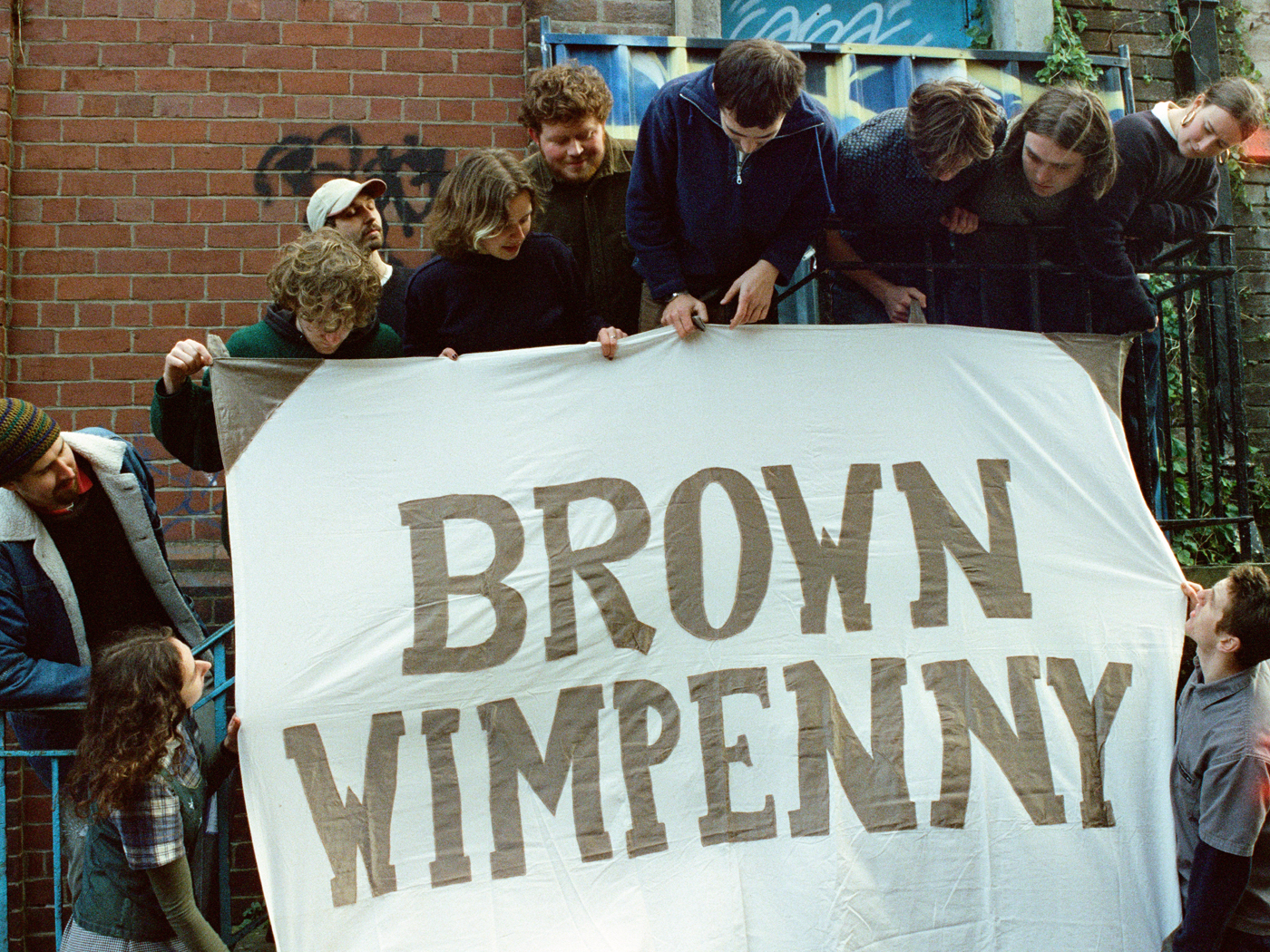
From Lankum to Shovel Dance Collective and the Magic Tuber Stringband, a new breed of folk groups are squeezing fresh juice from the traditional songbook while resisting the convenient compromises of folk-rock. After all, folk can reach places that rock music can’t: you don’t need amplification, or a stage, or a charismatic frontperson. And arguably it’s a superior vessel for telling stories, passing down wisdom and ensuring that the horrors of the past aren’t repeated – a particularly important mission right now.
An 11-strong collective who emerged from weekly get-togethers in a Manchester living room, Brown Wimpenny’s challenge was to find traditional songs that represented them and their surroundings. With much of the available repertoire relating to rural Southern England, they decided it was time a different tale were told, and began collecting folk songs specifically located in the industrial North.
Their debut album begins with a slowly flickering version of an early 19th-century fiddle tune called “Gas Lights”, quite possibly written in celebration of the world’s first gas-powered streetlamps installed on Chapel Street in Salford in 1806. “The Sheffield Grinder” dates back to the 1860s, when poor working conditions in the local steel industry led to a series of militant protests (the ‘Sheffield Outrages’) that were eventually crushed by a corrupt government enquiry. They’ve also turned up a more recent jig called “Farewell To Whalley Range” – by Irish musician Michael McGoldrick – that couldn’t be more local to the band’s origins in Withington.
Roving slightly further afield, “Old Molly Metcalfe” is a 1972 Jake Thackray song revealing the strange and pleasingly poetic method by which Swaledale sheep farmers used to count their flock – “//Yan, tyan, tether, mether, pip//,” etcetera – though Molly herself meets a typically tragic end. And “Raglan Road”, of course, is situated across the Irish Sea, with Patrick Kavanagh’s poem first set to music by The Dubliners and since performed by everyone from Billy Joel to Ed Sheeran. Suffice to say, none of them sought to put a free-jazz freakout in the middle.
This tendency to tug at the seams of the source material is what makes //Long Live Brown Wimpenny// such a fascinating record. Although they eschew electric instrumentation in a way that would make Ewan MacColl proud, when it comes to structure, anything goes. Several tracks on this album are made up of two or three traditional songs segued together, with vigorous jigs often materialising from (or dissolving into) passages of atmospheric drone or freeform exploration. It’s not so surprising to discover that several members of Brown Wimpenny first met while playing in post-punk and experimental rock bands, or even that one of them moonlights as an electronic DJ. The structures of several tracks actually resemble minimal techno epics in the way they build gradually to a climax before dropping away and intertwining with the next idea.
For most bands, sonic exploration would mean buying a new guitar pedal or finding a new synth patch. But within the all-acoustic stipulation they have set for themselves, Brown Wimpenny have found other ways to experiment, testing the limits of their chosen tools, be they banjo, fiddle, flute, accordion, euphonium or double bass. At times, they deliberately evoke the churn of ancient machinery or the creaking of ships in a harbour.
As with Lankum et al, Brown Wimpenny sometimes build on folk music’s existing use of drones and discordance to create a sense of creeping dread, but generally their music feels optimistic and inviting. Obviously there is a joy inherent in playing with a larger group of people that can’t help but transmit to the music. Most of the band can be heard singing together on the likes of “Lovely Bann Water” and the stirring hymn “Jesus At Thy Command”; while on the closing “Pratty Flowers” – also known as “Holmfirth Anthem” due to its historic association with the West Yorkshire town – they are joined by friends and family in a 30-strong chorus to belt out this bittersweet carol of lovers torn apart by war.
Despite the sadness at the song’s heart, it sounds like an infectious pub singalong, boozy and rumbustious, notes only approximately hit. It instantly makes you want to top up your tankard and join them.