

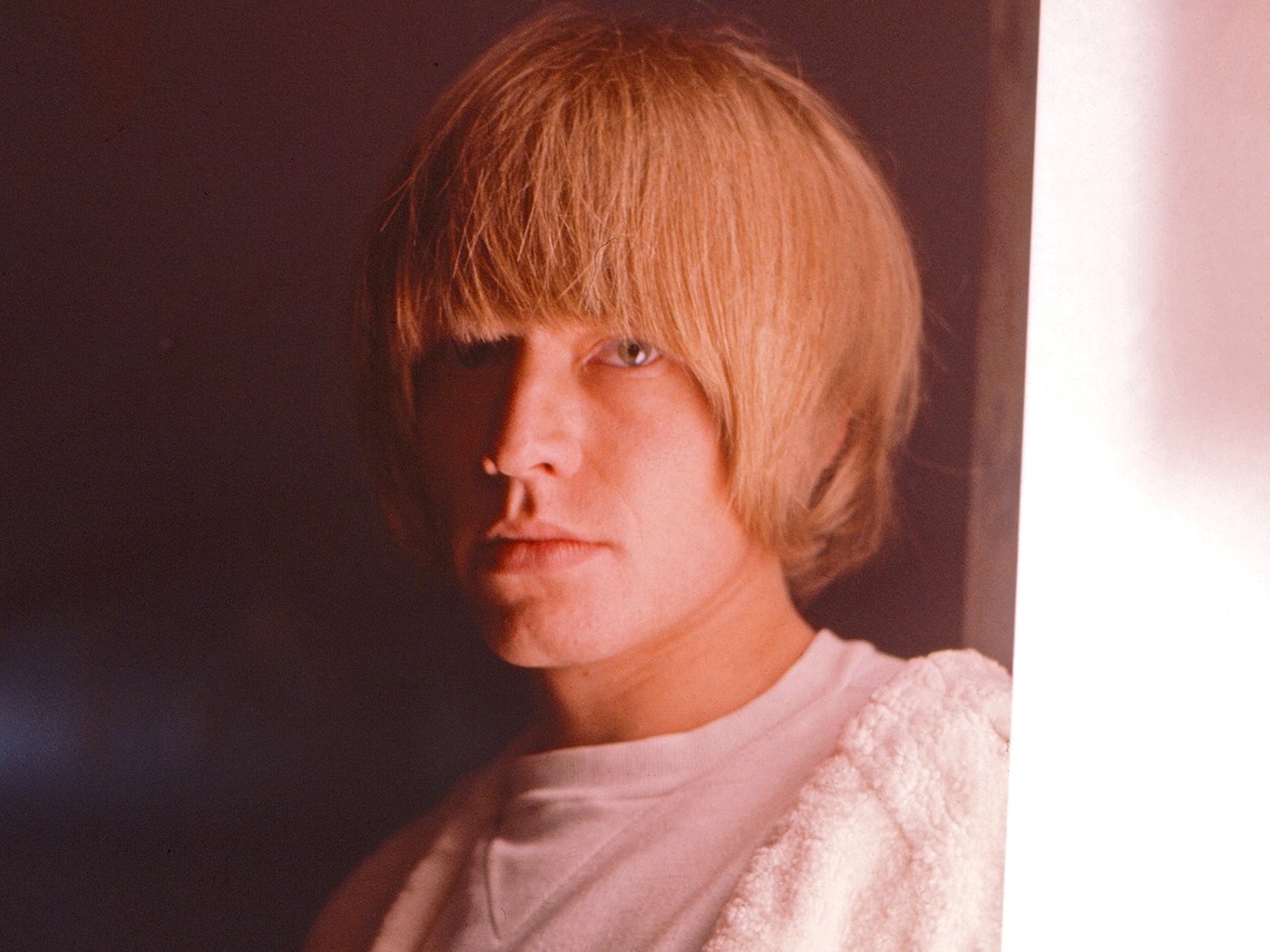
In 2009, a full 40 years after the death of the Rolling Stones’ founding guitarist, the respected Reuters news agency released a story that was picked up by thousands of publications around the world. The headline read: “New suspect emerges in the possible murder of Brian Jones.”
More than half a century after his death, Jones has become one of rock music’s most enduring true-crime obsessions. Every few years, a new witness, suspect, documentary, book or podcast emerges promising to solve the mystery once and for all. None has managed it. Instead, each fresh theory only adds another layer to a story that seems destined never to reach a definitive conclusion.
The Reuters report recounted a former Stones roadie pointing the finger at Jones’s occasional chauffeur, who himself had earlier claimed to have coaxed a deathbed confession out of one of his own friends. Details were sketchy and evidence scarce, but the story included suggestions that the band’s manager Allen Klein had even conducted a private investigation of his own. The fact that everyone mentioned by name in the article, including Klein, was dead meant readers were no nearer the truth than they had been in 1969.
The piece may not have amounted to much more than a speculative damp squib, but it gave conspiracy theorists a fresh morsel to chew on.
A cursory Google search reveals more than a dozen podcasts from the last five or six years that devote entire episodes to Jones (series with umbrella titles such as Death By Misadventure, Last Days and Disgraceland), the questions raised but unanswered making his passing the gift that keeps on giving. And while most are heartfelt, if amateurish, there is a tendency for them to be overly cheery, as if discussing the plot of a crime fiction paperback, as opposed to a tragedy that befell a real-life individual.
Thinking pragmatically, the podcasters may have to be forgiven for just picking up the baton from what went before, because the media mythology surrounding the death of Brian Jones took root a long time ago.
There is a bittersweet irony to a passage in the obituary published by Melody Maker way back in July 1969 after Jones was found in the swimming pool of his home at Cotchford Farm, East Sussex: “Brian was one of that small band of people who are destined to live their lives in newspaper headlines. What a shame the last headline was one reporting his death.”
As it transpired, Jones would be the subject of headlines ad infinitum, poring over the events of his demise to try to determine if it was merely an accidental case of drowning (the coroner returned a verdict of death by misadventure), or if more sinister goings-on played a part. In what is feasibly the first piece to open the can of worms, written by Nick Kent of NME on the 10th anniversary of Brian’s death, there was a suggestion he may have taken his own life, the writer basing his theory of what the musician reportedly told his father a few days earlier: “Please don’t judge me too harshly.”
“These can only be construed as the words of a man who knew his time was running out, a man who could see all the horrors of his life, many of them purely of his own instigation, flashing by in nightmarish glimpses.”
In retrospect, Kent’s words are reserved and respectful, compared books and magazine articles by “astrology author” Andrea J Miles suggesting Brian’s fate was written in the stars, or the “psychic” Christine Grant who claimed to communicate regularly with the musician after his death awakened her “gift” on the day he died.
And then there’s Stoned, the 2005 fictionalised account of Brian’s last days viewed through a prism that seems content to peddle a broad tabloid depiction of debauchery with a hint of whodunnit. Poorly received upon its release, it currently holds a 16 per cent aggregate rating on the Rotten Tomatoes review website, with the consensus conclusion that it “turns one of rock ‘n’ roll’s most darkly fascinating mysteries into a cinematic tragedy all its own.”
The saga of what happened to the tragic Stone isn’t leaving us any time soon, and the podcast terrain is perhaps its most natural habitat moving forward, save for the occasional more considered and better funded TV documentary where there’s at least a modicum of research in the mix.
A 2020 six-episode run of the US Smithsonian cable TV series The Curious Life & Death Of… was devoted to Jones, its historian presenter Dr Lindsey Fitzharris gleefully describing it as “a biography from beyond the morgue.” Inevitably, it’s a biography without a conclusion, the good doctor’s focus overwhelmingly on errors in the initial investigation into the death.
“There were so many things that got changed later, including witnesses who changed their testimony, and people who said they weren’t but were,” she said. “It wasn’t a cover-up, necessarily, but it was misconduct on the part of the police. There was a lot of motivation, at that time, to say it was drug-related, as a warning to the counter culture; they didn’t do the footwork they needed to.”
Jones was, it has to be said, the founding father of the distasteful fan/media invention the 27 Club, a posthumous cabal of high-profile performers who all died at the same age (future members including Jimi Hendrix, Janis Joplin, Jim Morrison, Kurt Cobain and Amy Winehouse). Setting aside the notion that the age thing is just a coincidence, it is nonetheless a “club” of talented people who left us at a time when thoughts naturally turn to their forever unfilled future potential.
Having taken his leave of the Stones, where the forcefulness of Mick Jagger and Keith Richards was starving him of opportunities to contribute to the band as a writer, who’s to say what he might have achieved in subsequent musical endeavours, unshackled from a working environment in which he could get no satisfaction.
As time marches relentlessly on, it’s becoming ever more unlikely that the real story of his death will ever reveal itself; rather, it could become increasingly muddied and distracting, as the next wave of podcasters seize upon the next questionable and tenuous theory to solve the riddle. Brian Jones should be celebrated for what he did when alive, and contemplation on what he might have gone on to do as a creative artist; now, that’s a podcast worth listening to…