

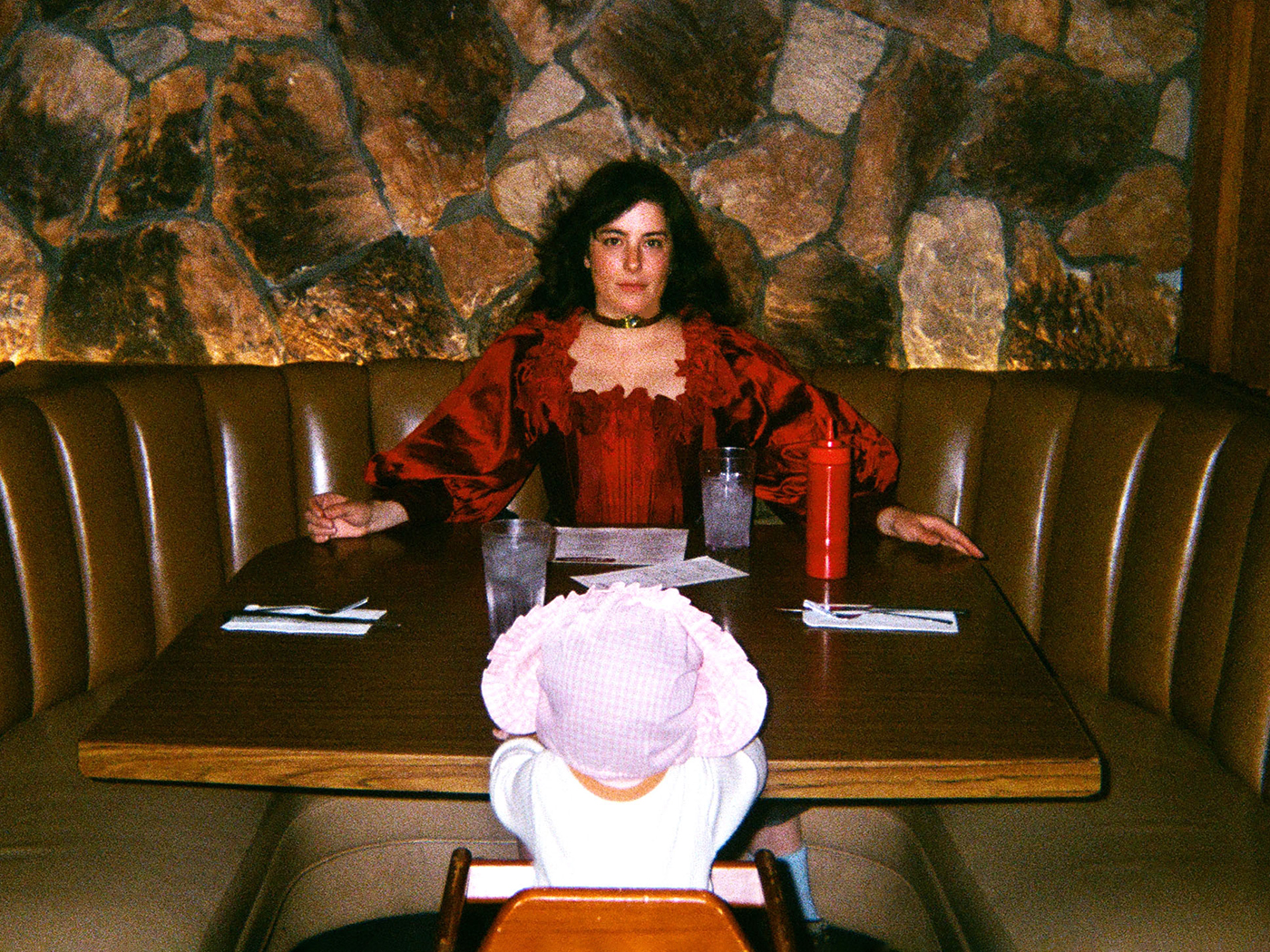
Ten years ago, on Do Easy – an album made with her twin sister as Tasseomancy – Sari Lightman sang of wanting to “reinvent” herself, to “fade into folk songs”. Her solo debut isn’t a reinvention, not exactly, but it draws much more closely from that “old music”, blurring autobiography and fragments of real and imagined other lives into a set of hushed, intimate songs.
The Way I Saw You emerges from a time of transition for Lightman, amid new community and a quieter way of life with her partner and toddler on the edges of Los Angeles. In her native Toronto, she and sister Romy developed a cosmic, experimental folk sound across 20 years of shared projects: Ghost Bees, Tasseomancy, The Lightman Sisters. Their most recent release, 2024’s Sister Smile as Lightman & Lightman, began as a series of imagined conversations between 20th-century mystics Etty Hillesum, a Dutch Jew who was murdered at Auschwitz in 1943, and the “singing nun” Jeanine Deckers, who was exiled from her Belgian convent following the discovery of her long-term romantic relationship with another nun and later died by suicide in poverty. The pair never met, but the words they each left behind unlocked something in Lightman: they are among the women whose stories she channels in her solo work.
The album begins with another of those imagined conversations: between a journalist and Eve Babitz, whose writing became synonymous with a hedonistic vision of 1970s Hollywood. Lightman, in the journalist’s shoes, drops in on her muse decades into her reclusive later years, following a car accident that left the glamourous writer disfigured. “When you’ve written the rose you can live in its folds,” she reassures the older woman softly, over a gently melodic guitar line from friend and producer Meg Duffy of Hand Habits. The metaphor – one so central to the album’s themes that it is printed on its cover – comes from Dante’s Paradiso, where the flower’s petals preserved the beauty and art of the feminine saints for eternity.
Next to Babitz in Lightman’s rose is her twin, Romy: “The Day Of The Just Cause” is both ode and frustration, a light-footed pairing of only Lightman’s plainspoken Judee Sill-esque vocal delivery with Duffy’s rippling guitar, that packs a haunting power. Her perspective shifts from poetic to direct: roses “filling the room” with Romy’s shifting moods while the effect of a dramatic haircut (“our likeness changed and that suited me”) is rendered in clear-eyed, photorealistic detail. The subject of “Girl Bitten By A Lizard” is similarly drawn from real life, although the details are sparse and Lightman’s voice is lower in the mix, as if praying to a family member lost to addiction: “Did you always want to burn up like a sunset in the autumn?”
Lightman credits Duffy as a “guiding force” on the record, much of which was recorded in the Californian heat of the latter’s home studio. Additional instrumentation is used sparingly but effectively: “Etty”, on which the spindly, experimental jazz of the opening track from Sister Smile is extrapolated into something more earthy and grounded, folds in a whisper of bass and surprisingly organic synth from Mega Bog’s Aaron Otheims. Drummer Evan Cartwright, of Montreal post-punk trio Cola and a long-time collaborator with the sisters, adds a soft-shoe shuffle beat to “The Prize” which, in its very rarity, acts as anchor to the rest of the album’s airiness.
With Duffy’s directing hand – and mixing by Philip Weinrobe, well-versed in elevating soft voices from his work with Big Thief – the album unspools at an unhurried pace suited to the temperate surroundings of the Tujunga mountains. The restraint sometimes threatens to tip into elusiveness: Lightman’s instinct is to suggest rather than to state, rarely naming her characters and eschewing biographical detail in favour of the poetic. The spectral “Give It All Up”, the song into which “Etty” spills, suggests a continuation of the Lightman & Lightman conversations with its lyrical references to sensuality and spirituality, but the details are hard to pin down. But, as Lightman’s voice loops and layers, as if in conversation with itself, while liquid guitar and subtle synths form a similar instrumental bed, the tranquility of the overall effect negates the need to search for meaning.
The album closes with a subtle shift in perspective: on “Rose Is In Greece”, sung as if directly to a friend, Lightman adopts an almost sing-song tone, dancing with a headier, more playful guitar. Even the most creative storytellers have to cut loose sometimes. Sari Lightman contains multitudes.