

After the extraordinary success of Born In The USA, the world had a fixed notion of who they thought Bruce Springsteen was: a bandana-wearing, fist-pumping, stars-and-stripes waving, guitar-wielding, all-American rock-and-roll hero who sang about cars, open roads, freedom and glory days. What they didn’t want was a man approaching his 40s, tortured by guilt, singing depressive songs about failed relationships against a backdrop of weeping synths and booming drum machines. But that’s what Springsteen served up with Tunnel Of Love, an album that sold about half as many records as its predecessor and subsequently became just about the most under-rated record in his entire catalogue.
Not everybody was impressed. When Springsteen played Tunnel Of Love to his old friend and trusty sideman Stevie Van Zandt, the guitarist was appalled. It didn’t help that the album began with “Ain’t Got You,” a song about a man who has everything – money, sex, houses, good luck and “a house full of Rembrandt and priceless art” – except the woman he loves. When Springsteen explained he was being honest about his life, Van Zandt replied, “I hate to tell you this, but nobody gives a fuck about your life. Your genius is telling people about their lives.” Bruce didn’t entirely welcome this feedback: “We yelled and screamed for a while, and then he threw me out”, wrote Van Zandt in his 2021 memoir, Unrequited Infatuations.
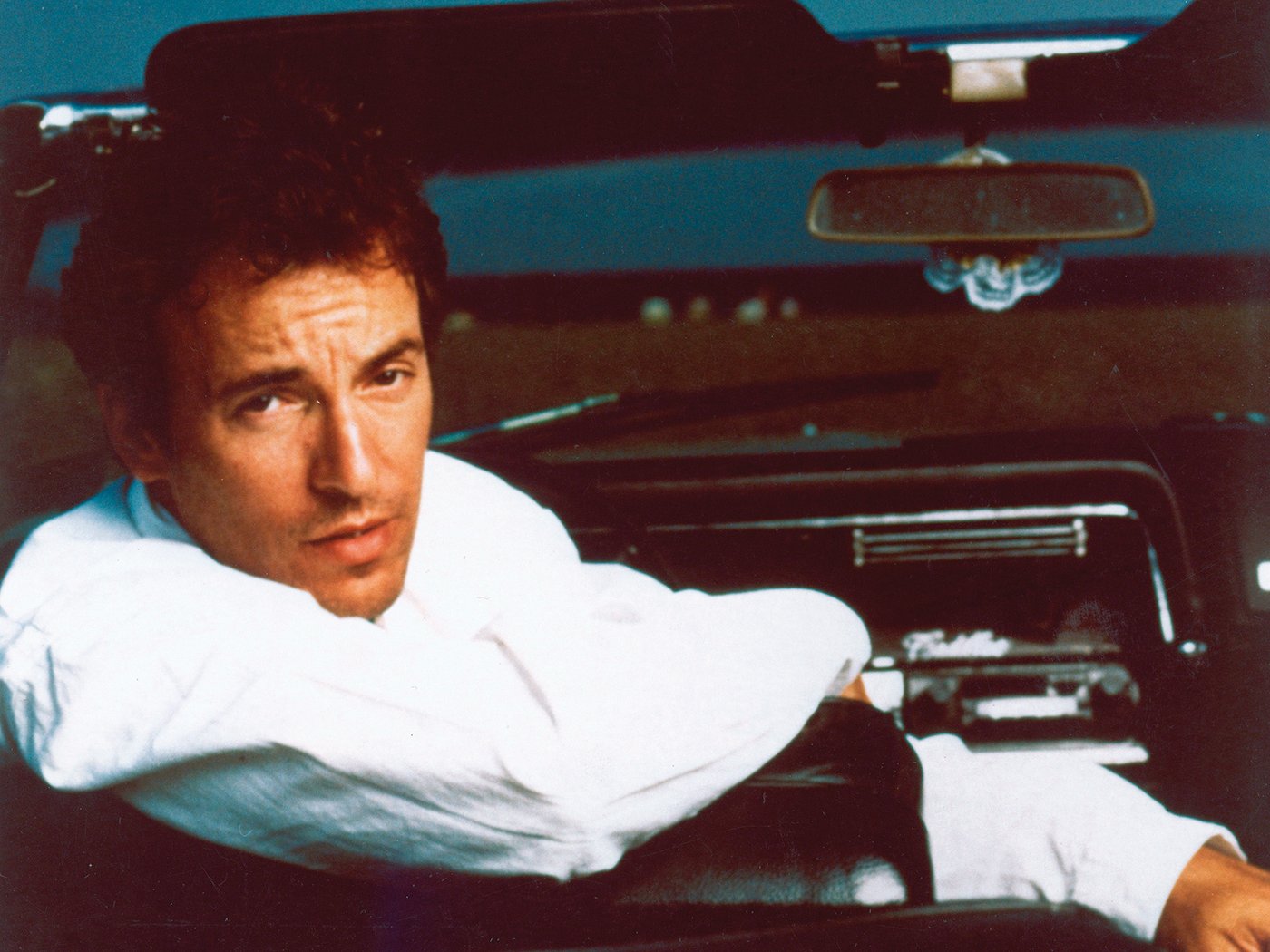
Springsteen set out his intentions on the album cover – slick-backed hair and bootlace tie, slumped against a convertible like he’s auditioning for the Richard Gere role in American Gigolo or waiting for a prom date. This was grown-up Bruce, weary and wary, a man who had supped at the cup of life and found it left a sour taste. “Man meets a woman and they fall in love; But this house is haunted and the ride gets rough”, he rhymed on the title track, while “One Step Up” subverted the classic imagery of “Born To Run”. Instead of suicide machines, velvet rims and hands strapped across engines there was the somewhat sadder vision of Bruce, now a man of a certain age, hopping into “an old Ford” only to “hit the engine but she ain’t turnin’.” It happens to the best of us.
Tunnel Of Love was written and recorded during Springsteen’s short marriage to actress Julianne Phillips. They’d got married seven months after they met and Springsteen seems to have known in his heart that he’d made a mistake, experiencing what he later described as “a series of severe anxiety attacks” shortly after the wedding. Springsteen’s doubts went beyond the relationship itself. He was pondering the decisions that people make at a certain point in their lives – those big calls about jobs, houses and family that ensure a certain future is inevitable, baked in. If Born To Run was inspired by the recklessness and abandonment of youth, Tunnel Of Love was about consequences.
Such a personal, intimate record demanded a different soundscape to Born To Run, The River, Born In The USA and even the melancholic Darkness On The Edge Of Town. Springsteen decided to dispense with the services of the E Street Band and recorded most of the album at his home studio in Rumson, New Jersey, with engineer Toby Scott. Members of the E Street Band came in to perform on some songs – Max Weinberg on eight songs, Danny Federici on three, Roy Bittan on two, plus roles for Nils Lofgren, Clarence Clemmons, Garry Tallent and a certain Patti Scialfa. But otherwise this was Springsteen on his own, at home, using pretty much the same approach as Nebraska, only now with some of the most personal songs of his career.
It’s a combination that makes Tunnel Of Love such a powerful and profound record. Springsteen was removing the mask he’d worn on his previous records, something he addressed directly in the outstanding lead single “Brilliant Disguise”, which maintained the run of hits he’d enjoyed since “Dancing In The Dark” thanks to a classy hook. “Brilliant Disguise” introduced Springsteen’s themes of identity and uncertainty, and ended with a desolate final thought: “Tonight our bed is cold; I’m lost in the darkness of our love; God have mercy on the man; Who doubts what he’s sure of”.
Tunnel Of Love is full of moments like this. “Cautious Man” is as sparse and bleak as anything on Nebraska, but instead of singing about murder, financial ruin and isolation, it dealt with one man’s struggles with the responsibility of marriage and need to seek refuge in prayer. “Two Faces” begins with Springsteen confessing that he meant to make a girl happy but instead he made her cry. On “One Step Up”, he sings, “When I look at myself I don’t see; The man I wanted to be”, while “When You’re Alone” has him admitting “nobody knows baby where love goes; But when it goes it’s gone”.
Alongside the lacerating, guilt-laden sadness and exhaustion, there are some of Springsteen’s finest melodies and brilliant hooks from the opening salvo of “Ain’t Got You” and “Tougher Than The Rest”, through the catchy “Brilliant Disguise” and the title track, with its wild intro and waves of synths that neatly date it to a particular time and place. The ’80s production still leaves some people cold, which is their loss as this is a fantastic sounding record, with the synths acting as a base for voice and acoustic guitar, a queasy coalition of digital and analogue that captures the tortured soul at its heart.
The sole rock song is “Spare Parts”, a greasy number with Federici, Tallent and Weinberg all backing Bruce as he hollers a song about an unplanned pregnancy – “Bobby said he’d pull out/Bobby stayed in” – and its repercussions. Like many of the songs on Tunnel Of Love, there’s a religious subtext, and it’s clear that throughout the record, Springsteen’s fears about the state of his marriage is heightened by his Catholic guilt. This would only increase when he began an affair with Patti Scialfa during the subsequent tour, hastening the inevitable divorce.
That brought a legal conclusion to the turmoil that had been plaguing Springsteen throughout the era covered by Tunnel Of Love. Springsteen would describe the album as “an intentional left turn” after Born In The USA, but looking at his career through a wider lens, it’s Born In The USA that’s the aberration following the more sombre Darkness, the self-conscious maturity of The River and the intense, intimate Nebraska. All three records are filled with songs about men who make bad decisions, even if writing and recording Tunnel Of Love was one of the best that Springsteen has ever made.